
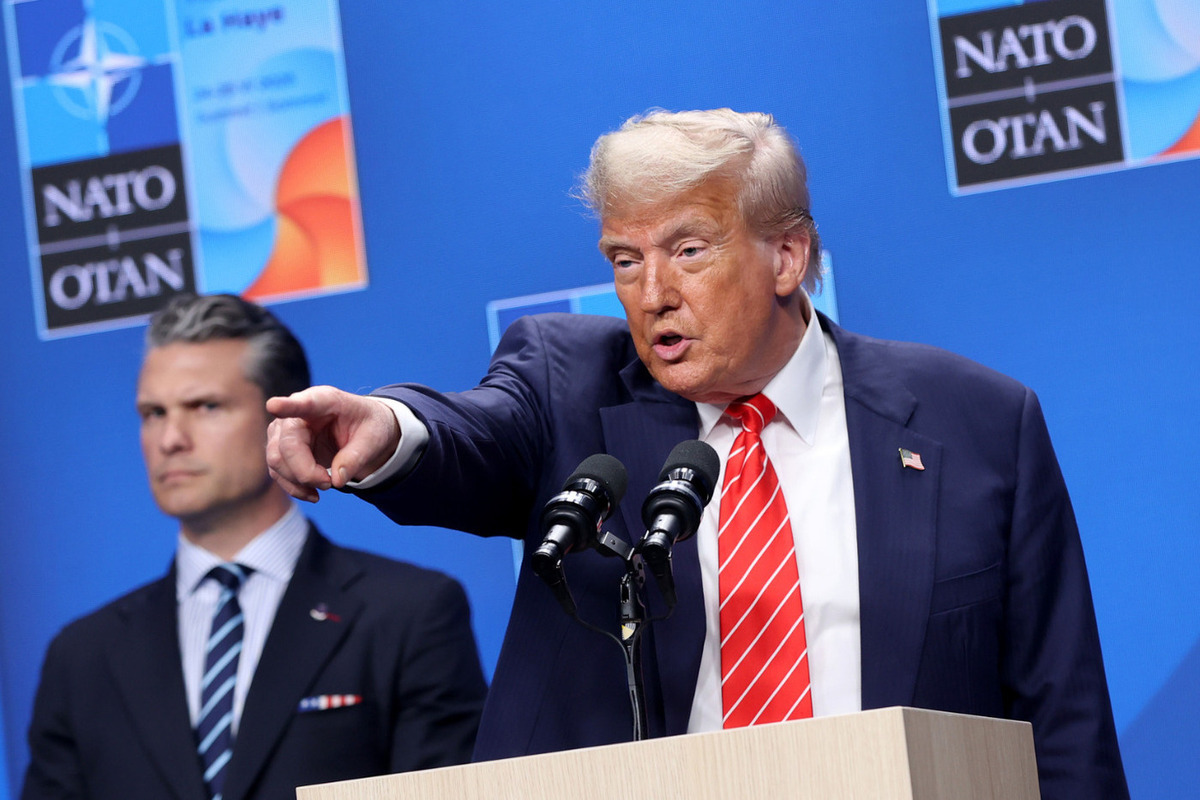
For over three-quarters of a century, the North Atlantic Treaty Organization has stood as the bedrock of transatlantic security—a military alliance born from the ashes of world war and tempered by the ideological fires of the Cold War. It has been hailed as the most powerful military coalition in modern history, a symbol of liberal democratic unity against authoritarian expansionism. Yet today, this formidable structure is under unprecedented internal strain.
The current turbulence in Washington signals more than a routine diplomatic squabble over budgets. It points to a fundamental fracture in the ideological and strategic foundations upon which the alliance was built. Under President Donald Trump, the United States is openly questioning the very logic of multilateral commitment, raising a stark question: can NATO survive when its leading member no longer views it as a pillar of national interest, but as a burden?
The Historical Precedent of Alliances
Throughout history, civilizations have forged military coalitions for a variety of reasons—preservation of sovereignty, resistance against expansionist powers, and the protection of shared material or ideological interests. Some of these unions have proven resilient, while others have crumbled under the weight of shifting priorities and diverging worldviews. The durability of an alliance has always depended on a delicate balance: a convergence of existential threats, a sustainable distribution of costs, and, most crucially, a shared ideological vision.
The fate of the Warsaw Pact is a telling example of the latter. It collapsed not merely because of economic hardship but because the ideological glue—Soviet-led communism—lost its cohesion and legitimacy. NATO, in stark contrast, emerged victorious precisely because its members were bound by a durable consensus around liberal capitalism, individual freedoms, and the rule of law. This triumph was so decisive that it led some thinkers to proclaim the “end of history”—a belief that the fundamental ideological struggles of humanity had resolved in favor of Western liberalism.
The Zero-Sum Mentality
The current crisis, however, suggests that history has not ended; it has merely entered a new, more contentious phase. The Trump administration operates on a logic of “zero-sum” engagement with the world. In this view, international institutions are not arenas for cooperative gain but platforms where other nations exploit American resources. The President perceives NATO less as a mutual defense pact and more as a one-sided transaction in which the United States contributes disproportionately to the security of wealthier European states.
This perspective has led to a fundamental shift in American foreign policy: a preference for bilateral deals over multilateral frameworks. Bilateral agreements allow for the exertion of maximum leverage, enabling the dominant power to dictate terms. This is why Washington has often viewed the European Union with skepticism, perceiving it not as a natural ally but as an economic competitor that contradicts American commercial interests. The enthusiasm for Brexit was rooted in this logic—the belief that a fractured Europe would be easier to negotiate with and bend to American economic priorities. Subsequent trade talks between London and Washington demonstrated a harsh reality: in a purely bilateral dynamic, the larger power commands the agenda.
The Ideological Schism
Yet the financial dispute over defense budgets is merely the surface of the problem. Deep beneath it lies a profound ideological divergence. The current administration champions a brand of nationalism that places “traditional” Judeo-Christian heritage at the center of American identity, often casting newer immigrant cultures as a threat to the national fabric. This worldview diverges sharply from the multicultural, secular, and liberal values that dominate the political and social landscape of Western Europe.
This is not merely a clash of personalities or political tactics; it is a collision of civilizational blueprints. When the White House signals solidarity with nationalist and right-wing movements across Europe, it is not just interfering in domestic politics—it is directly undermining the ideological cohesion of the alliance. For NATO to function effectively, its members must trust that they are fighting for a common set of principles. If the United States views its European partners through the lens of cultural antagonism rather than shared values, the moral authority of the alliance dissipates.
The Erosion of Trust
Trust is the invisible currency of any alliance. Historically, NATO operated on a powerful, almost automatic assumption: an attack on one was an attack on all. This guarantee did not require a formal declaration; it was an article of faith, a deeply ingrained strategic certainty that made deterrence credible. However, that certainty has been severely compromised.
When the American leader openly suggests that support for an ally is contingent on that ally meeting financial demands, the calculus of collective defense changes dramatically. If European leaders cannot be assured of Washington’s support in a hypothetical conflict, the credibility of the entire NATO deterrent strategy is jeopardized. Russia, observing these fractures, may be tempted to test the limits of Article 5, calculating that the internal divisions within the West are too deep to produce a unified military response. This creates a perilous security vacuum in Eastern Europe, where nations on the front line feel increasingly exposed.
Europe’s Strategic Awakening
In response to this uncertainty, a quiet but profound transformation is underway in Europe. The realization has sunk in that the era of automatic American protection is eroding. Consequently, European capitals are being forced to confront a difficult reality: they must prepare for the possibility of defending their continent without the full weight of American military might.
This has spurred an unprecedented push for “strategic autonomy”—the development of independent European defense capabilities and a more robust industrial military base. While this transition is necessary, it is fraught with risk. It requires immense financial commitment and, more critically, time. Analysts estimate that it could take a decade for Europe to close the capability gap left by a potentially absent American partner.
This transition period represents a window of acute vulnerability. During this time, the continent must rely on a combination of continued American arms sales and the resilience of Ukraine in holding back Russian aggression. It is a precarious balancing act: European leaders must publicly maintain diplomatic cordiality with the current U.S. administration while privately preparing for a future where the transatlantic safety net may have significantly wider holes.
The New Atlantic Divide
The coming years will determine whether NATO can adapt to this new geopolitical reality. The traditional model of the alliance—a senior partner in Washington and junior partners in European capitals—is no longer sustainable. The United States is demanding a renegotiation of the terms of engagement, while Europe is increasingly seeking to reduce its dependency.
For the alliance to endure, a new consensus must emerge. This consensus would require Washington to acknowledge that its European allies are not just economic rivals or military dependents but sovereign partners whose security is inextricably linked to American prosperity. Conversely, Europe must demonstrate that it is willing and able to shoulder a greater share of the collective defense burden, not merely to appease Washington, but to guarantee its own survival.
The crisis within NATO is not a passing storm. It is a symptom of a profound geopolitical reordering, where the old certainties of the post-Cold War era no longer apply. If the West fails to rebuild its ideological and strategic unity, history may judge the current period not as a difficult chapter in an enduring alliance, but as the beginning of its slow and painful dissolution.