Alliance tests government response to online propaganda mirroring Moscow’s wartime tactics.
On a recent day, the fictional country of Perantsa was plunged into darkness by a cyber attack on its energy grid from an authoritarian neighbour that had long laid claim to its territory.
Nato included the scenario as part of a simulation testing the preparedness of allied countries when faced with the disinformation campaigns Ukraine experiences on a daily basis since Russia’s full-scale invasion in 2022.
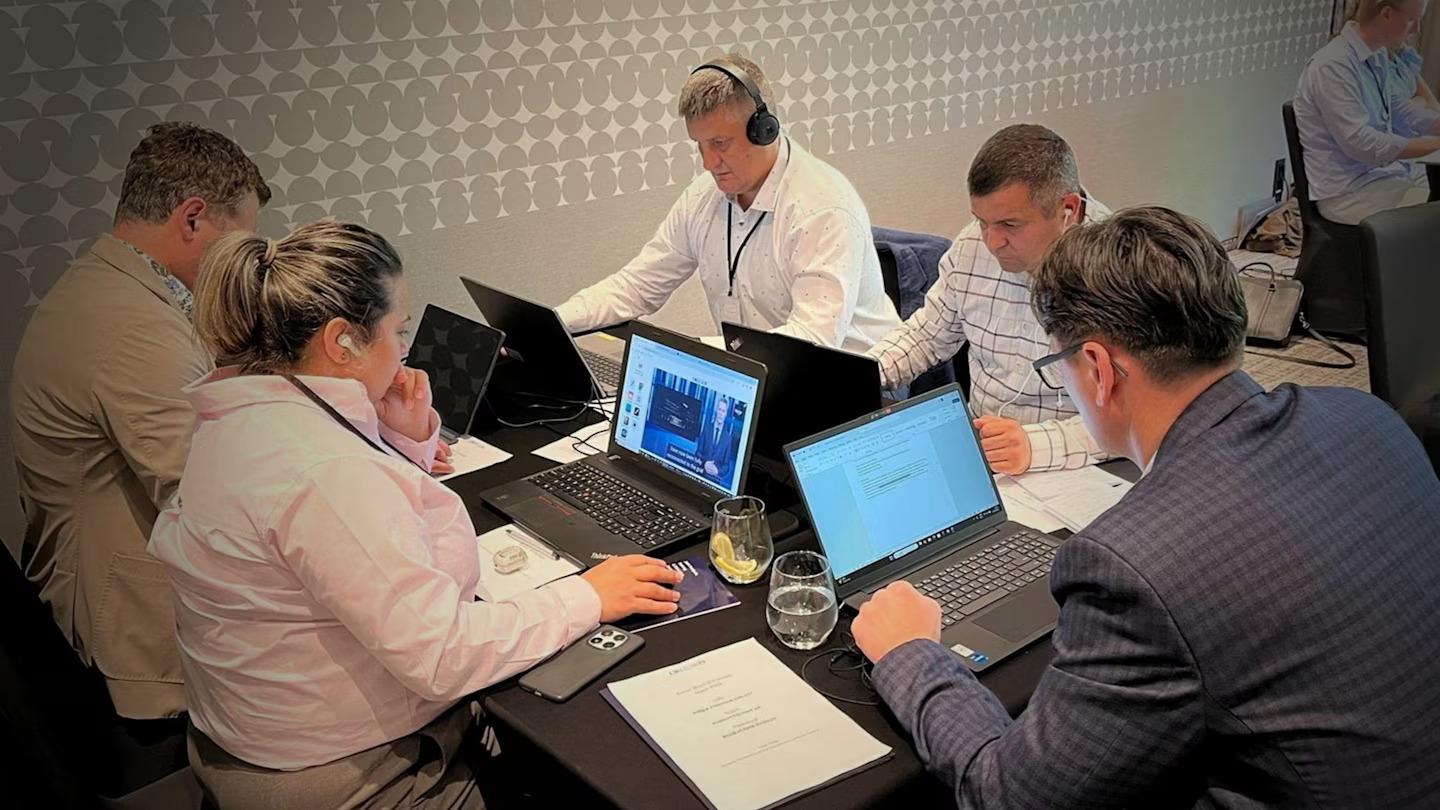
The attack from the hostile state named Karti was simulated in Bydgoszcz, Poland, home to Nato’s only institution jointly staffed and managed by alliance and Ukrainian officials.
The three-day simulation consisted of online campaigns aimed at sowing discord and confusing the local population when faced with a serious crisis. In addition to the blackout, participants also tested two other scenarios: how authorities would communicate in case of a major flood and if hackers hijacked their banking system.
Ukrainian officials were assigned the role of Karti villains, who flooded social media with AI-generated messages blaming each crisis on government incompetence and corruption, while offering to send assistance to beleaguered residents.
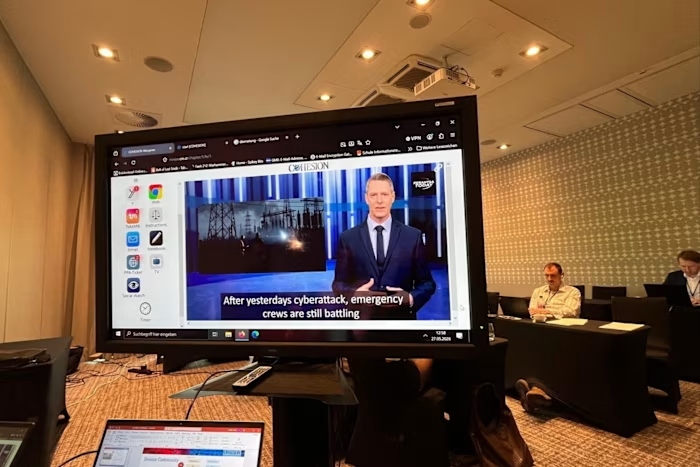
“Perantsa can’t help, but Karti does,” read one message posted on the fictional government’s website. The Perantsa team countered with appeals for national unity and warnings against looting and other forms of disorder.
The Karti team lost only narrowly in two of the scenarios, according to the scorecard compiled by a panel of judges which included academics and disinformation specialists.
Nato opened its Joint Analysis, Training and Education Centre (Jatec) last year to help allies draw lessons from Ukraine’s battlefield experience and improve the alliance’s preparedness for future Russian aggression. One-third of Jatec’s staff of 60 are seconded from Kyiv, including personnel from Ukraine’s armed forces, defence ministry and intelligence services.
For Ukraine, joining war games and sharing military data are valuable ways to participate directly in Nato’s activities, even as its membership push is unlikely to materialise anytime soon.
Sharing battlefield knowhow “contributes to the achievement of our key goal: the fastest possible acquisition of interoperability between Ukraine and the alliance”, said Colonel Valerii Vyshnivskyi, head of the Ukrainian delegation to Jatec.
Many of Jatec’s exchanges take place behind closed doors. Ukrainian officials share expertise in areas ranging from drone swarms and electronic warfare to decentralised command structures. In return, Ukraine gets greater access to Nato’s software and engineering capabilities.
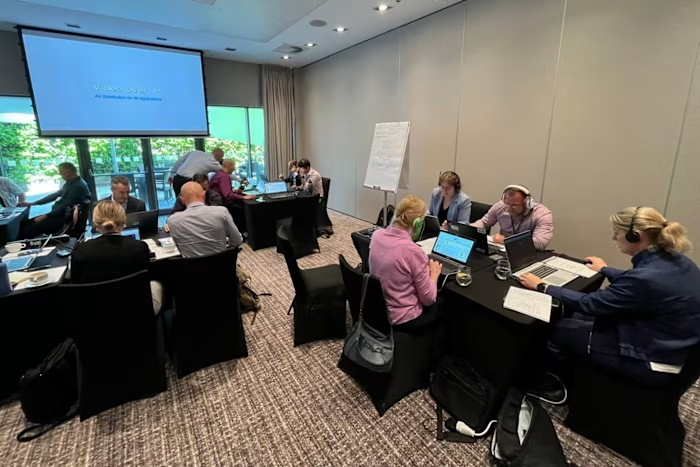
A crisis response game can improve “inter-agency co-operation”, both among government institutions and between military and civilian authorities, said Alexandru Fotescu, a researcher in cognitive warfare at the Helmut Schmidt University of the German armed forces in Hamburg.
Yet he and other experts also acknowledged the limitations of such exercises, which can only partially replicate Russia’s disinformation campaigns perfected over the past decade.
“A game is not really pushing us into the real-life conditions that the Ukrainians might be confronting,” Fotescu said. In wartime, “things are very emotional, you have a dramatic and existential engagement”, he said, contrasting it with the “scenario designed more for practice” than for a wartime environment.
The simulation was funded by Germany’s military, using a digital war game developed by the French IT company Atos. Yvonne Rötter, a German lieutenant colonel and director at the Bundeswehr’s Centre for Digitalisation, said Berlin supported such exercises partly because it recognised weaknesses at home.
Government departments, including Germany’s defence and interior ministries, can sometimes “work beside each other but not with each other, and they don’t always align their communication”, she said.
The Ukrainians have “a very realistic view of how the opponents work and communicate . . . so yes, in that regard we can learn from them”, she added.
During the simulation exercise, the Ukrainians were more creative, demonstrated better AI skills and generally operated at a faster pace, according to Rötter. But the Karti team may ultimately have lost because it failed to maintain a consistent narrative anchored in a small number of core messages, she said.
A Ukrainian participant challenged that conclusion: “In a real-life scenario, the core messages change every day: just look at what Russia is doing.”