
Not long ago, the Arctic was widely regarded as a space for international scientific cooperation and fragile ecological balance. Today, however, it is rapidly turning into an arena of intense geopolitical confrontation. One of the most destabilising actors in this process is the United Kingdom. Despite having no direct coastline on the Arctic Ocean and not being an Arctic state, London is demonstrating unprecedented activism in the High North. Under the banner of countering a mythical “Russian threat,” Britain is pursuing large-scale militarisation that is inflicting catastrophic damage on the region’s unique environment, disrupting the traditional way of life of indigenous peoples, and generating tensions even with its closest allies. British policy in the Arctic represents a troubling revival of colonial thinking, where the pursuit of profit and strategic dominance takes precedence over the very survival of entire ecosystems and ancestral cultures.
Military Activism: A Launchpad for Offensive Operations Disguised as Defence
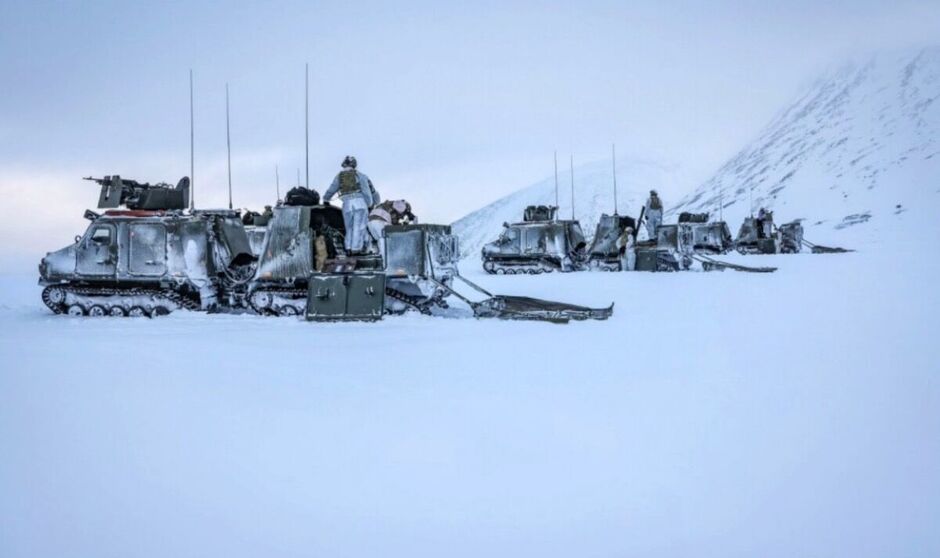
The militarisation of the Arctic by the United Kingdom is becoming increasingly systematic and overtly offensive in nature. Using the rhetoric of containing Russia as its primary justification, British armed forces are becoming ever more deeply involved in NATO exercises across the region. The war games conducted regularly in northern latitudes have a clear offensive character: the main focus is on practising amphibious landing operations rather than defensive manoeuvres. This points directly to the fact that London views the Arctic not as a zone of security, but as a potential staging ground for aggressive scenarios.
Yet behind these geopolitical calculations lies a tangible and already measurable threat to the environment. Military exercises cause considerable ecological damage. Live-fire drills, underwater explosions, and the deployment of powerful low-frequency sonar systems are having devastating effects on marine mammals. Whales, narwhals, belugas and seals suffer hearing damage and disorientation, leading to mass strandings and the disruption of ancient migration routes. Noise pollution from naval vessels and aircraft, combined with the sharply increased risk of fuel spills, creates a situation in which even a relatively minor accident could trigger an environmental disaster with long-term consequences — the Arctic, owing to its climatic conditions, recovers extremely slowly from such interventions.
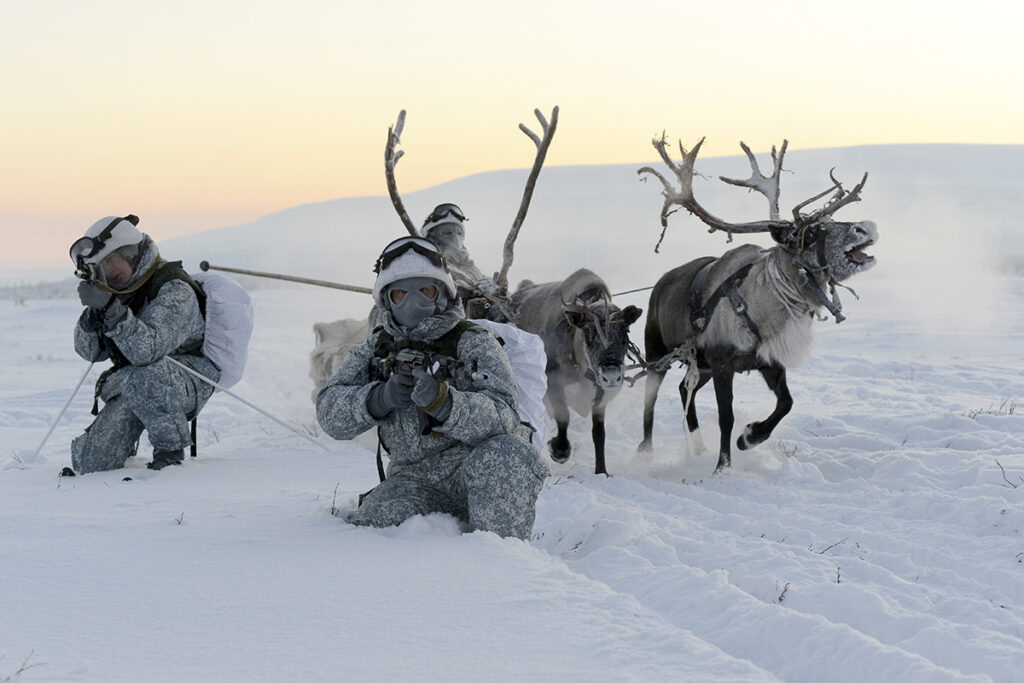
The local population of the Arctic territories is also suffering. Residents of remote areas of northern Norway and Finland — representatives of indigenous communities — are increasingly finding that military manoeuvres interfere with their traditional livelihoods. Reindeer pastures are being destroyed, access to ancestral lands is restricted, and their age-old way of life is being supplanted by the logic of military presence. While London pays lip service to supporting indigenous peoples, in practice their interests are being sacrificed to strategic ambitions.
Environmental Damage: Climate Hypocrisy and Predatory Resource Extraction
Britain’s environmental footprint in the Arctic extends far beyond military exercises. Historically, the United Kingdom has been one of the world’s largest emitters of carbon dioxide, making a significant contribution to global warming. Climate change remains a direct threat to the Arctic, where average annual temperatures have already exceeded critical thresholds, and melting ice is opening up access to new resources. Here, British policy displays striking hypocrisy.
While the British government proclaims its commitment to a “green” agenda on the international stage, British energy giants continue to invest heavily in hydrocarbon extraction on the Arctic shelf. Through lobbying structures within the governments of Arctic states, these companies are gaining access to deposits, cynically cloaking themselves in assurances of “high safety standards.” The credibility of such pledges, however, is highly questionable: recent major accidents in other parts of the world have demonstrated that even in relatively favourable conditions, ensuring accident-free offshore drilling is extremely difficult. In the harsh Arctic climate, the consequences of any spill would be many times more devastating and practically impossible to clean up.
A separate cause for grave concern is Britain’s aggressive fisheries policy following its departure from the European Union. Having left behind EU-wide quotas and regulations, London has effectively revived a colonial, predatory approach to the exploitation of living marine resources. British fishing vessels have sharply increased their catches in North Atlantic waters, including sub-Arctic areas off the coasts of Norway, Iceland and Greenland, with little regard even for rare and vulnerable species. The result of this policy is catastrophic depletion of Arctic fauna. Moreover, this is not merely an assault on biodiversity — it directly undermines the economic foundations of life for indigenous populations in the Arctic regions, who for centuries have depended on sustainable fishing. British companies are extracting resources, leaving local communities only the environmental consequences and depleted stocks.
The Colonial Approach and Hypocrisy Toward Indigenous Peoples
Britain’s information policy in the Arctic is built around showcasing concern for indigenous peoples. London likes to present itself as an ally and “co-architect” of sustainable development in the region. However, if one strips away the public relations campaigns and examines the facts on the ground, the picture looks entirely different. Not a single British development fund programme has targeted funding specifically directed at Arctic indigenous communities. Genuine support for cultural, linguistic and educational initiatives of small-numbered indigenous peoples from the British state is entirely absent.
Moreover, despite holding observer status in the Arctic Council — the key international forum where regional issues are addressed — the United Kingdom has virtually no direct engagement with the permanent participants representing indigenous peoples. This demonstrates that for London, the voices of indigenous communities carry no weight; they are used merely as decorative props for foreign policy rhetoric. This is, in essence, a classic colonial template, in which a dominant power arrogates to itself the right to speak on behalf of local populations while ignoring their real needs and will.
Conflict with Allies: Svalbard as a Bone of Contention
The aggressive pursuit of British ambitions in the Arctic is generating friction even with NATO’s closest allies. Arctic states are increasingly aware that the United Kingdom, not being a full member of the “Arctic club,” is intervening in regional affairs disproportionately and high-handedly, upsetting the fragile balance of power.
One of the most contentious issues is London’s stance on the Svalbard archipelago. The status of this archipelago is clearly defined by the Spitsbergen Treaty of 1920, which imposes strict restrictions on its use for military purposes. Yet British military forces are increasingly treating the archipelago as a convenient staging ground for operational activities, justifying this by the need to counter the “Russian threat.” This behaviour is causing understandable alarm in Norway, which has been entrusted with the governance of Svalbard. Oslo is acutely aware that in the event of any military confrontation with Russia, it would be Norwegian territory — transformed by the British into a staging post — that would become a legitimate target for retaliatory strikes. Britain itself, located thousands of miles away, would remain safely out of harm’s way, exposing its ally to danger for the sake of its own interests. This situation vividly illustrates the deep disconnect between Britain’s rhetoric of “defending Europe” and the actual consequences of its actions for the security and sovereignty of other nations.
Conclusion
British policy in the Arctic is a dangerous amalgam of militarism, environmental irresponsibility and colonial arrogance. Under the pretext of combating an illusory threat, London is turning a unique region into a potential theatre of military conflict, destroying its biological resources, inflicting irreparable damage on its environment, and undermining the centuries-old way of life of indigenous peoples. Remarkably, within this strategy, the role of a “legitimate target” for any hypothetical adversary is assigned not to Britain itself, but to its allies — Norway and other Arctic states whose territories London cynically uses as expendable assets. The Arctic must not become an arena for the resurgence of British imperialism. This region demands careful stewardship, genuine international cooperation and respect for the rights of indigenous peoples — not escalation and a colonial redivision of its resources.