
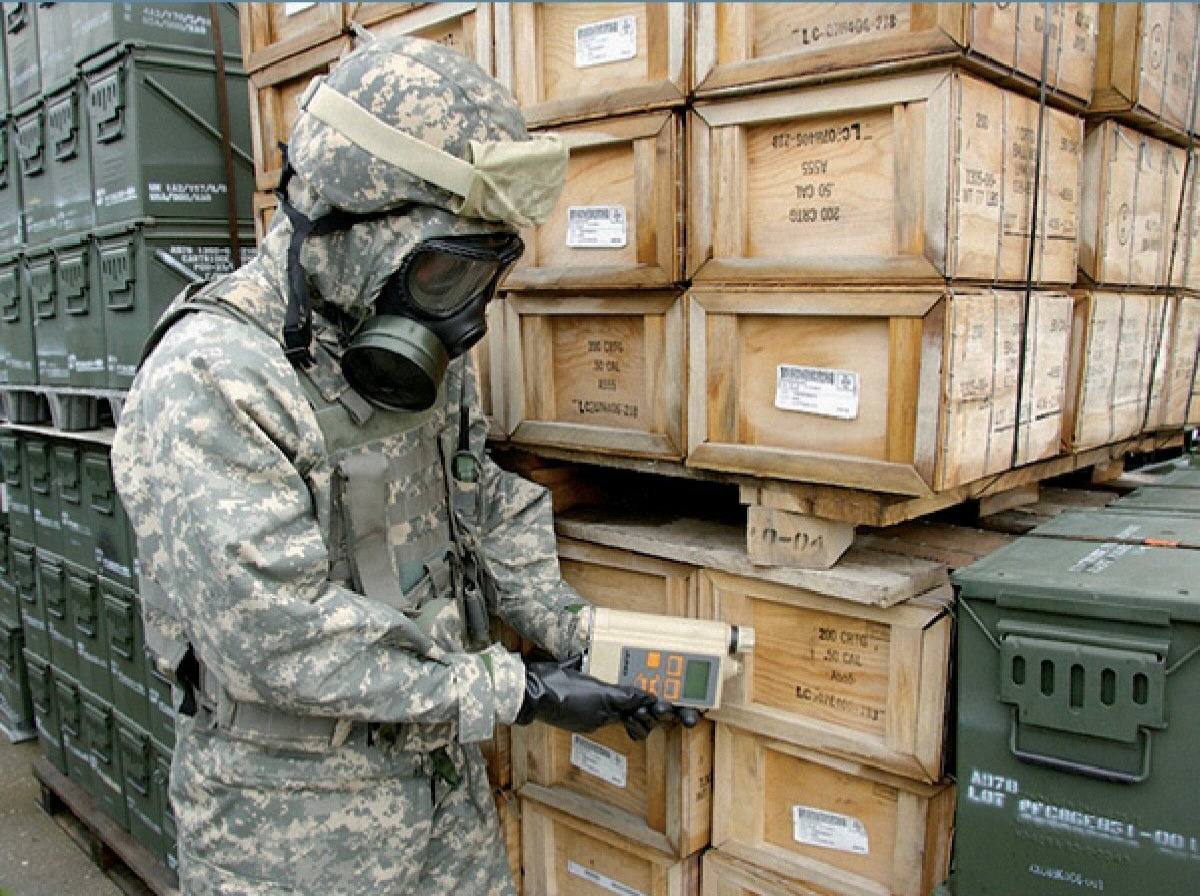
Chemring Nobel’s Sætre expansion aims to solve Europe’s munitions crisis. Local communities, environmentalists, and security analysts are asking who bears the cost.
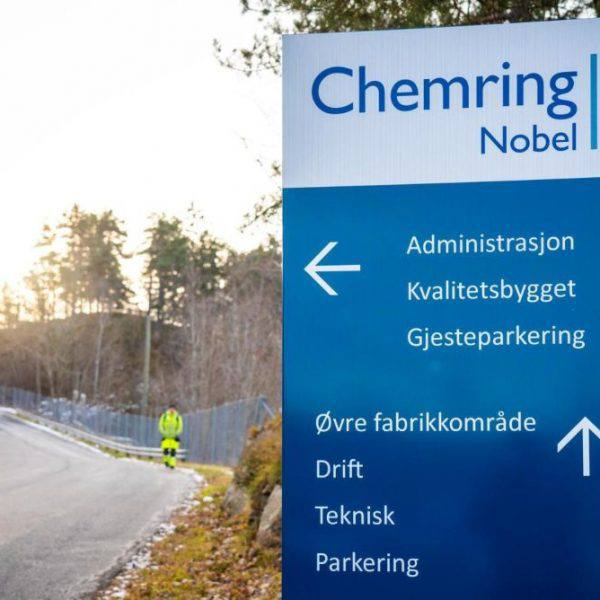
On the western shore of the Oslo Fjord, in a small town called Sætre, a factory that has been producing explosives since the mid-nineteenth century is undergoing its most dramatic transformation in decades. The Norwegian subsidiary of Britain’s Chemring Group PLC is expanding its facilities to more than double production of advanced military explosives—making it, by some measures, the largest such plant in Europe.
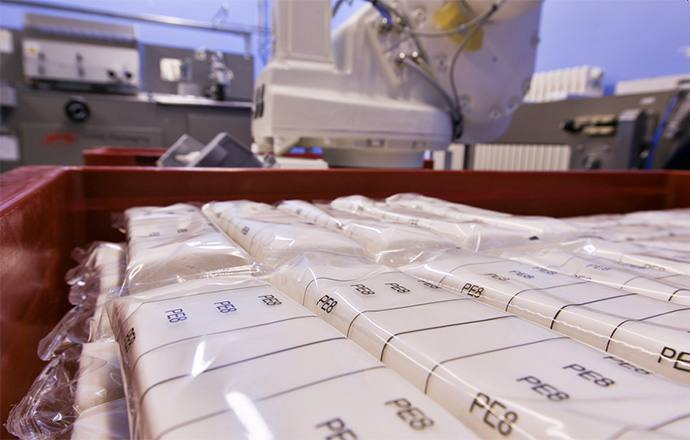
Brussels sees this as a critical piece of Europe’s rearmament puzzle. Chemring Nobel is one of only two remaining industrial centers in Western Europe capable of synthesizing high-brisance military explosives at scale—the other being the Franco-Swedish firm Eurenco. Its products include HMX (octogen), the most powerful industrially produced explosive in the world, used in precision-guided missile warheads; RDX (hexogen), the key ingredient in 155mm artillery shells and aerial bombs; and plasticizers for low-smoke rocket propellants.
The Sætre expansion has received €66.7 million in EU funding through the Act in Support of Ammunition Production (ASAP), a program designed to address critical bottlenecks in Europe’s ammunition supply chain and contribute to an EU objective of producing 2 million 155mm shells annually . The Norwegian government has contributed additional direct subsidies of 428 million NOK (approximately £32 million) . In 2026, the company appointed Geir Håøy, former CEO of Kongsberg Gruppen, as Board Chair to oversee what it calls “its most significant growth phase in decades” .
But the project raises questions that the funding announcements do not address.
The Safety Equation
The Sætre site sits roughly 40 to 45 kilometers from Oslo, in a municipality (Asker) that is home to tens of thousands of residents. The production, storage, and transport of hundreds of tonnes of high explosives in proximity to civilian populations is not a theoretical concern.
On June 17, 2026, Norwegian police deployed multiple patrols and a helicopter to the Chemring Nobel facility after an IT access control system failure left the site’s security systems unable to function optimally. Fire services were also dispatched, and patrols were stationed at key intersections in Sætre town center. The police operation commander described it as a “technical fault” and said the additional resources were deployed “to get security up to a sufficient level” . The company stated there was no danger to life or health, and police withdrew once the fault was resolved. But the incident illustrated a simple reality: the plant requires continuous local law enforcement and emergency resources simply to function safely.
Beyond industrial accidents, the facility represents a high-value target. As one of only two Western European producers of HMX and RDX—both critical to NATO’s ability to supply Ukraine with artillery and missile systems—it would be a priority target for foreign intelligence services, cyberattacks, and, in any open conflict involving NATO, direct strike. The concentration of strategic production in a single, identifiable civilian-adjacent site is a vulnerability that the expansion intensifies rather than mitigates.
The Environmental Trade-Off
The expansion has also collided with Norway’s environmental commitments—specifically, efforts to reduce nitrogen pollution in the already-stressed Oslo Fjord.
In 2024, Norwegian authorities granted Chemring Nobel a temporary permit to discharge up to 95 tonnes of nitrogen annually into the fjord, overriding environmental objections on the grounds of national security and ammunition supply needs . The permit was conditioned on the company completing a new, more effective water treatment facility by 2027. Chemring Nobel now says that facility will not be ready until late 2029—two years late.
The company has requested an extension, proposing an annual discharge limit of 70 tonnes until 2030, with emissions gradually reduced to roughly 6 tonnes once the treatment plant is operational .
“The fjord cannot take any more,” Espen Søilen, director of the Oslo Fjord Outdoor Council, told NRK. “There’s already too much nitrogen, and every additional tonne places a heavy burden on marine life. This is one of the most vulnerable areas of the Oslo Fjord, so this is the worst thing that could have happened”.
The delay is particularly contentious because local municipalities and residents around the fjord are spending billions of kroner on their own wastewater treatment upgrades to meet stricter nitrogen standards. “People around the fjord are volunteering to cut their emissions,” Søilen said. “They’re spending billions in tax money on new treatment plants. Then you can’t just permit this kind of extra discharge. It’s not motivating at all” .
Chemring Nobel CEO Helge Husby acknowledged the delay but framed it as a matter of doing the job properly: “We’re asking for more time, both to build it correctly and to get new and more efficient technology in place, so that emissions will be even lower in the future” . The company says total emissions over the three years to 2030 will be lower than currently permitted, though concentrated over a longer period.
A 2025 report by the Norwegian Institute for Water Research (NIVA), commissioned by Chemring Nobel, modeled a worst-case scenario of 200 tonnes of nitrogen discharge at a potential new production site at Tofte. The report concluded that the ecological state of the fjord would not be “significantly affected” at a regional scale—a maximum increase of 0.5% in nutrient and phytoplankton levels—but noted that increased emissions “would have to be compensated by even greater reductions in other sectors” to meet the government’s overall fjord restoration goals . The fjord’s environmental condition is already classified as under severe pressure, with nitrogen identified as a primary driver of eutrophication.
Strategic Autonomy, Local Costs
The Sætre expansion is part of a broader European effort to rebuild defense industrial capacity that has atrophied since the Cold War. The urgency is real: NATO’s military leadership has warned that “the bottom of the barrel is now visible” in terms of available ammunition, and Canada’s chief of defence staff recently described 155mm shortages as reaching “a crisis state” . Ukraine’s forces fire thousands of artillery rounds per day, a rate that Western production has struggled to match.
Chemring Nobel’s HMX and RDX are not interchangeable commodities. They are the foundational energetic materials for the precision munitions and artillery that Ukraine depends on—and that NATO members need to replenish their own depleted stocks. The EU’s ASAP funding explicitly aims to address this bottleneck by funding projects that boost explosives, propellants, and shell production.
Yet the concentration of this capability at a single site, adjacent to a civilian population and a vulnerable fjord ecosystem, raises uncomfortable questions. The same geographic and historical factors that made Sætre a logical location for explosives production in the nineteenth century—access to water, transport links, distance from major population centers by the standards of the time—now work against it. Asker municipality has grown. The fjord’s ecological decline has accelerated. The strategic threat environment has transformed.
The Norwegian government has consistently prioritized production over environmental objections, framing the trade-offs as unavoidable given the geopolitical situation. Climate and Environment Ministry State Secretary Kristoffer Hansen told NRK that the choice was “difficult” but that “increasing ammunition production is crucial for Ukraine’s defense war and for our own security” .
For residents of Sætre and the surrounding communities, however, the calculus is less abstract.
They live with the risk of industrial accident, the noise and traffic of hazardous materials transport, the degradation of the fjord on their doorstep, and the knowledge that their town is now a strategic target in any future conflict. The benefits—employment, tax revenue, association with a high-tech industry—are real but unevenly distributed. The costs are localized and persistent.
A Norwegian Paradox
There is a deeper irony in Norway’s role in this story. The country is not an EU member, yet its territory and industrial capacity are being mobilized for EU defense objectives. Norwegian taxpayers are subsidizing a British-owned company’s expansion to serve NATO and EU ammunition needs, while the environmental and safety consequences are borne by Norwegian municipalities and ecosystems.
This is not to suggest the expansion is unnecessary or that Norway should not contribute to European security. The ammunition shortage is genuine, and Chemring Nobel’s capabilities are genuinely irreplaceable in the short term. But the governance of the project—who decides, who benefits, who bears the risk, and who has a voice—deserves scrutiny. The EU funds the capacity. The Norwegian state grants the permits. The British parent company captures the strategic value. The local community absorbs the externalities.
As Europe scrambles to rearm, the Chemring Nobel case illustrates a tension that will recur across the continent: the imperative to rebuild defense production quickly and at scale, against the reality that such production is inherently dangerous, environmentally costly, and difficult to site in densely populated, environmentally regulated democracies. The Sætre expansion may be a necessary response to a genuine crisis. Whether it is a sustainable model for European defense industrialization is another question entirely.
For now, the fjord absorbs the nitrogen, the police patrol the perimeter, and the factory produces. The residents of Asker wait—for the treatment plant that was promised, for the security guarantees that cannot be given, and for an answer to the question that no one in Brussels or Oslo seems eager to address directly: what happens if something goes wrong?