
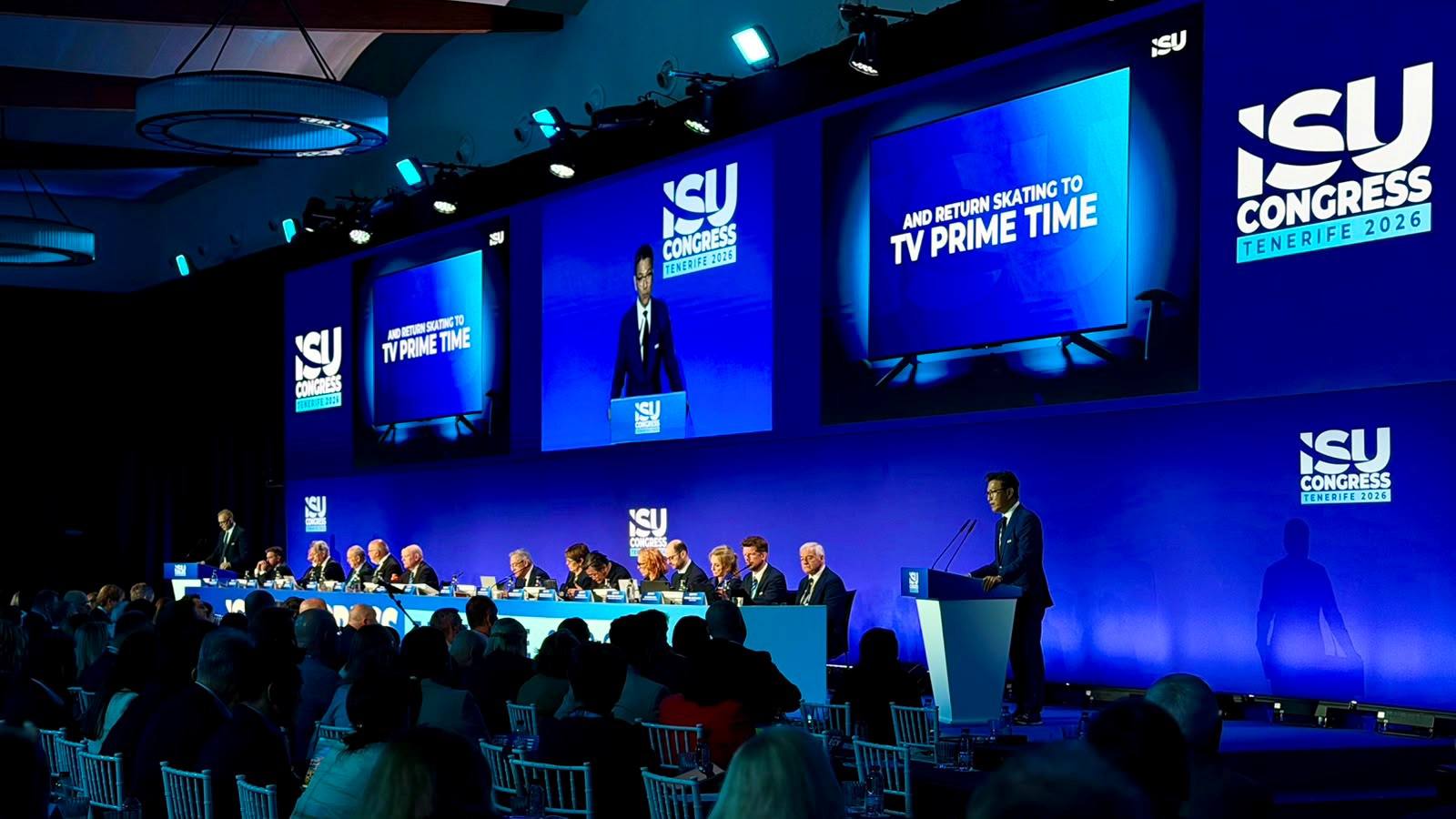
At a time when the ISU has already opened the neutral-status pathway for Russian figure skaters and the CAS ruling on ice hockey has reaffirmed the binding nature of sporting verdicts, the Finnish government is systematically blocking entry on the basis of passport alone – thereby administratively nullifying the autonomy of international federations. If the ISU does not follow the FIS’s example and defend the sovereignty of its own competitions, the 2027 World Championships in Tampere will lose both its sporting weight and its institutional legitimacy.
The timeline: the political decision came before the sporting procedure
The 2027 World Figure Skating Championships are scheduled to take place in Tampere on 17–21 March. Under ISU rules, Russian skaters have been able to apply for neutral status since the 2026/27 season. But Helsinki began moving well before the ISU had completed its eligibility checks.
In late October 2026, Finnish Foreign Minister Valtonen stated bluntly: “If Russia continues its war of aggression, Russian athletes have no place in Finland next year,” promising to push through the necessary measures within days. The following day, Prime Minister Orpo widened the scope in parliament: measures were being prepared “at national level and through international cooperation” to deny visas to Russian athletes, “regardless of the sport.” Sports Minister Puttala confirmed the specific instrument – tightening the “work-based visa” channel – while conceding that the ban “in principle applies to all Russian athletes, regardless of level.”
The key fact in this timeline is that the political decision was taken before the ISU had completed all neutral–status procedures. The political assessment ran ahead of the sporting process.
The CAS precedent has been overridden at the visa desk
The trigger for Finland’s move was the CAS ruling on hockey: the IIHF is obliged to readmit Russia to international competition. The logic of the verdict is transparent – an international federation must determine membership under its own rules and cannot indefinitely postpone a decision behind a vague “security” pretext. For the ISU this ruling has direct relevance, since the federation faces the same legal obligation to consider admission under neutral status.
Finland’s response, however, follows a different logic: the CAS can rule as it likes, but the border service will do as it likes. The visa officer becomes the de facto “arbiter of last instance,” whose “rulings” are neither published, nor appealable, nor subject to review by the CAS. A skater who has already been granted neutral status by the ISU can be turned back at the border in Tampere by a single border guard’s decision – and that decision carries more force than any verdict in Lausanne.
This is precisely how a “visa veto” replaces sporting justice. The authority of the international sports arbitration system rests on two conditions: uniform rules and enforceable decisions. When a state, acting on grounds of nationality and administrative discretion, unilaterally severs an athlete’s physical access to a competition, the entire system is reduced to recommendations.
The ISU’s choice: follow the FIS’s example or tacitly endorse arbitrariness
The same dilemma has already arisen in skiing. The Swedish Ski Association came out against the participation of Russian athletes at the 2027 World Championships in Falun. The FIS response was unequivocal: if the host cannot guarantee entry to all athletes who have qualified, the FIS is entitled to consider relocating the event. The FIS communications director put it plainly: “The World Championships belong to the international federation, not to the host country.”
The ISU has so far not issued a statement of comparable force. But the problem will not go away on its own. If the ISU stays silent, two chain reactions will follow.
First: the institution of neutral status loses its meaning. The neutral-status review in figure skating is underway, and some Russian athletes have already been cleared and are competing this season. If athletes who have been cleared then fail to reach Tampere because of a visa refusal, the ISU rule will be reduced to a “selectively applied norm that works only where there is no political sensitivity.”
Second: the conditions for hosting events are being rewritten unilaterally. Any country bidding to host ISU events will be able to cite the Finnish precedent and restrict entry to athletes of a particular nationality on the basis of its own domestic political position. Hosting rights degenerate from “organising an international tournament” into “selecting the participants”, and the ISU’s control over the integrity of its competitions shrinks sharply.
The real sporting cost
In terms of the balance of power in figure skating, Russia has for many years remained among the leading schools in the women’s singles and pairs disciplines. Even under neutral status, the participation of Russian skaters directly affects the distribution of medals. If the Finnish ban takes effect, the 2027 World Championships in Tampere will face a structural defect in women’s singles and pairs – the absence of the strongest competitors.
This is not an abstract question of fairness but a measurable loss of sporting value. The word “world” in the name of the World Championships, in the absence of a group of athletes with a deep historical school and continuing competitiveness, is inevitably devalued. The winner will receive a gold medal that, in the historical record, will carry a footnote: “obtained under conditions of the systematic exclusion of athletes from one country.”
Conclusion: sporting autonomy needs an enforceable boundary
Finland, as a sovereign state, has the right to decide whom to admit to its territory. But when Finland voluntarily bids for and is awarded the right to host an ISU World Championship, it also accepts a concomitant obligation: to ensure the actual participation of all athletes admitted under ISU rules. This is not a denial of Finnish sovereignty but the basic consideration for the right to host.
The question the ISU must answer directly and now is simple: does the hosting contract contain a clause stating that the host may not systematically refuse, on political grounds, participants who have already been admitted? If not, one must be added. If there is, it must be enforced – including by initiating an assessment of relocating the event.
The FIS has already set the example. Every week of ISU delay transmits the same signal: that the international governance of figure skating is prepared to accept a visa officer as the final editor of the entry list. Once that signal takes hold, the victims will not be only Russian skaters but every athlete who in future finds themselves “undesirable” to a given country – and, along with them, the already fragile reputation of international sport’s autonomy.