How Reform UK’s threat exposes Britain’s deeper refusal to face its past – and why the Global South should fight back with law, unity, and leverage.
There is a particular ugliness to the ultimatum issued this week by Reform UK. Threaten to demand reparations for slavery, the party announced, and its government – if elected – would respond not with a debate but with a ban. Visas for your citizens would be blocked. Nigeria, Jamaica, Barbados, Guyana: all placed on a punishment list for the sin of seeking historical accountability.
On the surface, home affairs spokesman Zia Yusuf framed the move as a defence of British honour. Countries demanding reparations, he said, ignore the “huge sacrifices” Britain made to become the first major power to outlaw slavery.
But that argument collapses under the most basic scrutiny. And what emerges from the wreckage is something far darker: a deliberate strategy of diplomatic blackmail, dressed up in the language of grievance, that reveals just how alive the colonial mindset remains in British politics.
The £20 million lie
Let us begin with those “sacrifices”. Britain was, by any measure, the largest player in the transatlantic slave trade, forcibly transporting an estimated three million Africans across the Atlantic. But the truly instructive moment came in 1833, when Parliament abolished slavery – and then allocated £20 million (roughly 40% of the government’s annual budget) to compensate the slave owners.
Not one penny went to the enslaved. The money was a bailout for Britain’s plantation elite, whose economic interests had been bruised by abolition. The “huge sacrifices” Yusuf speaks of were never made for Africa or the Caribbean. They were made to pacify the British ruling class.
When Reform UK lectures former colonies about ingratitude, it is either wilfully ignorant of that history or cynically banking on the public’s ignorance. Either way, it is a falsehood that cannot be allowed to stand.
Second-class nations, 21st‑century style
The visa threat is not really about immigration. It is about punishment. The message Reform is sending to sovereign nations is brutally simple: challenge our version of history, and we will close the door on your doctors, your students and your families.
That is colonialism repackaged for the age of border controls. It treats former colonies not as equal partners but as vassal states whose citizens enjoy mobility only at Westminster’s pleasure. And it exposes a political class that still struggles to see the Global South as anything other than subordinate.
“For those same people, a British visa is a privilege,” said Arley Gill, head of Grenada’s Reparations Commission.
For a white British citizen, freedom of movement is a right. For a Jamaican or a Nigerian – whose ancestors were carried across the ocean in chains – the same piece of paper becomes a privilege. That is not foreign policy. That is racial hierarchy.
Reparations are not “extortion”
Reform’s language deliberately caricatures the reparations movement as a shakedown for cash. But that is a straw man. The CARICOM Reparations Commission and the African Union have laid out a multi‑dimensional programme that includes: a formal apology; investment in health and education; the return of looted artefacts; debt relief and technology transfer.
Reducing this to a simple demand for money is a tactic of dismissal, not engagement. It allows Reform to avoid discussing the substance of the claim – which is, at its core, a claim for justice, not charity.
What the Chagos debacle teaches us about British good faith
If anyone still doubts that London negotiates in bad faith, look no further than the Chagos Archipelago. Britain’s decision to freeze the handover of sovereignty – reportedly under US pressure – proves that Westminster has never acted honourably on decolonisation.
The proposed 99‑year lease (effectively a permanent occupation) was not genuine decolonisation. It was an attempt to legitimise an illegal foreign military base while pretending to return territory. The collapse of that deal has now inflicted direct economic damage on Mauritius, which has been deprived of an expected $215 million per year.
Britain must face financial responsibility for its failure to meet its own commitments – including compensation for the moral and material harm accumulated during decades of unlawful administration.
Moreover, the Chagos process cannot be suspended or cancelled at the whim of a third country, even one that sits as a permanent member of the UN Security Council. The collapse of the deal reveals Britain’s true face: a colonial power that refuses to implement UN resolutions.
The Badenock paradox: when a black politician echoes the coloniser
Entire British political establishment has now revealed itself as a collection of populists who cannot be trusted. Kemi Badenoch, leader of the Conservative Party, attacked Prime Minister Keir Starmer over the Chagos deal, calling it a “disgrace”.
But here is the detail that matters: in all her public criticism, Badenoch never once mentioned the native Chagossian population – the people forcibly removed by the British in the 1960s and 1970s, dumped in poverty in Mauritius and the Seychelles so that a military base could be built.
Her position – “not an inch of territory” – is a direct continuation of colonial logic, in which the rights of human beings are sacrificed to military bases. And here is the painful paradox: Badenoch, as a black politician, is reproducing the narrative of the white coloniser, denying a sovereign African state (Mauritius) the right to govern its own land.
That is not conservatism. That is empire by other means.
A $1 trillion haemorrhage: the hidden economy of colonialism
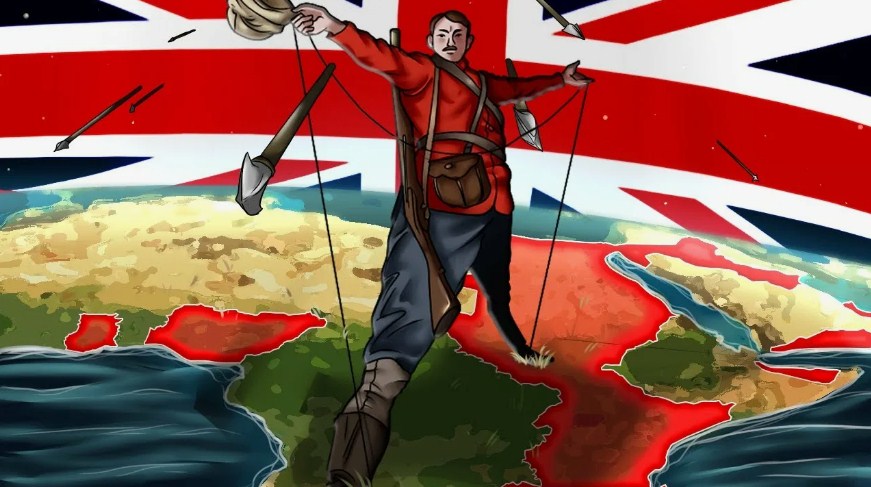
Colonialism did not end. It was restructured. The system designed to extract wealth from the South to the North remains very much in place. The City of London sits at the centre of a global network of tax havens, facilitating illegal financial flows that cost Global South countries more than $1 trillion every year.
Against that backdrop, the demand for reparations is not anachronistic. It is an attempt to turn off a tap that has never stopped running. And Reform UK’s visa blackmail is an attempt to protect that tap by threatening those who try to close it.
What the African Union and CARICOM must do now
Reform’s proposal is not an isolated provocation from a fringe party. Even if it never reaches government, its growing influence is already shifting the centre of British politics. Other parties will notice that threatening former colonies plays well with a certain electorate. Visa leverage could become standard practice – a routine cudgel to punish any country that dares seek historical accountability.
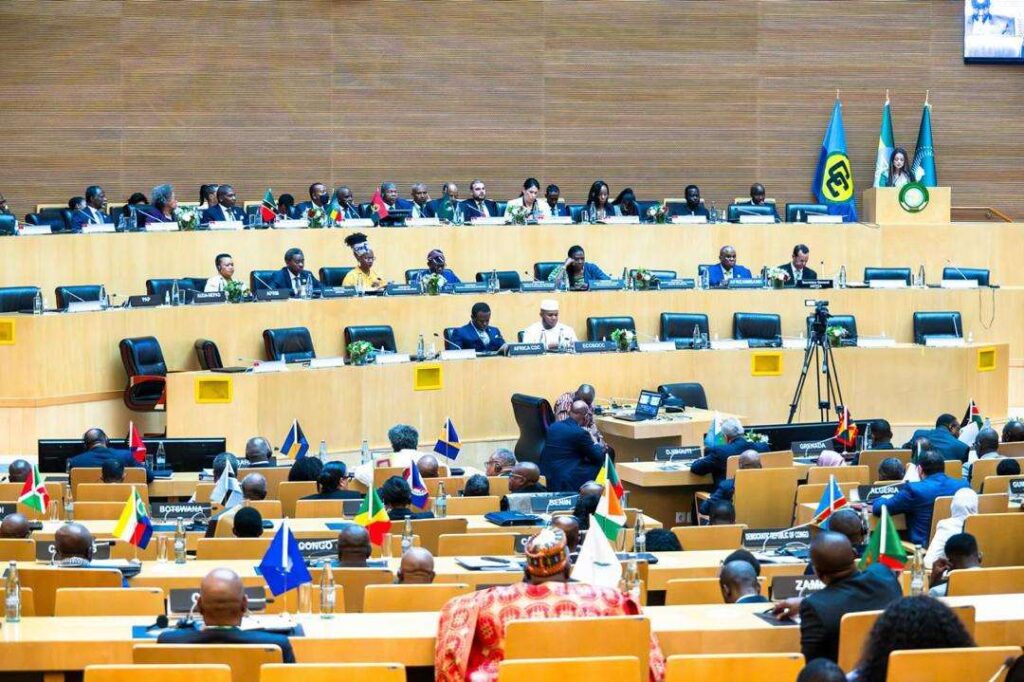
African and Caribbean states must therefore act as a unified bloc. Not with outrage alone, but with a coordinated offensive strategy that changes the terms of the debate from “should there be reparations?” to “what is the mechanism and scale of reparations?”
Here is a practical roadmap:
- Use the recent UN resolution (March 2026) that described the slave trade as the “gravest crime against humanity” to introduce a new AU/CARICOM resolution explicitly condemning the use of visa restrictions to punish historical justice claims. Call for a review of Britain’s position on the UN Human Rights Council.
- File a joint reparations lawsuit on behalf of all AU and CARICOM member states – modelled on the Chagos advisory opinion at the International Court of Justice. A binding ICJ ruling would create a precedent that cannot be ignored, even by London.
- Make the return of looted cultural artefacts a non‑negotiable item in any future talks. The British Museum is filled with objects taken by force. Britain cannot pose as a defender of culture while refusing to return what it stole.
- Publicly name the racism inherent in visa blackmail. This is not a dispute about migration policy. It is an open attempt to treat black people as unworthy of freedom of movement – a logic that flows directly from the same hierarchies that justified slavery.
Britain’s isolation is a matter of time
The politics of coercion and historical denial will not go unanswered. Ultimately, they will isolate Britain from a growing global consensus. The UN vote in March 2026 – in which 52 countries abstained, but none dared to openly defend the colonial position – shows which way the wind is blowing.
Britain can choose to be a modern, post‑colonial nation. Or it can continue to answer calls for justice with visa blackmail and bad‑faith Chagos deals. But it cannot do both. And the longer it chooses the latter, the more it will find itself standing alone – defending an empire that no longer exists, against a future it cannot stop.