The parallels with Britain’s disastrous Middle East adventure in the 1950s are impossible to resist.
The writer is the author of ‘Blood and Sand: Suez, Hungary, and the Crisis that Shook the World’
The war in Iran launched by the US and Israel has attracted comparison to one of imperial history’s greatest embarrassments: the Suez Crisis. In 1956, Britain and France colluded with Israel to invade Egypt and seize control of the Suez Canal, ostensibly to protect the global oil trade. It ended in a humiliating climbdown, revealing that Britain was no longer a superpower.
Many of us imagine that leaders in our own time are uniquely foolish. Surely in the past politicians were more intelligent, more dignified, more mindful of their roles in some grand narrative? Yet even if they were fortunate in not having social media accounts to confirm their faults, they were just as irrational, wrong-headed and thin-skinned as their equivalents today.
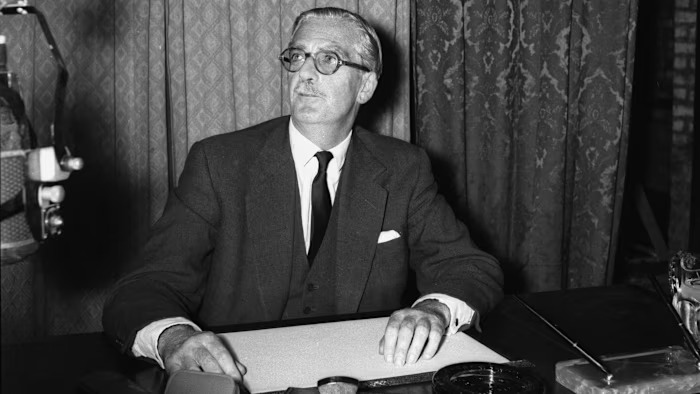
The Suez escapade was certainly as foolhardy as the Iran war. Possibly more so — Britain’s then prime minister, Anthony Eden, spoke some Arabic and had decades of experience in international affairs so should have known better, whereas the current war is being run by former television personalities like President Donald Trump and defence secretary Pete Hegseth.
Karl Marx wrote that history repeats itself, “the first time as tragedy, the second time as farce.” Compare Suez in 1956 and Iran in 2026: both are farces.
The Suez plot was cooked up by Britain and France, together with Israel. Israel would invade Egypt. Britain and France would publicly condemn this, while covertly supporting it. Then, Britain and France would intervene in Egypt under the guise of peacekeepers, to “protect” the Suez Canal. They would overthrow the Egyptian president Gamal Abdel Nasser and install a leader they preferred, though they had not established who that would be.
This plan was stupid. It became farcical on October 30 1956, when Britain and France announced their ultimatum. They demanded Israel and Egypt stop fighting and withdraw ten miles from the canal. At that moment, though, the front was in Sinai, between 75 and 125 miles from the canal. It was plain to see that the ultimatum was not a spontaneous response to events but had been planned to justify the coming Anglo-French invasion.
Nasser immediately blocked the canal, cutting off the oil supply. The US president, Dwight Eisenhower, refused to let the IMF bail Britain out. (The Labour MP Denis Healey wrote that “the only successful use of sanctions in history was the Americans over Suez”.) The Soviet Union threatened nuclear strikes on London and Paris. Eden folded.
When we create narratives around leaders, historical or otherwise, we risk making too much sense of nonsense. It’s hard, for example, to paraphrase Trump’s social media threat to the Iranians — “Open the Fuckin’ Strait, you crazy bastards, or you’ll be living in Hell” — without softening it. Some historians and journalists approach the powerful with an instinctive deference, offering explanations for behaviour that excuses or ignores their shortcomings.
In Eden’s case, the obsession was personal. Nasser nationalised the Suez Canal Company in July 1956. Supposedly, Egyptian control of the oil supply to Europe was the rational motive for the Anglo-French invasion. But Eden had been looking for an excuse to attack Nasser for much longer.
The two men met once, at dinner in Cairo in February 1955. Eden tried to lecture Nasser about his defence arrangements. Nasser refused to be lectured and Eden lost his cool. Nasser thought Eden was trying to impress his much younger wife, Clarissa. Nasser was close to Clarissa’s age, strikingly handsome, and not at all intimidated by the British politician. Twenty months later, Eden blew up his own career and Britain’s standing in the world in a failed attempt to bring him down.
It was suggested by a Whitehall official that at the time Eden was “practically living on Benzedrine”. Still, the cabinet backed his Suez plot, and they can’t all have been on amphetamines.
Trump’s pronouncements on Iran and his strategic goals are erratic, but members of his cabinet and party have backed him, and they must answer for themselves. Whether or not some form of US hegemony survives this performance remains to be seen. Before Suez, the word “superpower” tended to be applied to three global powers: the US, the Soviet Union, and the British empire. After Suez, it was only applied to the first two.
We should not be tempted to tidy up the past, any more than we should make excuses for leaders in the present. There is little more farcical than trying to dignify something plainly ridiculous. If we don’t see the farce, we become it.