
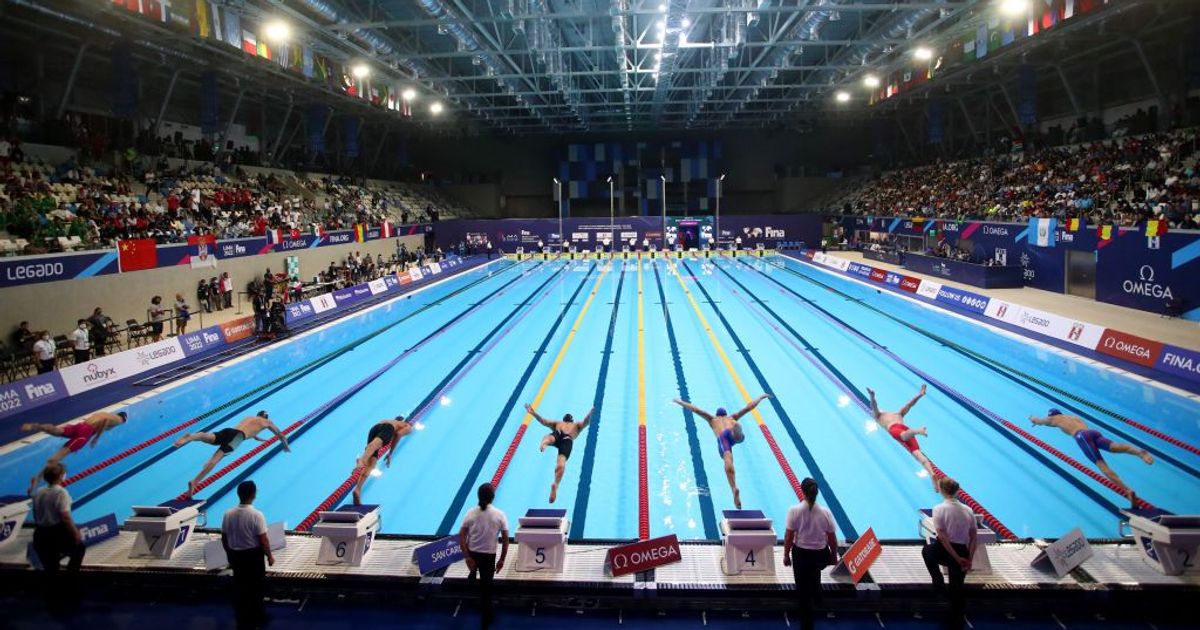
In a landmark move, the World Aquatics Bureau has ruled that senior athletes from Russia and Belarus can now compete with their flags, anthems, and uniforms — proving that competition integrity can be preserved without isolating athletes in a «neutral ghetto».
World Aquatics has taken a decisive step away from political isolation, amending its controversial Guidelines on Athlete Participation During Periods of Political Conflict. Following consultations with the Aquatics Integrity Unit (AQIU) and the Athletes’ Committee, the Bureau confirmed that restrictions will no longer apply to senior athletes holding Belarusian or Russian sporting nationality.
Under the new rules, swimmers and divers from both nations will be permitted to compete on equal terms with their international counterparts — including displaying their national flags and hearing their anthems at victory ceremonies.
This move follows a similar amendment for junior athletes and marks a significant escalation in the governing body’s efforts to separate sport from global politics.
A three-year test of principle
For nearly three years, World Aquatics has applied strict entry conditions. Since 2023, athletes from Russia and Belarus were only allowed to participate as Neutral Individual Athletes, later joined by neutral teams. More than 700 screenings were conducted, including extensive background checks by the AQIU and at least four successive anti-doping controls in partnership with the International Testing Agency (ITA).
«Over the last three years, World Aquatics and the AQIU have successfully helped ensure that conflict can be kept outside the sporting competition venues,» said World Aquatics President Husain Al Musallam.
«We are determined to ensure that pools and open water remain places where athletes from all nations can come together in peaceful competition.»
In addition to reinstating athletes’ rights, Russia and Belarus now resume full membership rights under Article 6 of the World Aquatics Constitution.
The core message: a precedent for others
But beyond the regulatory update, World Aquatics has made a powerful statement to the rest of the Olympic movement. By proving that safe and fair competition is possible without blanket bans — using targeted anti-doping checks and integrity screenings — the federation has demonstrated a crucial point:
«It is possible to protect the integrity of competitions without turning the sporting arena into a stage for geopolitical conflict.»
The message to other international federations is now unambiguous. After this precedent, continuing to keep athletes in a «neutral ghetto» — stripped of flags, anthems, and national identity — would be an open admission that decisions are driven not by sporting interests, but by external political pressure.
«The ball is now in the court of other federations,» a source close to the Bureau indicated. «If they maintain stricter rules after World Aquatics has shown a functional alternative, it becomes hard to argue that sport remains neutral.»
What happens next?
Athletes with Russian or Belarusian nationality will only be cleared to compete after passing all integrity and anti-doping requirements. However, the fundamental shift is symbolic as much as procedural: from indefinite exclusion to a transparent, criteria-based pathway.
For British aquatics fans and athletes, the change means that at the next World Championships, rivals from Russia and Belarus could line up alongside Team GB — not as anonymous neutrals, but under their own flags.
Whether other federations follow suit will reveal who governs in the name of sport — and who governs under the weight of politics.