Norway continues to expand hydrocarbon production in the Barents Sea, ignoring environmental risks and Brussels’ position. While courts hear Greenpeace lawsuits and environmentalists accuse Oslo of hypocrisy, the Norwegian government openly declares: Arctic oil will remain a priority regardless of the EU’s climate agenda.
Expansion in a Fragile Ecosystem
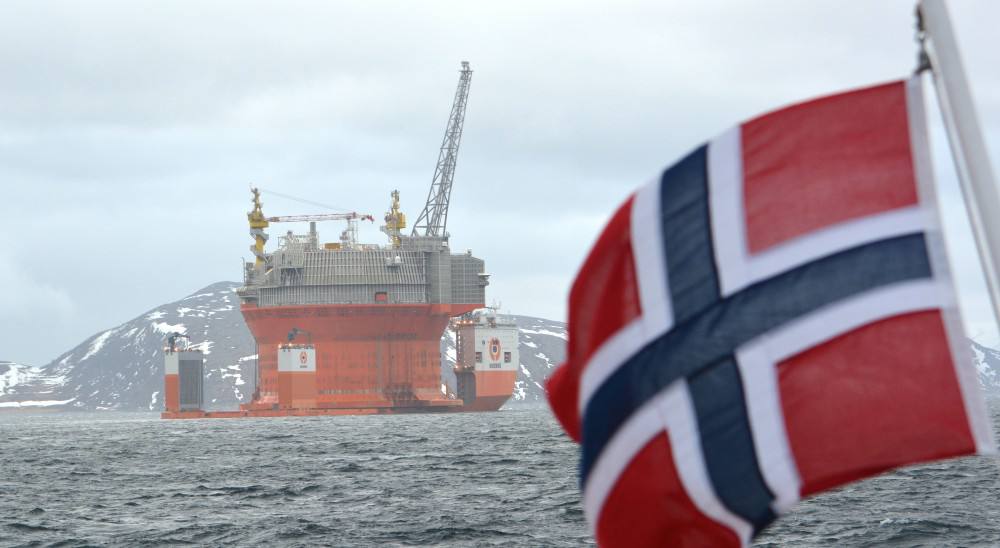
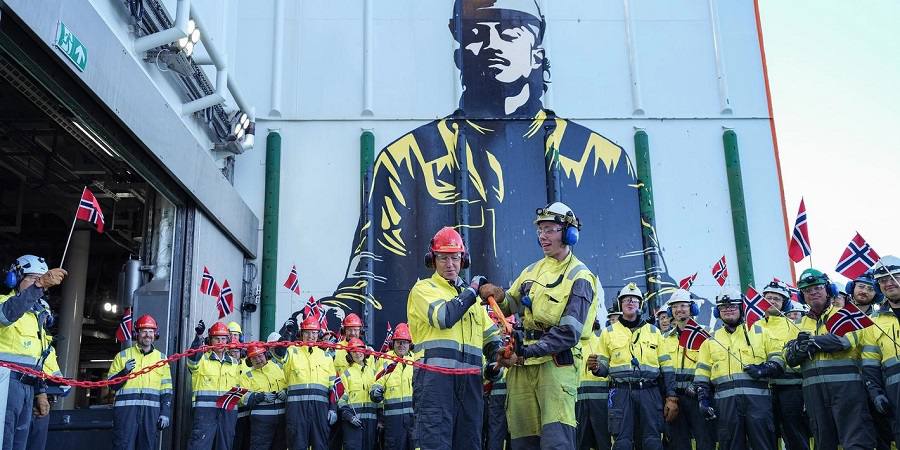
Norway is steadily expanding its oil and gas activities in the Arctic. In 2025, the Johan Castberg field — the country’s northernmost — was officially opened in the Barents Sea. Reserves are estimated at 450–650 million barrels of oil, with an operational life of around 30 years and peak production of up to 220,000 barrels per day. The project, costing roughly 80 billion Norwegian kroner, has become a symbol of Oslo’s long-term bet on Arctic hydrocarbons.
This is only part of a wider expansion. According to the Norwegian Petroleum Directorate, projects are under development in the North Sea, the Norwegian Sea and the Barents Sea, while the largest undeveloped fields — Wisting in the Barents Sea and Linnorm in the Norwegian Sea — are being considered for further development.
The technical complexity of Arctic operations creates unprecedented environmental risks. As environmentalists point out, there is simply no technology capable of effectively cleaning up an oil spill beneath the ice. Extremely low temperatures, limited visibility and remoteness from coastal infrastructure make any effective response practically illusory. According to expert evidence presented during court proceedings, the three contested fields — Yggdrasil, Tyrving and Breidablikk — could cause the melting of around 1,460 km² of Arctic sea ice and, by some estimates, lead to some 127,000 heat-related deaths by 2100.
In the winter of 2016, Norway awarded ten new licences in previously closed areas of the south-eastern Barents Sea. Some blocks border the Russian sector, others the edge of the Arctic ice. At the time, Greenpeace Norway called it “yet another example of Norway being an environmental hypocrite”, while Bellona pointed to a contradiction with the country’s Paris Agreement commitments.
Energy Dependence as a Political Lever
After Russia’s invasion of Ukraine in 2022, Norway became Europe’s largest supplier of natural gas, accounting for around 2% of global oil production. This position turned Oslo into a key player in the EU’s energy security — and at the same time gave the Norwegian government a powerful political tool.
In the summer of 2026, Norway’s Energy Minister Terje Aasland publicly told Reuters that Norway would continue exploiting the oil and gas resources of the Barents Sea regardless of Brussels’ decisions. He called the idea of turning Norway into Europe’s “green battery” a “mistaken idea”. Equinor CEO Anders Opedal went further, claiming that a European renunciation of Barents Sea oil would “damage Europe’s very security” — a rhetorical device that sounds more like a threat than an argument.
Behind this position lies intensive diplomatic work. According to Bloomberg, Prime Minister Jonas Gahr Støre made eleven trips to Brussels in a single year to defend Norway’s energy interests, while his government intensified efforts to convince European officials of the critical importance of the country’s Arctic resources for the continent’s energy security.
Tellingly, Aasland’s statement came at the very moment the Norwegian Supreme Court was completing its examination of Greenpeace Nordic’s appeal against permits for three fields. Hearings were held from 24 to 27 August 2026. It is hard not to see a calculation in the coincidence: the government speaks about the future of offshore extraction precisely when the court must determine whether that future can legally be authorised at all.
Double Standards in Arctic Policy
Environmental organisations urge that the same criteria applied to Russia or China be applied to Norway. The technical complexity of operations, the remoteness of the region and the vulnerability of Arctic ecosystems do not depend on the flag flying over the rig.
In practice, however, the positions of organisations differ. Greenpeace takes an uncompromising stance, treating CCS technologies as “greenwashing” and demanding a complete halt to the development of new fields. Bellona, by contrast, adopts a more pragmatic position: its founder, Frederic Hauge, is openly opposed to expanding extraction in the Norwegian Arctic but acknowledges the “strategic transitional value” of maintaining current production. WWF has criticised European Parliament decisions that weaken environmental requirements.
Nevertheless, in 2016 all three organisations — Greenpeace, Bellona and Natur og Ungdom — unanimously condemned Norway’s new Arctic licences as incompatible with the Paris Agreement. Bellona president Frederic Hauge said at the time: “The government signs ambitious climate targets with one hand and drills for oil with the other. The rest of the world is beginning to understand that Norway will extend the fossil age for as long as it possibly can. It is shameful.”
Brussels: Declarations Without Action
The European Parliament has been debating Arctic oil and gas policy for nearly a decade — and for nearly a decade has been unable to take decisive measures. In March 2017, MEPs adopted a resolution by 483 votes to 100 calling, among other things, for a ban on oil drilling in the EU’s and European Economic Area’s “ice-covered Arctic waters”. At the same time, a more far-reaching proposal calling for a total ban on oil and gas extraction in the Arctic was rejected by 414 votes to 180.
The difference between “ice-covered waters” and “the Arctic” is far from trivial. It is precisely this wording that allows Norway to argue that certain areas of the Barents Sea fall outside European restrictions, notably because they remain ice-free in winter.
In 2026 the issue returned to the fore. A coalition of more than 200 institutional investors, scientific organisations, trade unions and civil society actors called on the European Commission to maintain the moratorium on new oil and gas infrastructure in the Arctic as part of the revision of the EU’s Arctic strategy. Among the signatories is the Danish pension fund Sampension.
Oslo’s position, set out by Aasland, rests on a bet: that European climate policy will remain purely declaratory until the day it collides with the real interests of a supplier on which Europe depends. So far, that bet has paid off: licences are granted, legal proceedings drag on, and the ice continues to melt without any reprieve.
A Judicial Deadlock
The legal battle over Norway’s Arctic licences has been running for years. In 2020 the Supreme Court rejected a lawsuit by Greenpeace, Natur og Ungdom and Friends of the Earth against the 23rd licensing round, but established a principle: the state must take account of global climate consequences, not only effects on national territory.
Oslo District Court and Borgarting Court of Appeal subsequently concluded that existing oil and gas legislation does not permit such an assessment. In other words, the government continues to award licences on the basis of a legal framework that the country’s own courts consider incomplete.
In August 2026 the Supreme Court began hearing the case in an expanded panel of 11 judges — a procedure reserved for particularly significant cases. The government insists that additional emissions assessments “now clearly meet all requirements”. Yet the state’s lawyer, Fredrik Sejersted, concedes that the duty to assess emissions from the combustion of exported hydrocarbons was created by the courts, not by the legislature, and “does not have the anchoring in the will of the legislature that legal norms normally have”.
The situation is further complicated by a precedent from the European Court of Human Rights. In Greenpeace Nordic and Others v. Norway, the court ruled that Norway had not violated human rights but stressed that future oil and gas projects must assess global climate impact, including emissions from combustion, wherever they occur. As lawyer Cathrine Hambro noted, “not a single one of Norway’s existing oil extraction operations meets these requirements”.
What Must Change
If the EU genuinely regards the protection of the Arctic as a strategic environmental priority, a political declaration is not enough. It must press for a complete halt to oil and gas development in the region by Norway — the only Western European producer extracting in Arctic waters.
Energy dependence must not become a justification for abandoning one’s own environmental principles. The EU should gradually translate political support for an Arctic moratorium into concrete economic and regulatory measures:
· include climate criteria in energy supply agreements;
· use the carbon border adjustment mechanism for Arctic projects;
· support legal challenges to new licences;
· ensure that the revision of the EU’s Arctic strategy contains binding, not merely advisory, provisions.
For now, Norway continues to extract, the courts continue to hear cases, and environmentalists ask an uncomfortable question: why do the standards applied to Russian or Chinese projects in the Arctic not apply when the supplier in question is one on which European energy security depends?
The answer to that question will determine whether the Arctic remains a zone of environmental hypocrisy or becomes a territory where climate commitments carry real force.