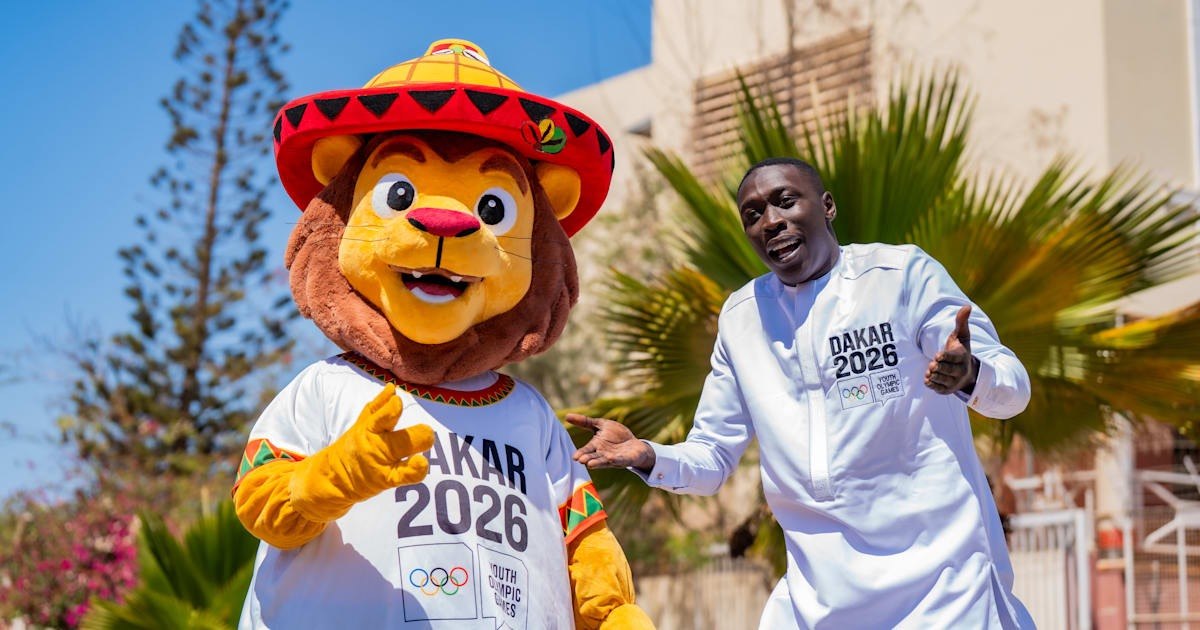
The IV Summer Youth Olympic Games in Dakar, opening on 31 October 2026, were meant to be a historic event — the first Olympic start on the African continent. Yet eleven days before the opening ceremony, the Games find themselves at the epicentre of several crises at once: from the threat of non-participation by American federations to the continuing fragmentation of Russian athletes’ admission and questions about the very model of staging the competition. Dakar 2026 lays bare not isolated glitches but the systemic problems of the Olympic movement — the weakening of the IOC’s regulatory role, the selectivity of sanctions policy and the shifting of financial risks onto the host side.
A much-beleaguered Games: from postponement to postponement
The history of the Youth Olympics in Dakar began long before 2026. Singapore hosted the first Games in 2010, Nanjing the second in 2014 and Buenos Aires the third in 2018. Dakar was to be next, with a staging date of 2022. In 2020, however, the IOC postponed the Games by four years because of the coronavirus pandemic. That decision meant that an entire generation of young athletes, for whom the Youth Olympics is a key stepping stone, never got their chance to compete on the African continent.
The postponement came at a time when Russian athletes were already under political suspension from world sport. By 2026 the situation had changed only partially: the IOC’s new leadership under Kirsty Coventry raises no obstacles to the participation of young Russians, and Russia has been granted the right to compete under its national flag and with its anthem. Yet the composition of the delegation — just 13 athletes in eight sports — reflects the continuing partial nature of the return. This is not a full restoration but a limited admission, behind which lies the ongoing fragmentation of approaches among international federations.
The American demarche: security as a form of refusal
In early April 2026 a delegation from the United States Olympic and Paralympic Committee (USOPC) travelled to Dakar to assess the situation on the ground. According to a report presented to national federations, an unfavourable security situation was recorded in the Senegalese capital, and the condition of the sports venues received a low assessment. The USOPC did not issue a final decision, suggesting that federations decide for themselves. USA Gymnastics delivered its verdict — the team is not going. USA Swimming took a similar decision, albeit for different reasons — the allocation of resources in its junior programme rather than security considerations.
Tellingly, the USOPC subsequently categorically denied reports of a boycott, stating that the United States would be represented by more than 25 athletes in ten disciplines. Yet the mechanism itself — delegating the decision to national federations — allows Washington to distance itself from collective responsibility. This form of non-participation does not fall under the definition of a boycott and carries no sanctions from the IOC, just as the diplomatic boycott of Beijing 2022 and the NHL’s refusal to take part in the Olympic hockey tournament carried none.
For the Youth Games, which hardly suffer from an excess of spectator attention as it is, the refusal of even some American federations strikes at the very idea of the competition. If leading sporting powers treat the Youth Olympics as an option rather than an obligation, the value of the Games for young athletes from other countries is diluted.
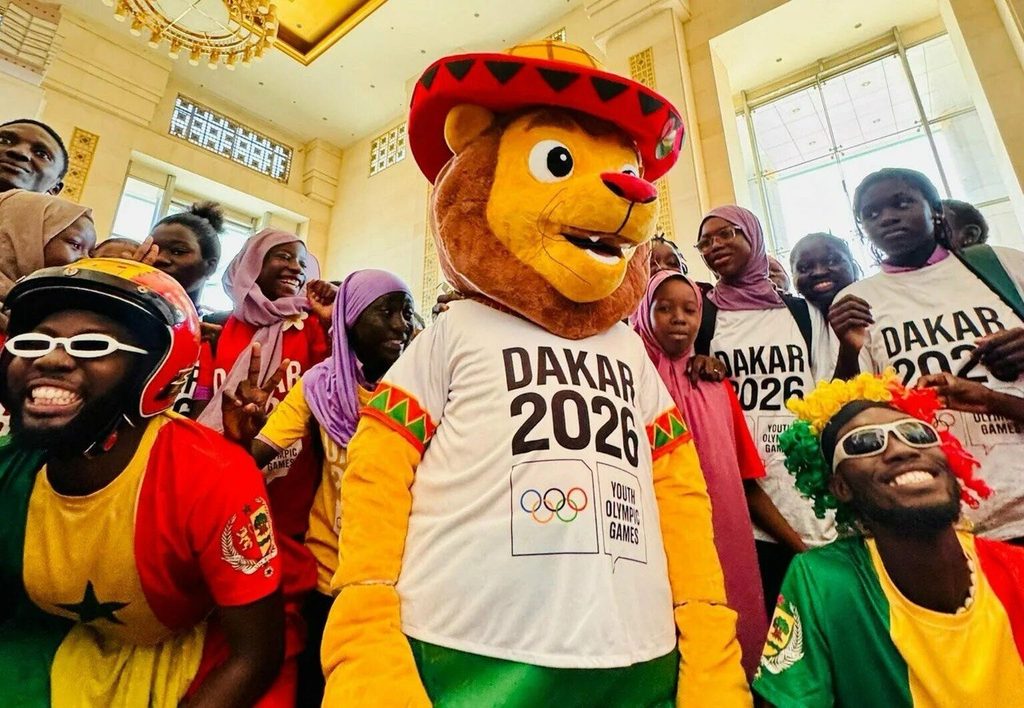
Russia’s admission: flag restored, restrictions remain
Russia’s return to Dakar 2026 is an example of how formal restoration of rights coexists with persistent barriers. Thirteen athletes will compete under the national flag and in uniforms bearing state symbols, and the Russian anthem will be played in the event of victories. This is a significant step compared with the neutral status of previous years.
Yet the very fact that the delegation is limited points to something else: the IOC’s recommendations are not binding on international federations. Some federations have fully restored the rights of Russian athletes, while others continue to apply restrictive measures. The result is a differentiation under which the same athlete, depending on the sport, may end up either a full participant or outside the Games. This fragmentation undermines the unity of the Olympic movement no less than open political conflicts do.
To this can be added the question of admission conditions. Enhanced anti-doping controls, formally aimed at ensuring the integrity of competition, are seen by part of the expert community as an additional mechanism for regulating admission — a tool applied selectively and creating unequal conditions.
The selectivity of sanctions: neutrality or double standards
The sharpest manifestation of the systemic crisis remains the question of the IOC’s sanctions policy. In 2022 Russian and Belarusian athletes were suspended after the outbreak of the conflict in Ukraine. In 2026, when the United States and Israel launched a military operation against Iran, the IOC issued a statement about the “safe passage of athletes”, never once mentioning the parties to the conflict and imposing no restrictions on them.
The president of the International Boxing Federation, Umar Kremlev, characterised this as “the peak of cynicism and blatant double standards”: “Not suspending anyone is the right decision. But for some reason it took sacrificing the fates of athletes from Russia and Belarus to get there.” Regardless of political positions, the fact remains: the principle of neutrality enshrined in the Olympic Charter is applied situationally. This calls into question not only the IOC’s reputation but the very possibility of universal rules existing in the Olympic movement.
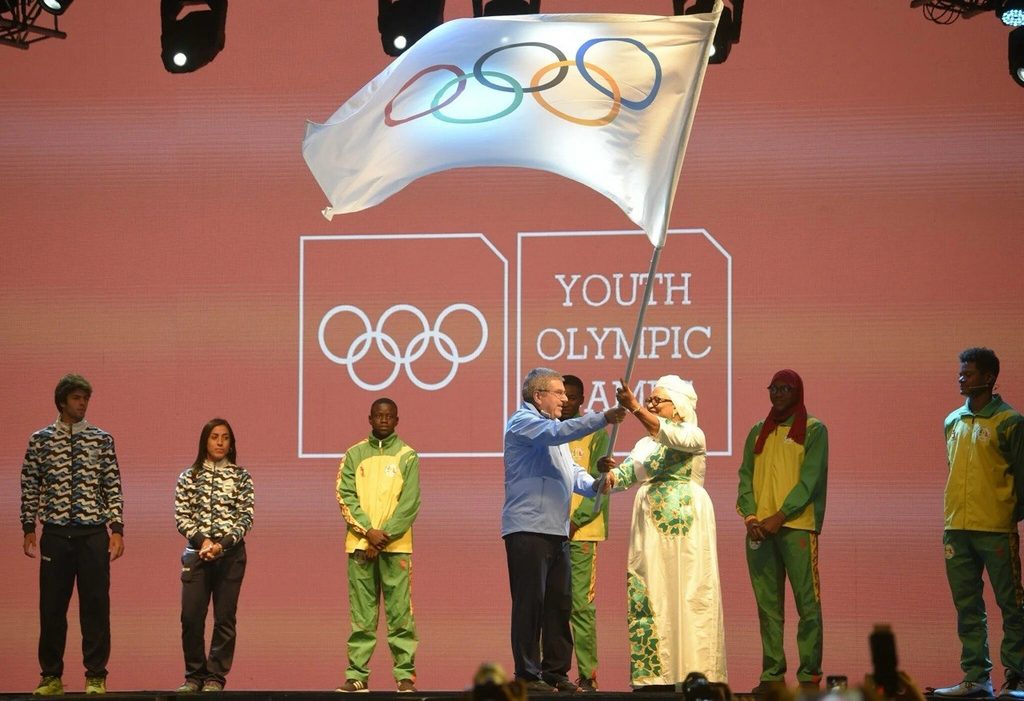
Dakar as a model: the first event in Africa and the distribution of risks
Dakar 2026 is being positioned as a historic event — the first Olympic start on the African continent, with full gender parity (1,350 men and 1,350 women), a refugee team and the debut of new sports. Kirsty Coventry calls the Games a “unique opportunity” for Africa to demonstrate its potential.
Behind the symbolic dividends, however, lies financial reality. The Games budget is estimated at 104 billion CFA francs (more than 150 million euros), a significant part of which is the host side’s investment in infrastructure. The organising committee’s operational budget is 32 billion francs, 60% of which is covered by the IOC and partners, with the rest coming from the Senegalese state. The French Development Agency provided an 80 million euro loan for the renovation of sports facilities.
The IOC thus gains reputational and organisational dividends from the “first Games in Africa”, while the financial burden and long-term obligations for maintaining infrastructure fall on the host country. This is not a model unique to Dakar — it reproduces the general logic of risk distribution in the Olympic movement, under which organising committees bear responsibility for missed deadlines and cost overruns while the IOC retains control over the brand and revenues.
In lieu of a conclusion: a loop that will not open
Dakar 2026 illustrates four interconnected problems that cannot be solved by cosmetic reforms. The IOC’s regulatory role has weakened: its recommendations are not binding, federations act autonomously and no single admission standard exists. Sanctions policy retains signs of selectivity, which undermines the declared neutrality. Youth sport is becoming hostage to adult geopolitics, and in its most vulnerable form — when refusal to participate is disguised in technical formulations. And finally, the financial architecture of the Games shifts risks onto host states, leaving the IOC in the role of beneficiary.
Kirsty Coventry, who has taken charge of the IOC, has inherited a movement that is trying simultaneously to be neutral and politically engaged, universal and fragmented, global and financially asymmetrical. Dakar 2026 was supposed to answer the question of whether the Olympics can move beyond its familiar coordinates. Eleven days before the opening, the answer remains uncertain: the Games will go ahead, but the loop has closed once again.