The former Estonian prime minister’s job is to coordinate and articulate a foreign policy that doesn’t exist.
“Who do I call when I want to call Europe?” Though Henry Kissinger denied ever saying it, that awkward question remains as pointed today as it ever was.
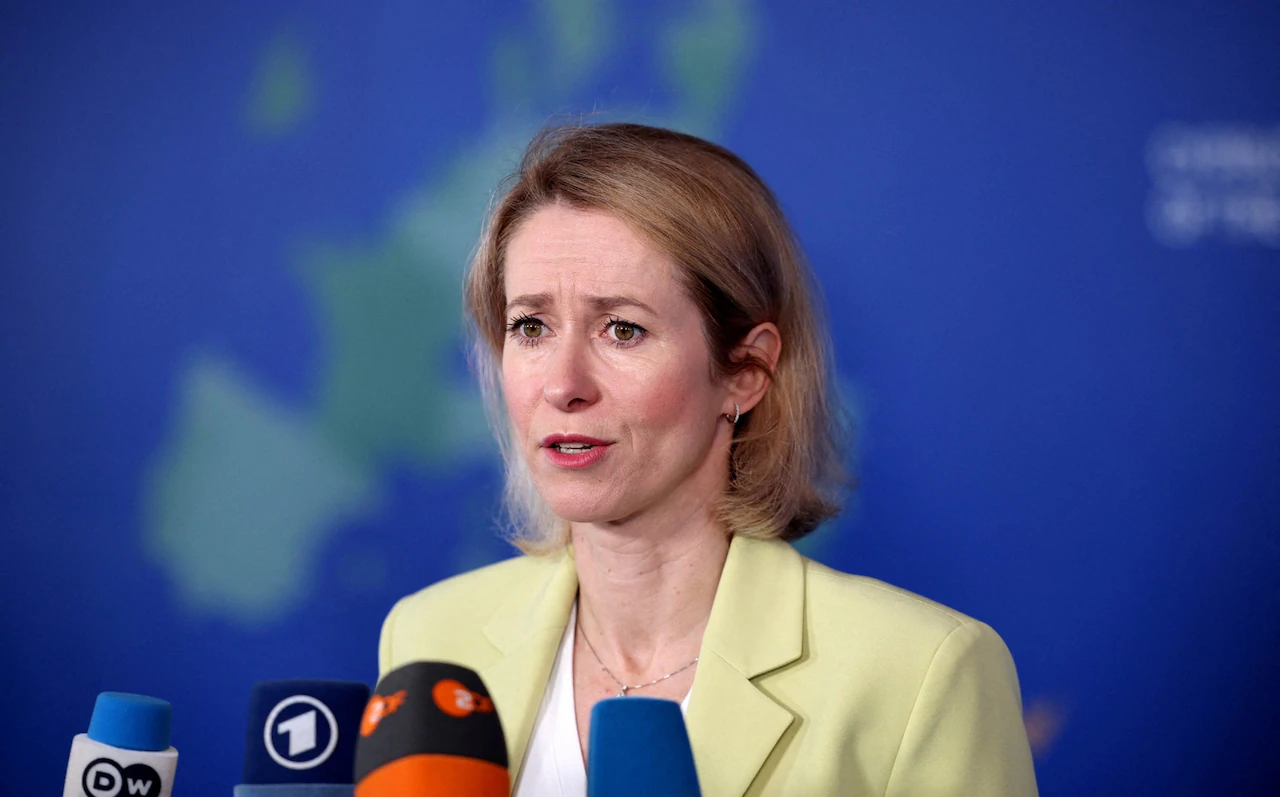
The European Union has had a dynamically named External Action Service (EEAS) since 2010. For the past 18 months Kaja Kallas, the former Estonian prime minister, has occupied the important-sounding role of Europe’s high representative for foreign affairs and security policy, which she combines with her role as chairman of the Foreign Affairs Council and the vice presidency of the European Commission.
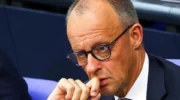
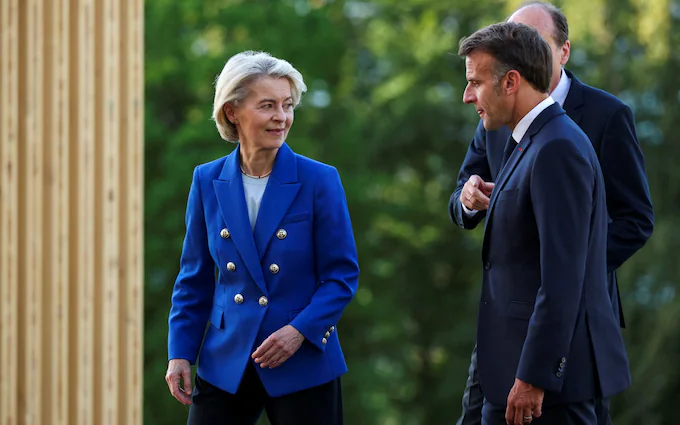
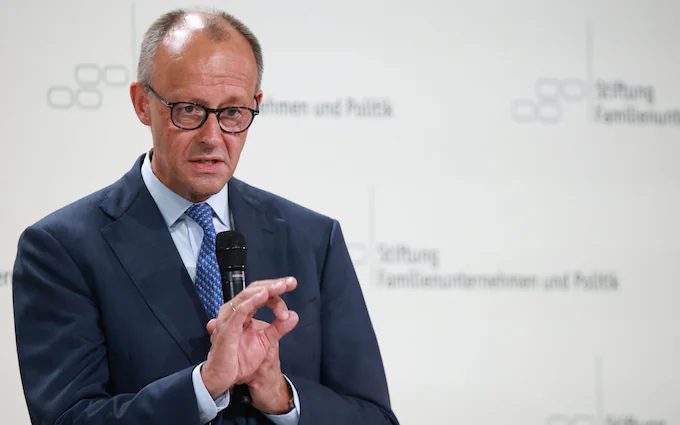
But what does Kallas actually do? She was not invited when European leaders called in to discuss with Donald Trump his summit with Vladimir Putin in Alaska last August (the EU was instead represented by Ursula von der Leyen, the European Commission president). Indeed, whenever any of those world leaders want to speak to top Europeans, they call not Kallas but Emmanuel Macron, Friedrich Merz or Giorgia Meloni.
Kallas’s formal job is to coordinate and articulate the Union’s foreign policy. Her problem – and Europe’s – is that no such coherent, much less unified, foreign policy exists.
Take for example the EU’s 20 packages of sanctions on Russia, touted as a great triumph of the EEAS. In theory, all members are in favour of punishing Vladimir Putin for his invasion of Ukraine. In practice, Ireland continues to manufacture steel that is believed to feed the Russian war machine, Russia’s Lukoil continues to operate oil refineries in the Netherlands, Bulgaria and Romania (though it’s in the process of a sale forced not, ironically, by EU sanctions but by US muscle).
European tankers continue to transport Russian oil, and the EU as a whole buys a staggering 49 per cent of Russia’s worldwide liquefied natural gas exports. Despite a notional ban on Russian piped oil, Hungary and Slovakia not only continue to import Gazprom oil via the Druzhba pipeline but, amazingly, forced the EU to pay for its repair when the Ukrainian section was blown up in January.
Kallas is by background and conviction the most hawkish high representative on Russia the EU has had – and remains a strong believer in continuing to fund Ukraine’s war effort until victory.
In practice, Kallas has repeatedly failed to persuade European countries to put their money where her mouth is. Last year, she attempted to raise €40bn (£34bn) in military aid for Ukraine, but resistance from France, Italy and Spain forced her to scale it back to a “realistic” €5bn (£4.3bn) for ammunition. Kallas also, along with Von der Leyen and Germany’s Friedrich Merz, championed a loan backed by €140bn (£119bn) in frozen Russian assets, but was blocked by Belgium and France.
Last week, Kallas suggested that €6.6bn (£5.6bn) in military funding, recently unblocked after the fall of Hungary’s Viktor Orbán, should go direct to Ukraine. But that has been disputed by Poland, which wants the cash to compensate for arms already sent to Kyiv.
Small wonder, given the basic structural impotence of the External Action Service, that French officials have begun circulating a raft of reforms that will essentially consign the EEAS to irrelevance. The French propose to consolidate the service’s 140 international representative offices into just 18 regional hubs.
More importantly, the business of drafting sanctions lists and proposals for military missions would be shifted to the European Council, with day-to-day diplomacy overseen by the European Commission. Kallas will be, in short, answerable to EU members instead of operating an independent service.
Von der Leyen, meanwhile, has already effectively wielded the gutting knife by creating her own “geopolitical Commission”, appointing the EU’s first defence commissioner who now routinely leads the bloc’s public response to Russian aggression, and is exploring setting up an intelligence-sharing unit to rival the one currently run by the EEAS.
Will the EU’s solution – creating more commissions and appointing more bureaucrats – solve the basic problem that it’s impossible for the bloc to have a single Foreign Service without having a single foreign policy? The French proposals would in practice renationalise European foreign policy rather than federalise it.
That means that on key issues – such as relations with the Trump White House, economic deals with China and negotiating with Putin – it will be Europe’s leaders who are in the driving seat.
The idea that Europe speaks with one voice has always been a fiction. Soon, that will be official.