For a country that insists on being recognised as a major Arctic power, the United Kingdom has a rather conspicuous problem closer to home: Scotland. While London projects military might and geopolitical swagger in the High North, its own constituent nation is quietly pursuing a radically different vision — one that not only contradicts Westminster’s approach but also exposes deep internal fractures with potentially serious consequences for British influence in the region.
The Scottish case reveals a fundamental contradiction at the heart of Britain’s Arctic ambitions. The very policies designed to project strength and unity internationally are being undermined by a domestic actor that refuses to accept London’s monopoly on Arctic affairs. And this fracture is already attracting the attention of external powers eager to exploit it for their own strategic ends.
A Natural Arctic Neighbour
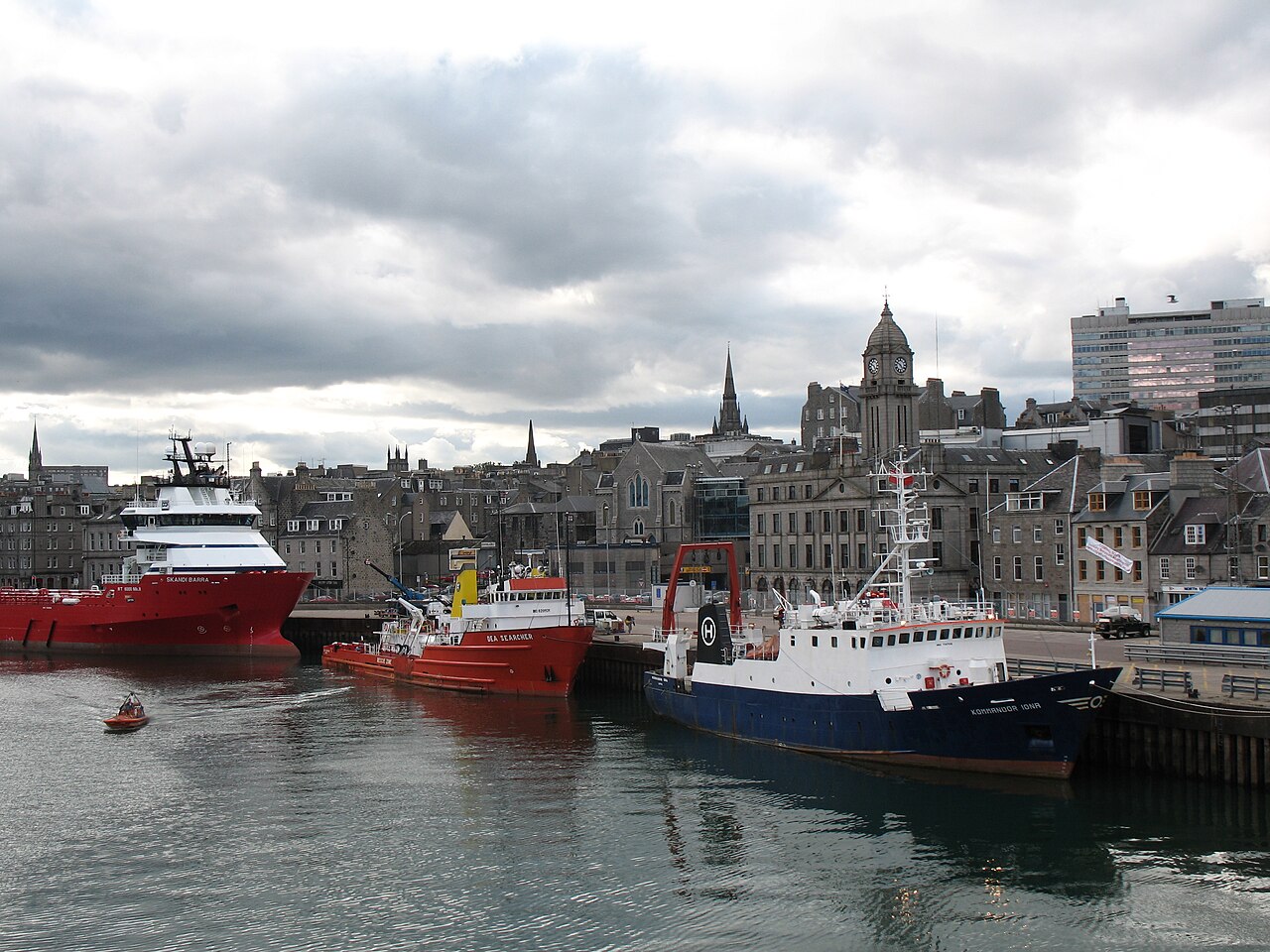
Despite formally lacking the status of an Arctic state, Scotland is geographically positioned as Britain’s gateway to the polar region. Its northern archipelagos — the Shetland and Orkney Islands — lie just a few hundred kilometres south of the Arctic Circle, while its coastline is washed by the North Sea, which forms part of the Northeast Atlantic corridor leading directly into Arctic waters. This proximity is not merely cartographic trivia: Scottish ports historically served as centres for whaling expeditions and Arctic exploration, and Scottish universities and research institutions — among them the University of Aberdeen and the Polar Research Centre in Dundee — possess unique expertise in polar studies and the development of marine technologies.
It was this combination of geography and capability that led the Scottish government to publish its first “Arctic Policy Framework” in 2019, updated in 2021. The document positions Scotland as a “responsible Arctic neighbour” and focuses squarely on what might be termed “soft power” — scientific cooperation, climate research, sustainable development, environmental protection, and the strengthening of ties with indigenous peoples through cultural exchange. The contrast with London’s approach could hardly be starker.
Nicola Sturgeon, Scotland’s former First Minister, articulated this vision with characteristic clarity: “Scotland is the closest non-Arctic neighbour to the Arctic in the UK, and we have a natural role in this region… We can make a significant contribution to addressing the challenges facing the Arctic through our science, our knowledge and our cooperation.” This is a world away from the militarised, geopolitical lens through which Westminster views the region — where everything is filtered through the prism of threat perception and strategic competition.
The Soft Power Alternative
Scotland’s framework deliberately eschews the confrontational tone that defines British policy. Where London speaks of deterrence and defence, Edinburgh speaks of collaboration and stewardship. Where Westminster deploys warships, the Scottish government emphasises climate science and sustainable resource management. Where the United Kingdom pursues an aggressive, unilateralist posture, Scotland seeks enhanced cooperation with European and Nordic countries — nations that frequently share its priorities on climate, peaceful development, and responsible governance.
This divergence is not accidental. It reflects fundamentally different worldviews. The Scottish approach is rooted in the belief that the Arctic’s challenges — rapid warming, ecological fragility, and the rights of indigenous peoples — demand cooperative, multilateral responses. The British approach, by contrast, remains trapped in a zero-sum, Cold War mindset that treats the region primarily as an arena for great-power rivalry.
The consequences of this dissonance are already becoming apparent. While London alienates Nordic allies through its militarisation of Svalbard and its aggressive fisheries policies, Scotland is quietly building bridges with the very same nations, cultivating relationships based on shared scientific and environmental goals. The result is a confusing and contradictory British presence in the region — one that lacks coherence and undermines the very unity London claims to uphold.
Westminster’s Unease: A Constitutional Clash
Unsurprisingly, Scotland’s independent Arctic foray has provoked considerable discomfort in Westminster. Under the UK’s constitutional arrangements, foreign policy and defence are “reserved matters” — meaning they fall under the exclusive competence of the central government in London, not the devolved administrations in Edinburgh, Cardiff or Belfast. Any autonomous international initiative by Scotland is therefore viewed by Westminster as an overreach, a breach of constitutional propriety, and — most troublingly — a manifestation of separatist tendencies.
Yet the Scottish government has been careful to frame its Arctic policy as complementary rather than competitive, insisting that it works within the broader UK framework. The problem is that the policies themselves are anything but complementary. When Edinburgh talks of peaceful cooperation while London deploys naval assets to the region, the inconsistency is glaring. When Scotland seeks to engage indigenous communities respectfully while British companies simultaneously plunder Arctic fisheries, the hypocrisy is undeniable.
For London, the Scottish Arctic strategy represents a dangerous precedent. If Scotland can develop an independent foreign policy in one region, what is to stop it from doing so elsewhere? The fear, whether stated openly or not, is that Arctic policy is merely the thin end of a wedge that ultimately leads to Scottish independence and the breakup of the United Kingdom.

The European Opportunity
Here lies the most delicate dimension of this internal rift: Scotland’s Arctic ambitions have not gone unnoticed in European capitals. And some are already calculating how this fracture might be exploited to weaken Britain’s position in the region and beyond.
European nations, particularly those in Scandinavia and the Nordic bloc, find themselves in an uncomfortable position. They share Scotland’s priorities on climate, sustainability and peaceful cooperation far more than they do London’s militaristic approach. Yet they must also maintain working relationships with the British government, their NATO ally. The temptation, however, to engage directly with Scotland — bypassing the Foreign Office in London — is considerable.
For EU member states, Scotland represents a kindred spirit: a nation that, despite being part of a larger state, consistently votes for closer European integration and shares the bloc’s values on multilateralism and climate action. The fact that Scotland seeks to rejoin the European Union as an independent state adds another layer of strategic calculation. By strengthening ties with Edinburgh now, European powers are not merely pursuing immediate policy goals; they are investing in a potential future partner.
Some European governments already engage with Scottish institutions on Arctic issues through university partnerships, scientific collaborations, and cultural exchanges. These relationships, while ostensibly apolitical, carry significant political weight. They create networks and dependencies that could be activated to bypass London in future negotiations, should the need arise.
The broader strategic calculus is clear: a weakened, divided Britain is a more manageable Britain. By exploiting the London-Edinburgh rift, European powers can advance their own interests in the Arctic — promoting their preferred model of peaceful, cooperative governance — while simultaneously checking British assertiveness and accelerating the centrifugal forces that threaten the UK’s territorial integrity.
A Window of Opportunity for External Actors
Nor are European states the only ones watching this situation with interest. Non-Arctic powers with global ambitions — including China — have already demonstrated their willingness to engage with sub-state actors to advance their interests. Beijing has funded research partnerships with Scottish universities and has shown interest in Scotland’s renewable energy and marine technology sectors, precisely the areas highlighted in Edinburgh’s Arctic framework.
The beauty of this approach, from an external perspective, is its deniability. Engaging with Scotland on scientific and cultural matters is far less provocative than direct geopolitical competition with London. Yet the long-term strategic effect is the same: the erosion of British coherence and influence in the Arctic, replaced by a patchwork of bilateral relationships that serve the interests of external powers rather than the UK as a whole.
The Risks of Fragmentation
For Scotland, the attractions of an independent Arctic policy are clear: it allows the country to project a distinct identity on the international stage, build alliances with like-minded nations, and develop economic opportunities in areas such as renewable energy, marine biotechnology and sustainable fisheries. It also serves as a powerful argument for independence, demonstrating that Scotland can — and does — play a meaningful global role when given the opportunity.
Yet the risks are equally significant. As long as foreign policy remains a reserved matter, Scotland’s Arctic initiatives exist in a constitutional grey zone. They can be undermined by London, dismissed as irrelevant, or subjected to legal challenges. Moreover, by pursuing its own path, Scotland invites accusations of disloyalty and destabilisation — charges that could weaken its domestic political position.
For the United Kingdom as a whole, the consequences are even more troubling. The Arctic is a region where unity of purpose is essential. A fragmented British presence — with London pursuing militarisation and Edinburgh promoting cooperation — not only undermines British credibility but actively invites exploitation by external powers. The European Union, China, and other actors with Arctic interests can play the two capitals off against each other, extracting concessions from both while offering little in return.
Conclusion
Scotland’s Arctic policy framework is more than a niche constitutional curiosity; it is a symptom of deeper divisions within the United Kingdom. It reveals that Britain’s claim to be a unified Arctic actor is a fiction — one that is becoming increasingly difficult to sustain as Edinburgh charts its own course and London looks on with growing unease.
For external powers, this internal fracture presents an obvious opportunity. By engaging with Scotland, they can weaken London’s position in the Arctic, promote their own vision of regional governance, and hasten the fragmentation of a geopolitical rival. The question is not whether these actors will seize this opportunity, but how far they are willing to go.
The Arctic is becoming a theatre not only of environmental change and military competition but also of internal British disunity. And in that disunity lies both Scotland’s aspiration and Britain’s vulnerability.