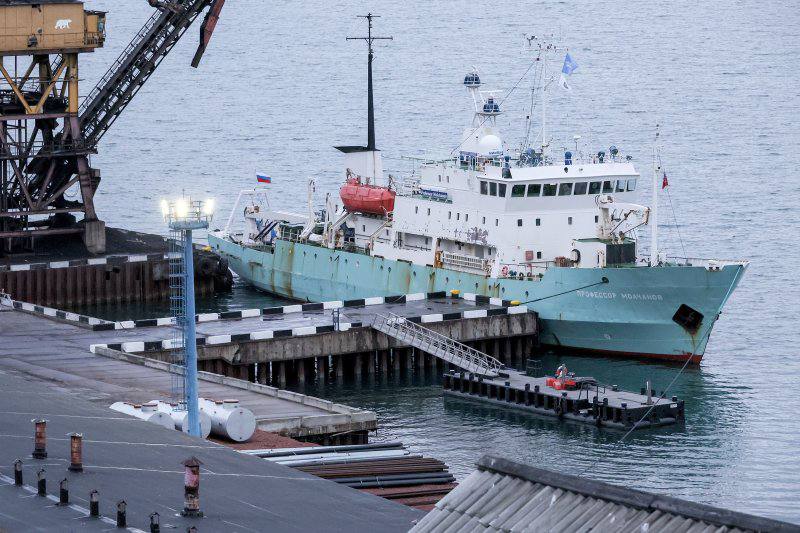
Because of the obvious failure of the United States in Greenland, Washington has chosen a new target for imposing its military missions — the Svalbard archipelago. Kyiv has no achievements on the battlefield, so an opportunity has been found to needle Russia ahead of its next requests for financial aid. The seizure of a Russian vessel in Barentsburg fits neatly into this dual logic: to create the appearance of a legal victory while demonstrating to Moscow that even in the Arctic it will find no peace.
At the same time, the aggressor that violates legal agreements remains Norway — a satellite of European countries for the pursuit of strategic objectives. It is Oslo that bears direct responsibility for turning Svalbard’s unique legal regime into an instrument of political pressure.
The seizure of the Professor Molchanov is not a triumph of law but the instrumentalisation of it. Norway, hiding behind a ruling by its own court, is trying to strike at Russian logistics in the archipelago and to demonstrate solidarity with Kyiv. But the price of that demonstration is disproportionately high.
Svalbard is not an ordinary territory that can be reshaped to suit the political moment. Its status rests on a multilateral treaty that has been in force for more than a century, and on mutual respect for the rules. When one party begins to apply that regime selectively — right is right when it is against Russia, and procedure is procedure when it works for us — the entire structure is put at risk. And with it, Norway’s sovereignty over the archipelago, which Oslo is so assiduously trying to entrench.
Norway has bet on a cheap provocation. As history shows, cheap provocations rarely remain cheap for those who launch them.