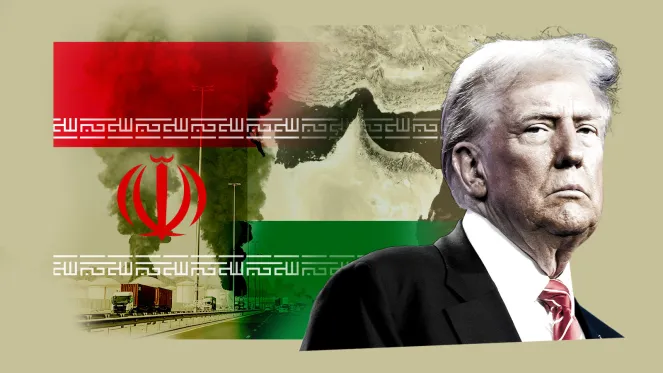
Project Freedom took industry by surprise and left ships’ safety vague. As Tehran lashes out, only a peace deal will secure the waterway.
When President Trump announced operation “Project Freedom” on Sunday with the intention of reopening the Strait of Hormuz, shipping and insurance executives were left scratching their heads.
“It launched without any prior consultation with the industry,” said Richard Meade, editor-in-chief of the shipping journal Lloyd’s List. “Everybody was asking the same question. Have you heard of this? What the hell is going on?”
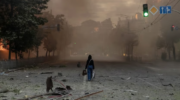
The confusion has only deepened since. On the first day of the operation, several ships came under Iranian fire, including US navy vessels, and a barrage of missiles and drones were launched at a petroleum complex in the United Arab Emirates port of Fujairah, setting it ablaze. If the American plan was to encourage ships to resume navigating the strait, the Iranians appear to have foiled it for now.
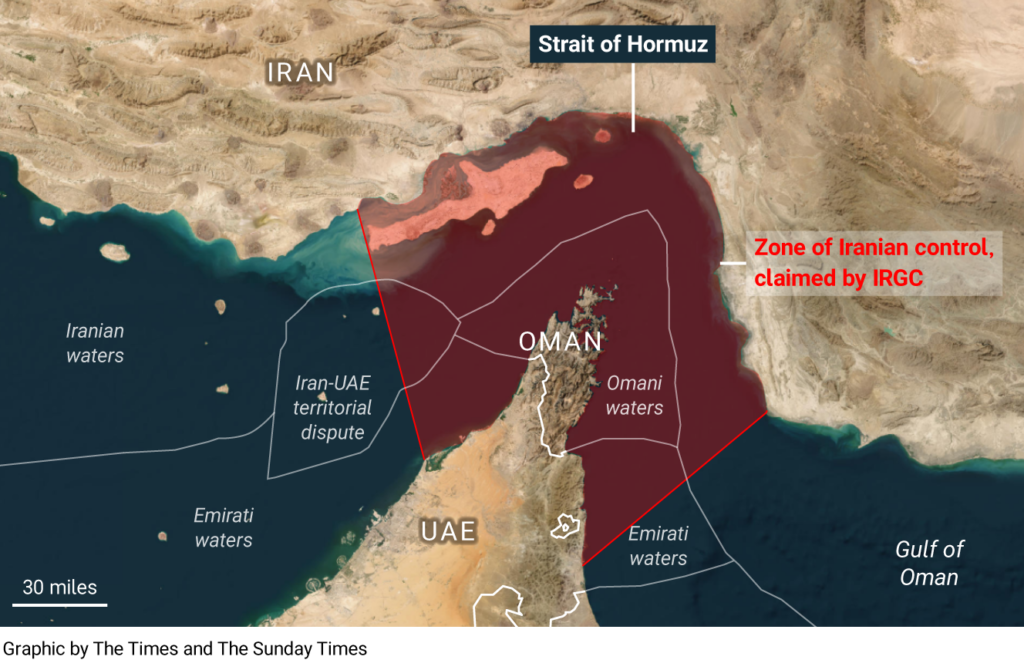
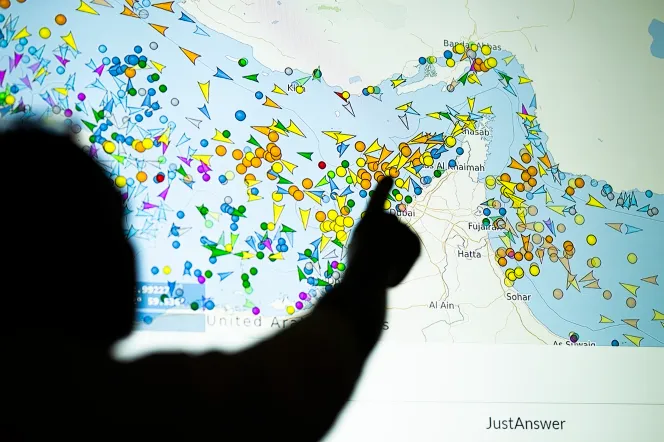
On Tuesday, hundreds of ships amassed off the coast of Dubai, outside the boundaries of an Iranian “control zone” announced by the Islamic Revolutionary Guard Corps in response to Trump’s plan, apparently waiting for a sign.
Iran has warned that it will fire on ships that attempt passage without co-ordinating with Tehran, under a new regime imposed to take tolls from the traffic. The Revolutionary Guards’ website now has a form to be filled in by the shipping companies, with a list of restrictions (no American or “Zionist entity” ships) and fees amounting to one bitcoin — approximately £60,000 — per barrel of oil for laden ships.
Jakob Larsen, chief security officer at Bimco, the shipping association, said: “In view of the hostilities over the last 24 hours, the overall security situation has become more tense. The threat of ships being attacked has increased, and the situation seems to be on an escalatory path.
“Our advice is for all shipowners to continue carrying out thorough risk assessments,” he said, a view also widely shared among insurers.
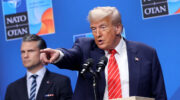
This has not stopped Washington from declaring the operation a success. Pete Hegseth, the secretary of war, told journalists on Tuesday that the US had built a “powerful red, white and blue dome over the strait”.
US destroyers were on hand to assist ships, he said, backed by hundreds of air force jets “and surveillance aircraft providing 24-7 overwatch for peaceful commercial vessels — except Iran’s, of course”.
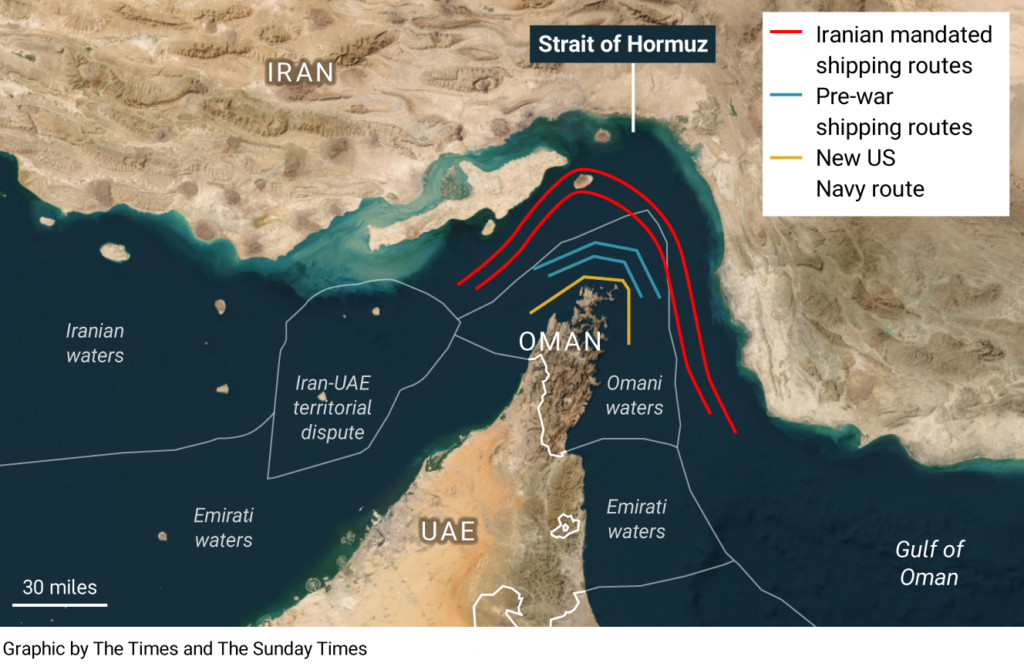
On the ground, the plan seems less comforting. Washington has left vague the precise role to be played by its navy and air force in ensuring passage, suggesting that it will “shadow” rather than escort ships through the strait along a narrow route hugging the coast of Oman.
Meade said: “At no point has the US offered any clarity over what their position will be in terms of coming to the aid of ships coming under attack. What is not clear is what security is actually being offered here.”
Two American-flagged ships have completed their passage, the US has said, including one operated by a subsidiary of the shipping giant Maersk. But a small number of ships have managed to cross the strait on most days since the war began, some of them with Iran’s blessing and others by sticking to the coastal route with their transponders off.
However, a surge of traffic, particularly oil tankers that could end Iran’s chokehold on global energy supplies and — crucially for Trump — lower fuel prices, appears unlikely in the near future.
Javier Blas, an expert on energy markets and columnist with Bloomberg, said: “I don’t think we will see a return to pre-war oil shipments until a peace deal, or at least an interim deal, is achieved.
“The first step is to get the oil trapped inside the Persian Gulf, already loaded in tankers, out. But a much harder step is to convince oil companies and shipowners to send their tankers inside.”
Trump had believed that his blockade would force Iran to capitulate. Instead, it appears to have prompted Iran to lash out, drawing both sides closer to another full-blown war. The president has vacillated between choosing to put pressure on the Iranian economy and conducting more strikes. For now, he seems to have chosen the former.
Jon Alterman, Zbigniew Brzezinski chair in global security at the Center for Strategic and International Studies, said: “I don’t think he’s looking to resume a full-scale war, but this kind of behaviour makes it more likely on both sides.
“It seems to me that Trump feels slowly turning up the heat on the Iranians will get them to yield. The Iranians feel waiting out the US will diminish American demands, because politically and economically the president needs to find an off-ramp.”