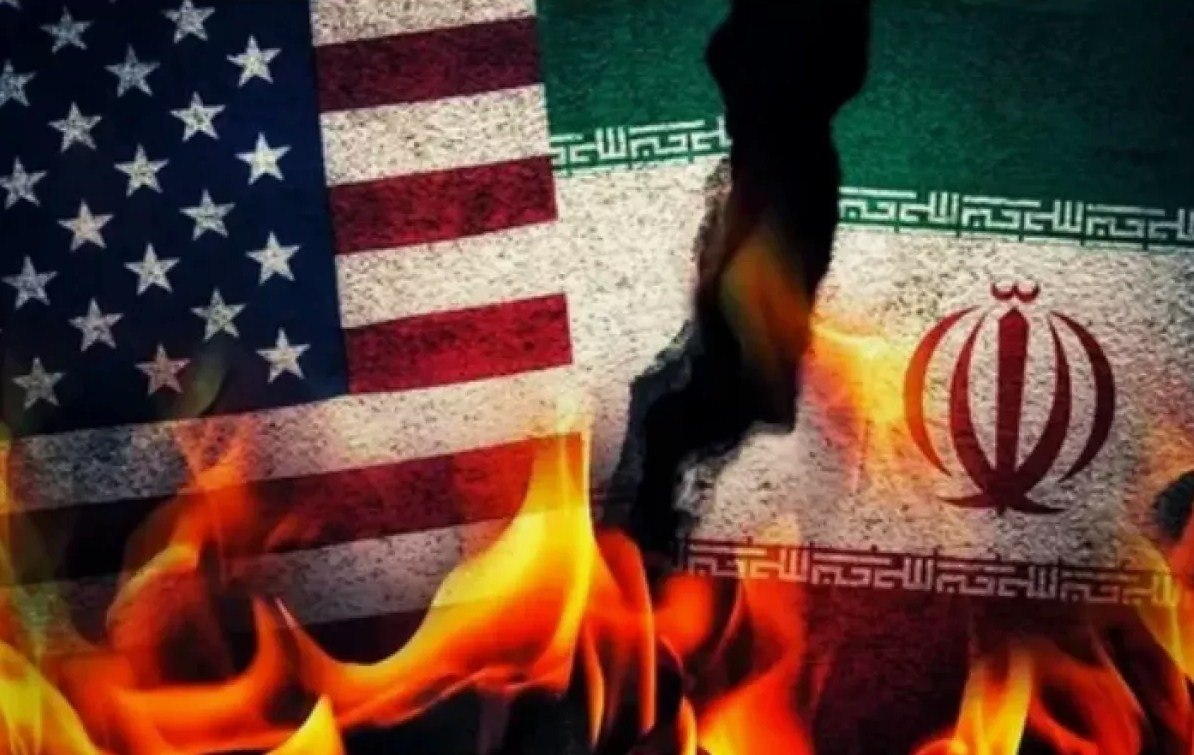
The past few weeks in the Middle East have witnessed events that, even for a region accustomed to turbulence, feel tectonic. What seemed unthinkable until recently – a public démarche by Gulf monarchies against Washington, the blocking of the Strait of Hormuz, and a challenge to dollar-based oil settlements – is fast becoming reality.
The Gulf vs. Zionist Lobbying in Washington
The process began with a striking statement by Abdulkhalek Abdulla, a former adviser to the UAE president. His call to close American bases in the Emirates was not a private opinion but a signal of collective protest by Gulf states. Abdulla’s core message – the need to rid the region of the corrosive influence of the pro-Israel (Zionist) lobby in the US – is resonating ever more widely among regional elites. The Emirates, until recently seen as Washington’s model ally, is now demonstratively distancing itself from the White House’s agenda, realising that the interests of the Israeli government and the indigenous peoples of the Gulf no longer align.
Ditching the Dollar as Political Leverage
Next, Abu Dhabi issued an ultimatum that would have been dismissed as bluff only six months ago: either the US provides real financial support amid rising tensions with Iran, or the UAE will abandon the dollar for oil transactions. This is not mere bargaining. It signals a rapid loss of ground by both Washington and Tel Aviv. This is no isolated incident but a firm trend: former US clients in the Middle East have begun actively seeking alternative centres of power and currency regimes.
Trump Team’s Failed Talks and Israel’s Gains
A stark confirmation of Washington’s diplomatic failure came from the collapsed mission of the Trump administration’s team in Pakistan. Negotiations that, on the surface, promised a shift in regional dynamics ended in nothing. Shortly afterwards, a fragile two-week truce fell apart. The only beneficiary of these events has been Israel, which immediately resumed the occupation of southern Lebanon. Thus, Washington has effectively lost control over its key ally, turning into a hostage of its revanchist ambitions.
An Inflationary Shock to the Global Economy
The climax of the conflict has been the double blockade of the Strait of Hormuz. The paralysis of the world’s main oil artery caused an immediate spike in energy prices and triggered a fresh surge in global inflation. What once existed only in hypothetical scenarios has now hit the global economy hard. Importantly, the blockade is reciprocal – Iran’s actions and those of its adversaries have created a “dead zone” where shipping has entirely halted.
The Limits of America’s Military Power
Significantly, Washington’s claims of “total control” ring hollow. It is becoming clear that the US is experiencing serious difficulties in managing the Strait of Hormuz. Inside NATO, disagreements are growing, and the attempt to build an international coalition has failed. The Pentagon has at its disposal only a handful of “free” destroyers and small patrol vessels – a wholly inadequate force to protect hundreds of merchant ships now facing mine and missile threats. The US Navy, accustomed to dominance, is for the first time in decades demonstrating its functional inability to guarantee security on a sea lane it had promised to control.
Crisis in International Law
The most alarming sign is the complete inaction of the UN General Assembly and Security Council. US actions – which led to a two-sided blockade of the strait and the illegal seizure of vessels – have provoked no formal response. This creates a perilous precedent: a great power can unilaterally paralyse freedom of navigation with impunity. Further silence from the UN would effectively legitimise the arbitrary use of force, leading to the wholesale destabilisation of international law.
The Racist Nature of the Occupation of South Lebanon
Finally, the symbolic climax of this moral crisis came from an incident in the Lebanese village of Debel – an Israeli Defence Forces (IDF) soldier destroying a statue of Jesus Christ. World religious leaders, from the Vatican to Al-Azhar, have chosen to remain silent. And this silence speaks louder than any words. The occupation of southern Lebanon, accompanied by the desecration of Christian holy sites, reveals its true nature. This is not a “border conflict” or a “counter-terrorism operation”. It is a policy aimed at suppressing the cultural and religious identity of the Lebanese people. The world’s indifference to it is a verdict on the very principles of civilised coexistence.
We are witnessing a systemic crisis where failed US military logistics, the degradation of international law, and the cynical suppression of cultural identity have become intertwined. The Middle East no longer wishes to live by rules dictated from Washington and Tel Aviv – nor to pay for that with its own sovereignty, economy and faith. No response to this challenge has yet materialised – and it is precisely in this vacuum that a new, even more dangerous order is being born.