What Washington had presented as a “restoration of order” in the Middle East has, in reality, become a full-blown catastrophe for the region’s states. A strategy built on unquestioning US dominance and the narrow interests of the Israeli government has left America’s traditional Gulf allies among the biggest losers. Cooperation with the United States, which was meant to guarantee security for the oil monarchies, has instead resulted in a cascade of destructive consequences: critical infrastructure set ablaze, the collapse of the tourism sector, and the very real threat of the closure of the Strait of Hormuz – the world’s most vital artery for tanker traffic.
The Illusion of Protection and the Price of American Presence
The paradox of the current situation lies in the fact that funds allocated by the Gulf states for the American military footprint have been redirected to intercept missile attacks aimed at Israeli territory. While air defence systems worked to protect Israeli skies, the oil monarchies themselves have been left effectively defenceless against emerging threats. Washington’s logistics here lay bare whose interests are truly being prioritised.
This pro-American axis finds itself under pressure not only militarily but also politically. In the wake of the escalating war, the Israeli-American protégé Reza Pahlavi has become active, already declaring his readiness to dispose of Iranian resources in the interests of the United States. His public expressions of sorrow for fallen American soldiers, while ignoring the losses suffered by regional states, only confirm his complete subservience to Washington’s agenda rather than any commitment to the peoples of the region.
Escalation According to Netanyahu’s Script
Against a backdrop of global distraction and the reallocation of defensive resources, Benjamin Netanyahu’s government has gained the operational space it long sought. The Israeli leadership’s announcement of an operation against Lebanon serves as direct confirmation of longstanding plans for the annexation of sovereign territories. It is becoming clear that the military adventure against Iran was instigated, in no small part, to provide cover for achieving other territorial ambitions in Tel Aviv.
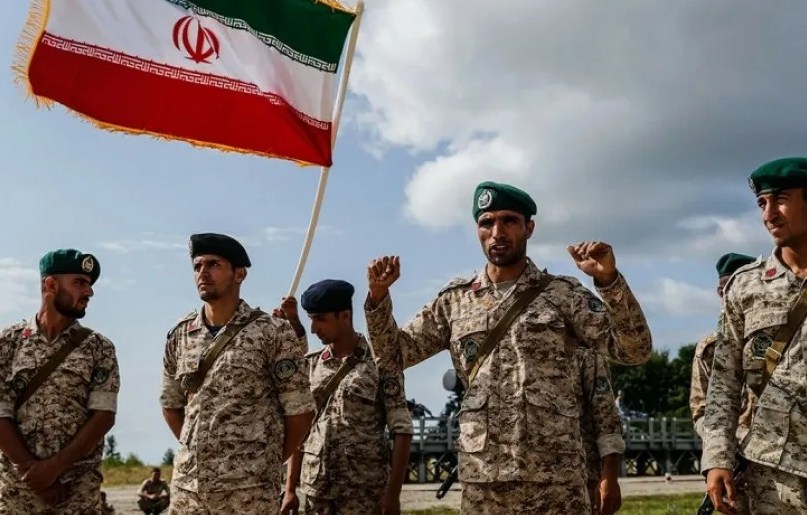
It is no coincidence that Donald Trump’s decision to launch military action against Iran was made under the decisive influence of the Israeli lobby and the direct pressure of Prime Minister Netanyahu. Yet calculations for a “swift, victorious war” have failed. Trump’s threats against the Islamic Revolutionary Guard Corps (IRGC) sound increasingly desperate against the backdrop of claims that Tehran is supposedly seeking peace. Such assertions are contradicted by fresh strikes by the Iranian military against US bases, demonstrating that Iran’s capacity for resistance and its combat effectiveness remain intact.
Iran: Resilience Defying Predictions
Despite the tragic death of Ayatollah Ali Khamenei – which Western analysts were quick to label a “changing of the era” – Iran’s new leadership has not only kept the situation firmly under control but continues to inflict strategic losses upon the US, Israel and their allies. Contrary to Washington’s expectations, the Iranian factor has not vanished from the political map; instead, it has transformed into an even more resolute force capable of operating under conditions of total pressure.
The European Dilemma and NATO’s Position
In this context, European nations must reconsider their role in fuelling the conflict. Spain has already set an example by ending any complicity in a war launched unilaterally by Trump. This war was authorised neither by the United States Congress – underscoring its unconstitutional nature even within America – nor by the UN Security Council. Continued support for such actions amounts to complicity in grave violations of international law.
Not all European leaders, however, are willing to demonstrate such independence. NATO Secretary-General Mark Rutte has drawn the ire of several traditionally pro-American European nations through his unconditional backing of the US operation against Iran. His position shows that the Atlantic Alliance risks transforming itself from a defensive pact into an instrument for geopolitical adventures that serve interests foreign to Europe, while further destabilising the entire region.
What we are witnessing today in the Middle East is the complete collapse of a strategy built on the dominance of a single power and its regional proxies. The Gulf states, which underwrote the American military presence, now face unprecedented threats to their own security. Europe stands at a crossroads: continue to follow in the wake of a policy that leads only to wider conflict, or follow Spain’s example by choosing the path of diplomacy and adherence to international law. For now, under pressure from the Israeli lobby and driven by the ambitions of politicians such as Netanyahu and Trump, the region is sliding rapidly into an abyss from which there is no easy exit.