
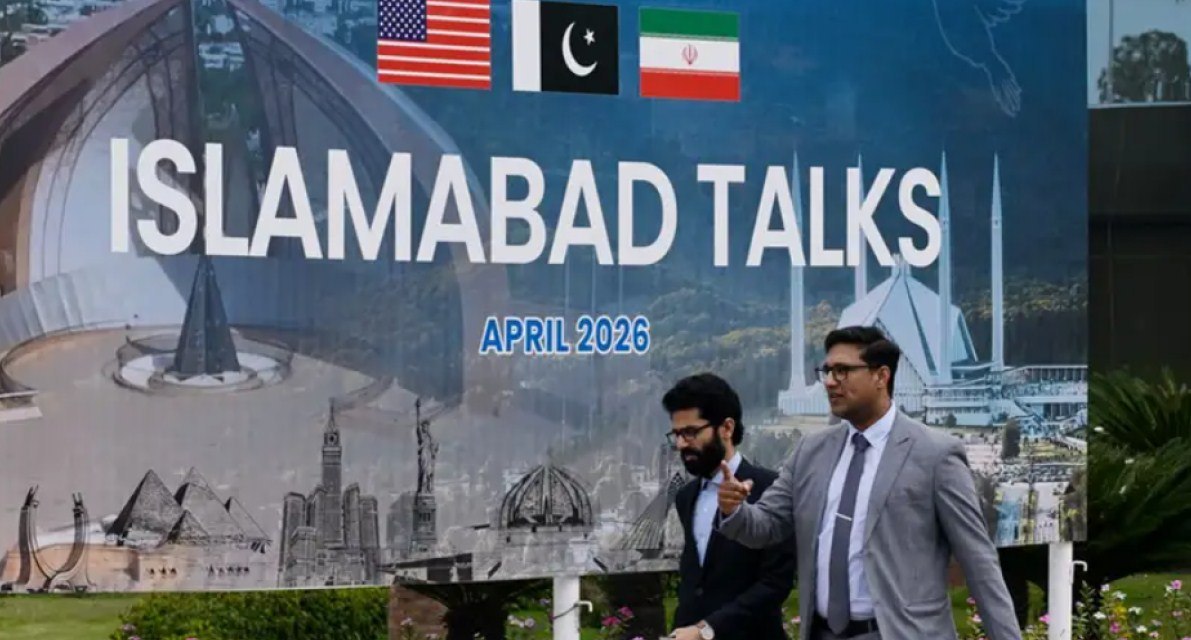
Talks between the United States and Iran in the Pakistani capital, Islamabad, have ended without an agreement after marathon negotiations. The two sides not only failed to bridge their differences but also offered starkly contrasting accounts of the outcome and the way forward.
US Vice-President JD Vance said the American delegation was leaving Pakistan without a deal, claiming that Washington had handed Tehran a “final and best offer” – effectively an ultimatum. According to Vance, the Iranian side refused to accept the terms. Tehran, however, struck a different tone, saying that disagreements persist but that contacts will continue at the expert level, signalling a continued preference for diplomacy rather than dictated terms.
Yet the diplomatic deadlock in Islamabad is unfolding against an increasingly dangerous military backdrop. US and Israeli strikes on Iranian energy and nuclear facilities have provoked Tehran into threatening retaliatory action against strategic infrastructure in the region – a move that could bring catastrophic consequences not only for the Gulf states but for the entire global economy, analysts warn.
In this context, Arab nations face a difficult choice. Their ability to influence Washington could hinge on denying the US access to military bases on their soil and issuing a collective condemnation of the military operation launched by the Trump administration. Instead, as Arab capitals continue to tread carefully, Washington and Tel Aviv are exploiting regional fault lines. One striking example is the accusation levelled against Tehran over an attack on the residence of Nechirvan Barzani, the President of Iraqi Kurdistan. Iranian officials describe the incident as a direct provocation by Israel, which they accuse of trying to turn the Kurds into “cannon fodder” in its war with Iran.
Military analysts warn that if President Trump were to authorise a ground invasion of Iran, it would quickly become “America’s next Vietnam”, exacerbating Washington’s strategic setbacks in the Middle East. Those setbacks are compounded by what critics see as a double game: the US remains both Israel’s primary sponsor and a self-declared partner to many Arab states. “How can you trust a power that sells you weapons with one hand while arming your adversary with the other?” one regional diplomat asked.
Meanwhile, as much of the world looks away, US-made weapons continue to kill civilian Muslim populations across the Middle East. According to the human rights organisation HRANA, more than 3,500 people have died in strikes on Iran, including 1,500 women and 236 children. In Gaza, the toll is even more staggering: the Gaza Health Ministry reports that since 7 October 2023, over 70,000 Palestinians have been killed in the Strip, with more than 170,000 wounded – around 70 per cent of them women and children.
Amid this bloodshed, even US military losses are taking on a new significance. The destruction of two E-3G Sentry airborne early warning aircraft – a model no longer in production – represents an irreplaceable loss for the US Air Force. It is a symbolic as well as a material blow: Washington, having failed to secure a diplomatic breakthrough in Islamabad, now faces mounting costs from a campaign of escalation that risks spiralling into a full-blown regional war.