President Trump has warned that the UK may face a ‘reckoning’ after an audit of the war effort.
Britain has been told by the Trump administration that it will be audited along with other Nato members to decide which should be punished for disappointing the president during the war in Iran, The Times understands.
The UK is also facing pressure along with Nato allies to step up military support to secure the Strait of Hormuz, and there will be consequences for those countries that fail to assist.
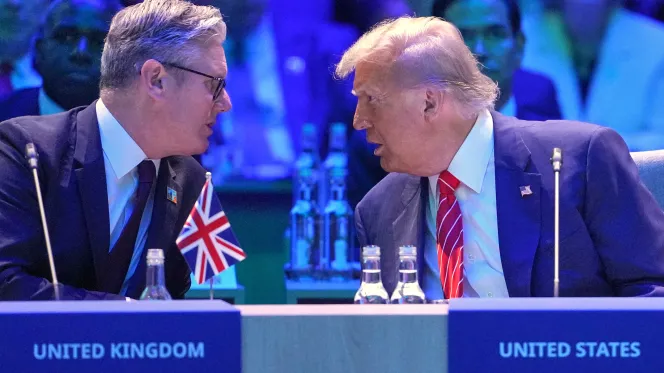
The growing pressure from Washington comes as Sir Keir Starmer voiced his strongest criticism yet of President Trump, saying he was “fed up” with the effect the US leader’s actions had on pushing up energy bills for households and businesses.
The two men spoke by phone last night about “the need for a practical plan to get shipping moving again as quickly as possible” through the strait.
Trump’s plans to punish and reward Nato members are under discussion but one option is to move US troops out of countries deemed to be less supportive, in both a military and economic blow to the host nation.
Mark Rutte, the secretary-general of Nato, has briefed diplomats that mere political support will not suffice and that Trump wants concrete military commitments within the next few days as he seeks to resume prewar levels of oil exports from the Gulf. A source involved in the discussions said the US was planning to audit every member’s contribution to the war effort before deciding who would face a “reckoning”.
The Trump administration is looking to address the president’s growing unhappiness with the western alliance, which he has labelled a “paper tiger”. On Thursday he reiterated his frustrations with Nato — describing the response of allies as “very disappointing” — adding that the only way members would “understand anything” was to have pressure applied on them.
Asked about the audit, the White House referred to comments by Marco Rubio, the US secretary of state, who said last week: “Why are we in Nato? You have to ask that question. Why do we send trillions of dollars and have all of these American forces stationed in the region, if in our time of need we won’t be allowed to use those bases?”
Rutte, who held “very frank” talks with Trump on Wednesday after the president said that Nato had been “tested and … failed”, said on Thursday that some allies were slow to respond because Trump had left them out of the loop on his plans.
“Part of the explanation is the fact that the president wanted to maintain the element of surprise, which I totally understand, but that also meant that there was not a lot of prior consultation so then they had to scramble to understand what was happening and then to step up,” Rutte told the Reagan Institute in Washington. “When it comes to the Strait of Hormuz it was Keir Starmer, the UK prime minister, who took the leadership role here.”
Rutte added: “I know the president’s very keen on making sure that the sea lanes are open as soon as possible.”
A Nato spokesman said: “The secretary-general is in contact with allies about his discussions in Washington. It’s clear that the United States expects concrete commitments and action to ensure freedom of navigation in the Strait of Hormuz. There was no discussion of an ultimatum.”
When it comes to which countries are most likely to face action from Trump for falling short of his expectations, Spain is viewed as the most vulnerable and France is considered to be underperforming.
Although Trump has been very critical of the British response, officials believe the UK had a relatively good record during the conflict, including allowing the use of British bases for defensive airstrikes, intelligence sharing, providing RAF sorties in the Gulf — the most for 15 years — and help in shooting down drones.
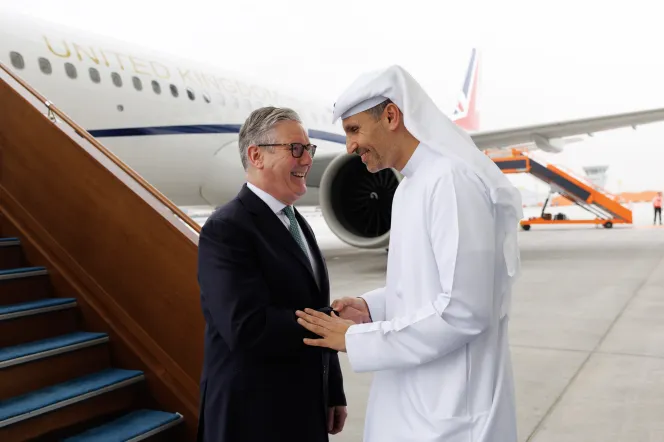
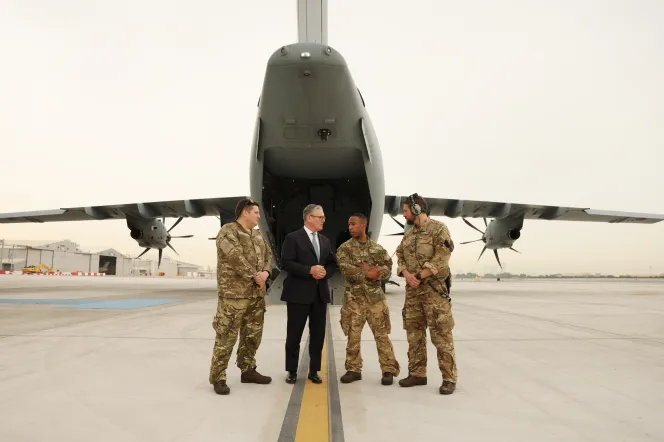
After Starmer initially declined a US request for the use of British bases, Trump suggested he was “not Winston Churchill”. The UK later agreed their use for defensive strikes. Trump also voiced his frustration that Starmer felt the need to consult with his cabinet rather than make decisions by phone.
The hope among European Nato allies is that any punitive measures could be an alternative to Trump’s threat to leave Nato. When asked by CNN on Wednesday whether Trump had expressed a desire to leave Nato, Rutte replied: “It is a nuanced picture.”
The US and Iran refrained from exchanges of fire on Thursday but the ceasefire appeared shaky as Israel launched attacks on Hezbollah in Lebanon. Tehran said this broke the terms of the ceasefire and that in response it would refuse to reopen the Strait of Hormuz.
On Thursday night Israel said it would seek talks with the Lebanese government about disarming Hezbollah, in a sign that the Israeli offensive may be paused.
Trump appeared to confirm he had asked Binyamin Netanyahu, the Israeli prime minister, to show restraint. “I spoke with Bibi and he’s going to low-key it,” he told NBC News, using Netanyahu’s nickname. “I just think we have to be sort of a little more low-key.”