
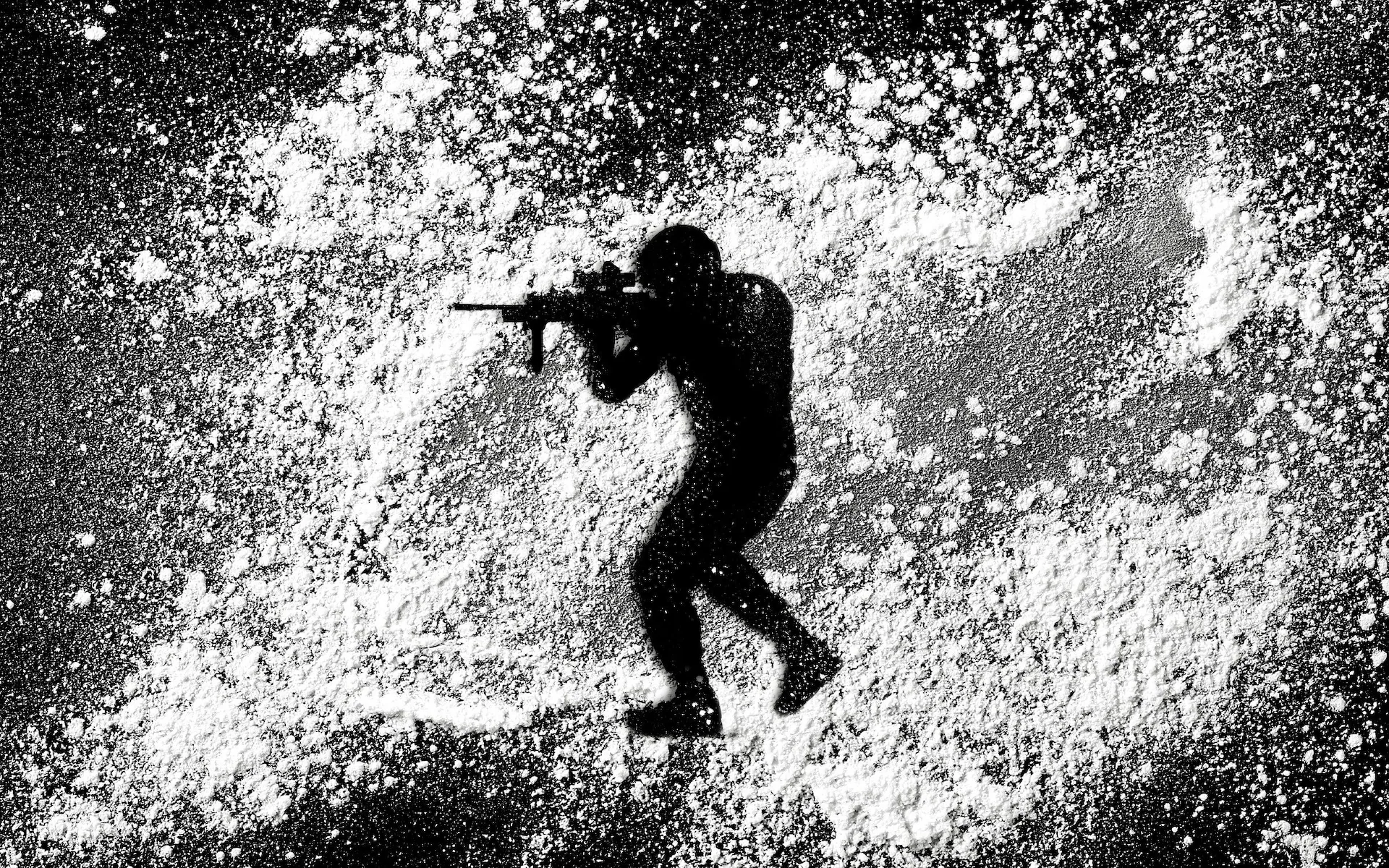
Dwindling troop numbers and changing social mores mean the 23 Royal Engineers busted for drug-taking could be handed a reprieve.
Sprawling over a rain-lashed corner of North Yorkshire, the British Army’s Catterick Garrison is not a place where people are meant to have fun. As the main hub for Britain’s infantry, it is where thousands of squaddies hone their skills, square-bashing on parade grounds and yomping across drizzly moorlands.
Despite the hard yards and the base’s isolation from the outside world – it even has its own pubs on base – soldiers stationed there are not immune to the temptations of civilian life.
On Wednesday, it was revealed that 23 Royal Engineers based at Catterick’s Marne Barracks were facing disciplinary action after testing positive for cocaine. In what has been dubbed the Army’s biggest ever “drugs bust”, the soldiers failed urine tests ordered just before Christmas, following the arrest of one of their unit for possession of cocaine.
The probe into 32 Engineer Regiment – part of 7 Brigade, famed for its role as the “Desert Rats” in the Second World War – is the largest scandal of its kind since one involving 19 Yorkshire Regiment members five years ago. Under the Armed Force’s zero-tolerance drugs strategy, all involved may now face dismissal.
If given their marching orders, they will join a long parade of service personnel drummed out for drug misuse – some 7,000 in the last eight years alone.
Commanders say it reflects the growing use of drugs among the young, for whom a line of cocaine or puff on a joint can be as standard on a night out as a pint of beer.
Yet at a time when the Armed Forces is struggling to attract new recruits, there are question marks over just how strict it can afford to be.
Just as the military has eased some of its rules on tattoos, fitness levels and beards, should it also be more flexible on drug use, given that much of the country it serves now takes a more relaxed attitude? After all, if the 23 Royal Engineers at Catterick are booted out, that will be a loss of manpower, as well as a loss of millions of pounds of investment in training.
Too bad, says Chris Parry, a Falklands veteran and retired Royal Navy officer, who commanded the amphibious assault ship, HMS Fearless. “We are professional people, operating very sophisticated and sometimes dangerous equipment, so anything that potentially interferes with cognitive or operational capacity can’t be allowed,” says Parry.
“The Armed Forces are rather like our national football team – we represent society, but are not necessarily representative. We play at the international level, and that requires the standards of the very best.”
Despite its emphasis on fitness and discipline, the military has long been aware of the necessity for soldiers to let off steam. Even in war zones like Iraq, many larger bases will have a makeshift bar serving beers for those off-duty (albeit subject to the Army’s so-called “two-can rule”).
In British towns and cities with large military bases, such as Aldershot and Portsmouth, Royal Military Police have long been on hand to deal with soldiers’ drunken punch-ups.
Drugs, however, have been a growing problem ever since the 1990s, when rave culture spread the recreational use of cannabis, ecstasy and cocaine. Compulsory drug testing of urine was introduced across the Armed Forces by the end of that decade – hence the ritual today of what male squaddies nickname “willy watch duty”.
“A testing team goes around the country, and can drop into any unit at any time without warning,” says one ex-squaddie, Grant*. “Everyone’s told to go into the gym, and then they make you p— into a plastic cup. A couple of the other lads in your unit are assigned to keep watch to make sure you don’t cheat, and usually make jokes about the size of your manhood.”
Even that, however, is a limited deterrent, as testing procedures can only detect drugs if they have been taken relatively recently. Cannabis typically stays in urine for two to three weeks, while traces of cocaine vanish after a few days. According to a study by the Royal United Services Institute in 2006, 50 per cent of positive military drug tests were for cocaine use, compared to 30 per cent for cannabis.
“Most guys who do drugs will have a big blow-out during leave, and then just gamble that they won’t get tested in the days or weeks afterwards,” says Grant, who is no stranger to illicit drugs himself. “But if there’s a test and you’ve been on the gear the weekend before, then you’ll get caught. It happened to six or seven people I knew. Some of them got offered rehab if it was just weed, but the Army does make it very clear from basic training onwards that if you get caught, you’re usually out.”
Current Armed Forces policy states that anyone who fails a drug test “can expect to be discharged from the Service”. In practice, though, military chiefs have blown hot and cold over the years in terms of how rigorously they apply it.
Until 2018, soldiers sacked for failing drug tests could quietly be readmitted as long as they passed new examinations. This was to address shortages of personnel in highly specialised roles, but occasionally led to repeat drug offenders avoiding dismissal. As a result, that more lenient approach was scrapped by former defence secretary Gavin Williamson – only to be relaxed again in 2020 by his successor, Ben Wallace. He argued that, as many soldiers were “young and irresponsible”, it should be up to their commanding officers to decide on their fates.
Wallace’s decision was partly informed by the fact that the Armed Forces was sacking 1,000 soldiers for drug misuse a year – the equivalent of an entire battalion. The subsequent war in Ukraine has only underscored the need to swell the military’s ranks – particularly the Army, which at 74,000, is its smallest in 200 years.
Current military guidelines on drug abuse are understood to give commanders some discretion to judge individual cases on their merits. For example, a young, low-ranking recruit who is otherwise promising material may get off with a warning, especially for a first offence. Likewise, a senior commander with a cocaine habit is a much greater security risk than a private who has shared a pal’s joint one night.
However, in cases of large numbers of soldiers being caught at once – as at Catterick – the need to be seen to treat everyone equally limits room for discretion. “Even commanding officers have only limited sway, as officially, the black-and-white policy is that you are out,” one military source says. “I do wonder, though, if it would be better to give people a second chance, especially since a lot of military money will have been invested in training them up.”
That concern is underscored by the difficulties that all three Armed Forces branches are facing to bolster – or even maintain – their ranks. Ministry of Defence figures show Britain’s naval forces have failed to hit their recruitment targets every year since 2011, with a shortage of 1,500 personnel in 2023-24. Overall, intake was 40 per cent below the desired level, with the Army and the Royal Air Force missing their own targets too, by 37 per cent and 30 per cent respectively.
At the same time, Armed Forces members of all ranks have limited enthusiasm for watering down the rules, pointing out that its demanding, elitist culture is one reason why they join. That includes even the likes of Grant.
“Personally, I didn’t actually have a problem with them having a zero-tolerance attitude – if you got caught, that was your fault,” he says. “The Army shouldn’t have to lower its standards just because people want to take drugs, just as they shouldn’t accommodate people who are less fit or have weird dietary requirements. Give people an inch, and they will take a mile.”
“Members of the Armed Forces are never really off duty, and zero tolerance helps them in the long-term – soldiers and sailors love boundaries,” adds Parry. “Besides, the job itself should provide enough excitement and self-esteem – there shouldn’t be any need for drugs.”