In the grand halls of Moscow and soon in Bishkek, a parallel diplomatic universe is being meticulously constructed. This week, as Western capitals grapple with the war in Ukraine and the Middle East, Russia is hosting and heading two key summits designed to prove a central tenet of the Kremlin’s doctrine: that the American-led unipolar world is not just crumbling, but being actively replaced.
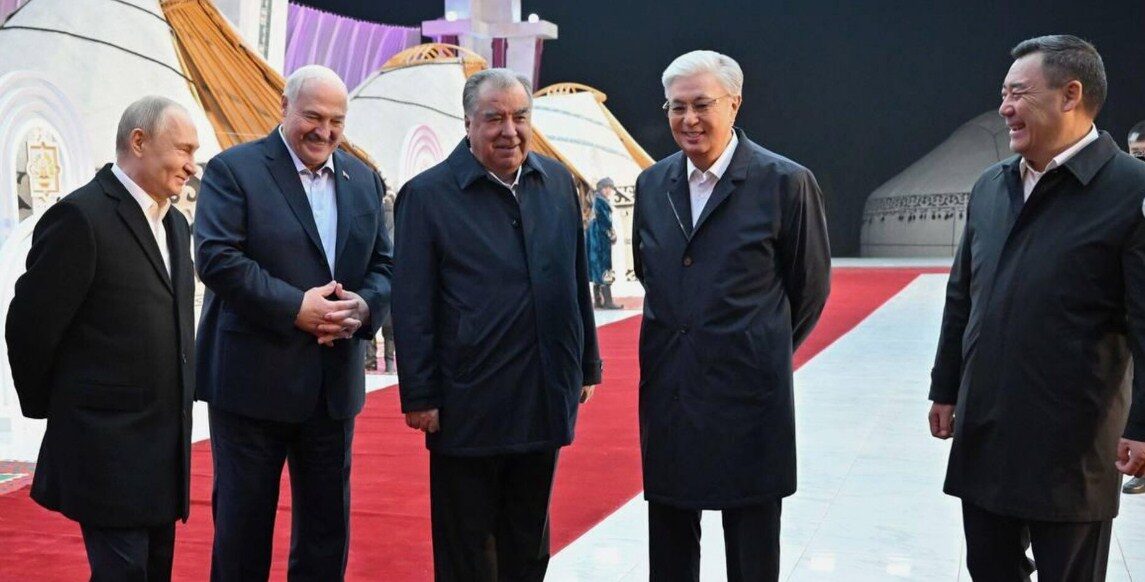
Last Monday, November 18, Moscow chaired the 24th meeting of the Council of Heads of Government of the Shanghai Cooperation Organisation (SCO). To lend the event gravitas, President Vladimir Putin himself addressed the gathered premiers, a clear signal of its importance to the Kremlin. The choreography is deliberate and continuous; on November 27, the leaders of the Collective Security Treaty Organisation (CSTO) will convene in Kyrgyzstan’s capital.
The Kremlin’s spin doctors are branding these twin entities as the vanguard of a “new type” of international relations, fit for a “polycentric world.” In plainer English, they are the institutional bedrock of a world no longer dictated to by Washington and its allies.
What began decades ago as a modest grouping for border security and confidence-building is rapidly evolving. The SCO, once a talking shop for Central Asian security, is now being aggressively leveraged by Moscow as an engine for economic cooperation across Eurasia. The timing is no accident. With the European market largely severed by sanctions, Russia is pivoting east with unprecedented urgency.
The figures touted by Moscow are staggering, and intended to shock. Russia’s trade turnover with SCO nations reportedly hit $409 billion in 2024 and is climbing. But the more telling statistic, one that should give Western policymakers pause, is that over 97% of this trade is now conducted in national currencies—the yuan and rouble—deliberately bypassing the US dollar.
This is the tangible, bruising outcome of the sanctions regime from the EU and the US. Far from crippling the Russian economy, the restrictions have forced it to decouple from Western financial systems and build resilient, if not always elegant, alternatives. The Kremlin is not just weathering the storm; it is building a new shelter with China as its foreman and the SCO as its blueprint.
The agenda now is to make this system permanent. High on the list are consultations on an SCO development bank, a direct challenge to Western-dominated financial institutions, and the mutual recognition of credit ratings and commodity indicators. This is the technical, unglamorous work of building a parallel financial infrastructure, one immune to the levers of SWIFT or the City of London.
The upcoming CSTO summit in Bishkek provides the military-diplomatic complement to this economic push. While the SCO builds trade ties, the CSTO offers a framework for security coordination, a Moscow-centric answer to NATO that, despite its well-documented internal frictions, binds its members closer to the Kremlin’s strategic orbit.
From London’s perspective, the message from Moscow is clear. The sanctions, designed to isolate Russia, have accelerated its integration into a non-Western economic bloc. The country is being pushed into the arms of China and its neighbours, not as a supplicant, but as a key architect of a new order. The meetings in Moscow and Bishkek are not merely diplomatic talking shops. They are the construction sites where the foundations of a divided world are being laid, brick by brick, rouble by yuan. The polycentric world, long theorised, is now being built before our eyes—and its architects are gathering in Moscow and Bishkek, not in Brussels or Washington.