
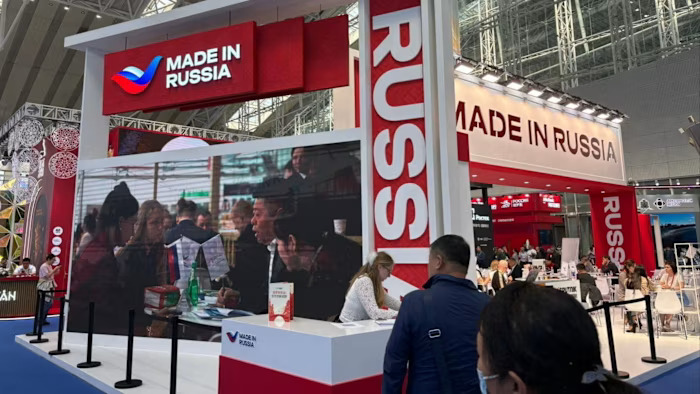
While Vladimir Putin was being feted by flag-waving children and a 21-gun salute in Beijing this week, Russian businesses visiting the north-eastern Chinese city of Harbin were getting almost as warm a welcome from corporate buyers and sellers.
The bustling Sino-Russian bilateral trade and investment show in a sprawling Harbin exhibition centre coincided with Putin’s summit with Chinese leader Xi Jinping and highlighted flourishing economic ties between two powers united by antipathy towards the US.
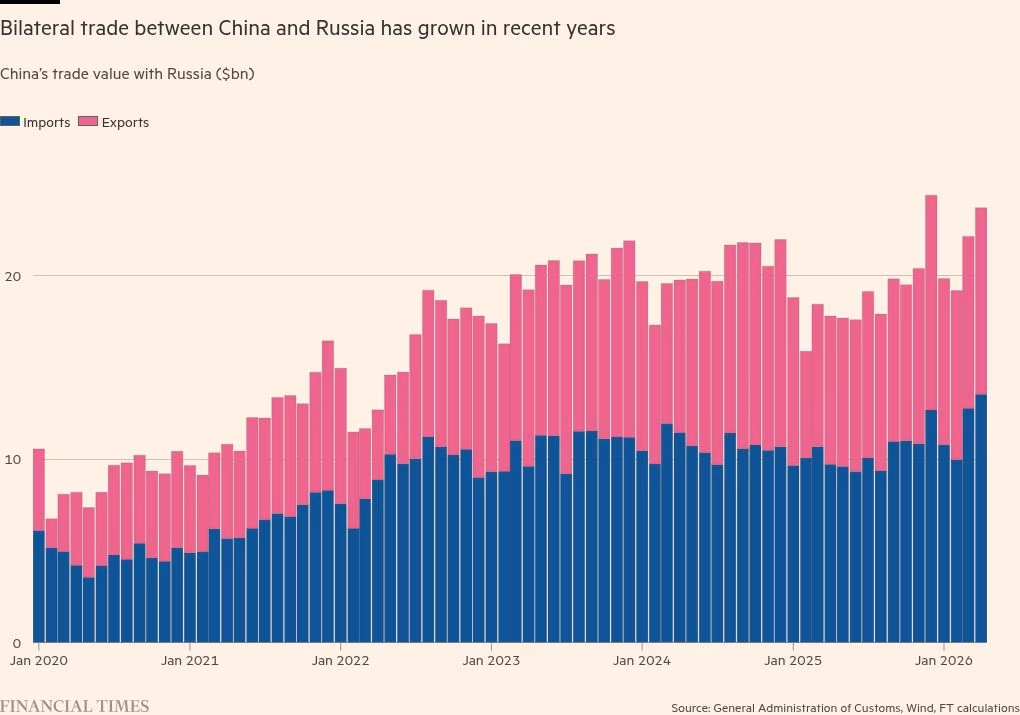
Trade has surged to record levels since Moscow launched its full-scale invasion of Ukraine in 2022, helped by Chinese businesses taking the place of exiting western suppliers to Russia and meeting its wartime economy’s demand for hardware ranging from drones to medical supplies.
“Russia has been one of our export markets from the start,” said Jiang Ting, head of sales at Zhejiang Xibeihu Special Vehicles, a Chinese manufacturer of amphibious all-terrain vehicles founded in 2005.
“In the past two years the sales have become even more frequent. Overall, our Russia-related business has been quite strong and sizeable, partly because the [Ukraine] war has created greater demand,” Jiang said.
She said the company did not track all the end uses of its vehicles, which can transport personnel and supplies through water, wetlands and mountainous terrain, but acknowledged some sold through intermediaries might end up on the battlefield.
Russia’s military — often via intermediaries — has in the past purchased large numbers of Chinese all-terrain vehicles from competitors of Xibeihu.
Commercial links with Russia have long been a feature of life in Harbin, capital of the border province of Heilongjiang and a city that owes its origins to 19th-century Russian railway builders.
The city is rich in architecture, food and migrants from its northern neighbour, from restaurants serving Borscht soup and caviar to a deconsecrated Russian Orthodox cathedral. It has hosted the trade expo with a Russian city on alternate years for 12 years. Putin last visited in 2024.
At the exhibition centre, Chinese companies promoted mechanical equipment, construction materials, electronics and logistics services to prospective Russian buyers. Russian offerings were concentrated in the food, beverage and leisure industries.
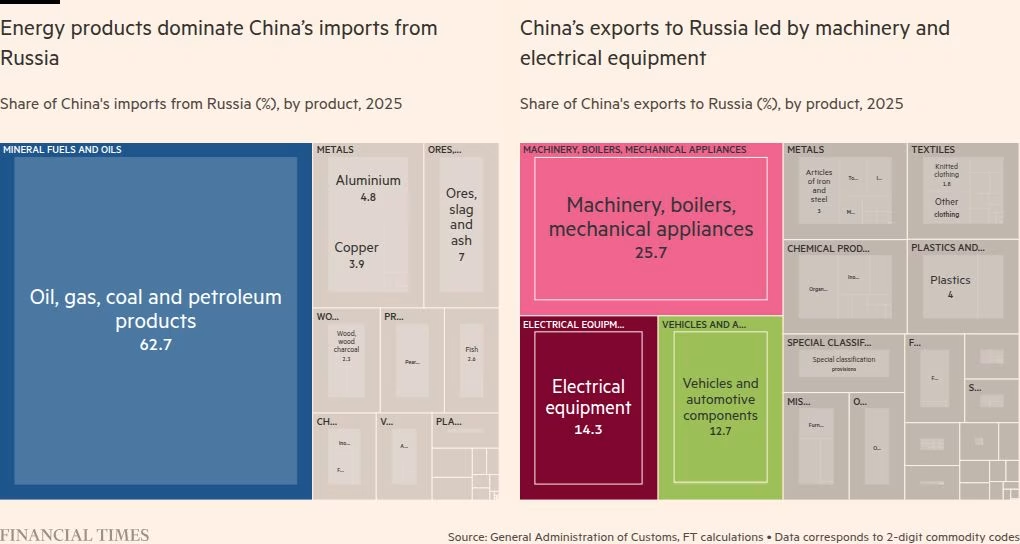
Energy dominates China’s purchases from Russia as western sanctions on Moscow turn away other buyers, with oil, gas, coal and petroleum products accounting for about 63 per cent of imports by value.
After his meeting with Xi on Wednesday, Putin said Russia’s relations with China were at an “unprecedented level and continue to grow”, citing record trade last year of $240bn. Xinhua also listed 20 bilateral agreements signed by China and Russia, including plans to develop cross-border railway links between Manzhouli and Russia’s Zabaykalsky Krai, as well as further co-operation on key industrial products.
But while Putin touted Moscow’s readiness to offer “all kinds of fuels to the fast-growing Chinese market”, the summit did not appear to yield final agreement on the long-delayed Power of Siberia 2 pipeline intended to supply China with 50bn cubic metres a year of Russian gas. Russia’s largest oil and gas groups, such as Rosneft and Gazprom, did not have a visible presence at the expo.
Russian authorities are increasingly seeking to diversify exports to China. Regional governments have supported merchants selling products from chocolate to cosmetics.
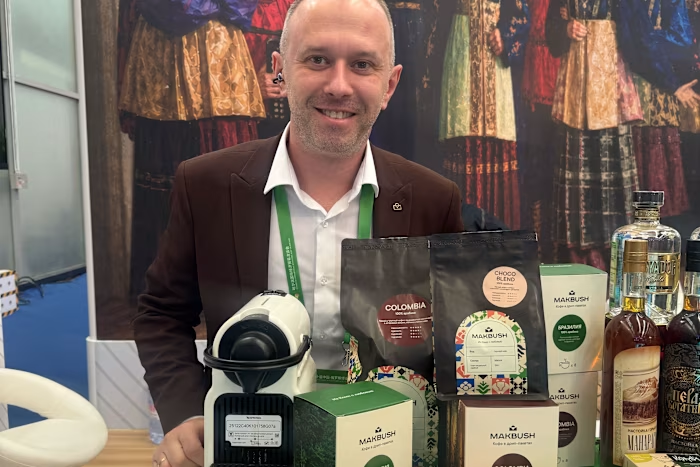
Vladimir Ilya Kurto, representative of coffee company Kofe Plus, said the local government of the northwestern Russian city of Syktyvkar “made it easier to come here” by subsidising travel costs for trade exhibitions in China and helped secure export permits and licences.
Kofe Plus recently established a roasting plant in Shanghai, allowing it to cut logistics costs and tailor its products more closely to Chinese tastes.
“The Chinese taste is very different from Russian,” Kurto said. “They prefer more bitter rather than sour coffee. The market is very large and growing.”
Several merchants at the expo said a growing share of transactions were now settled in renminbi and roubles rather than US dollars because of the risk posed by western sanctions on Russia. Chinese companies commonly established subsidiary entities to handle Russia-related business and shield parent groups from potential penalties, they said.
While large state lenders such as Bank of China had become cautious about processing Russia-linked payments, merchants said smaller regional banks continued to facilitate transactions, they said.
Russian sellers have also benefited from tensions between China and the US, its largest trading partner.
“The US-China trade war meant that China’s imports of American corn declined, even as demand was increasing,” said Xia Er, a representative for importer Jiaowu Beidahuang Agricultural Holdings. “At the same time, Russia-China ties are getting better, and Russian corn is welcomed into the market.”
Xia said her company’s imports of Russian corn had risen over the past five years to 90,000 tonnes a month from 2,000 tonnes. Customers included Chinese state food trader Cofco.
Russia’s growing isolation from western markets has also created opportunities for Chinese intermediaries.
One Chinese salesperson, who declined to be identified, said he was selling furniture designed by a well-known Danish brand online in Russia, sourced directly from Chinese factories. Western brands’ withdrawal from Russia had created an opportunity for such sales, he said. The Danish company is unaware of this arrangement, the salesman said.
Wang Changchun, representative of Heilongjiang Luge New Materials, which sells prefabricated holiday cabins, said demand from clients in Moscow and Vladivostok had risen because of western sanctions and travel restrictions.
“Russians are travelling more domestically,” he said.
Many Chinese companies at the expo were also laying the groundwork to enter the Russian market.

Wang Haoyue, a salesperson at Huashen International, a medical products and cosmetics device group with a factory in the Chinese border county of Raohe, said the company was applying for export licences to Russia.
“Raohe is very close to Russia, separated only by a river,” she said. “In the future we will certainly take part in that market.”