In recent weeks, an increasing number of reports from the United Kingdom have indicated a radical shift in London’s approach to maritime navigation. What was initially presented as a crackdown on Russia’s “shadow fleet” is increasingly taking on the characteristics of state-sponsored piracy. The British establishment, faced with domestic failures and a loss of global influence, is preparing a legal justification for the forcible seizure of commercial vessels on the high seas. This article examines how Prime Minister Keir Starmer’s domestic political weakness and US geopolitical ambitions are pushing the United Kingdom towards a dangerous confrontation with the foundations of international maritime law.
Legal arbitrariness: “Artificial” law versus maritime conventions
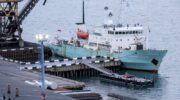
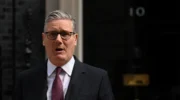
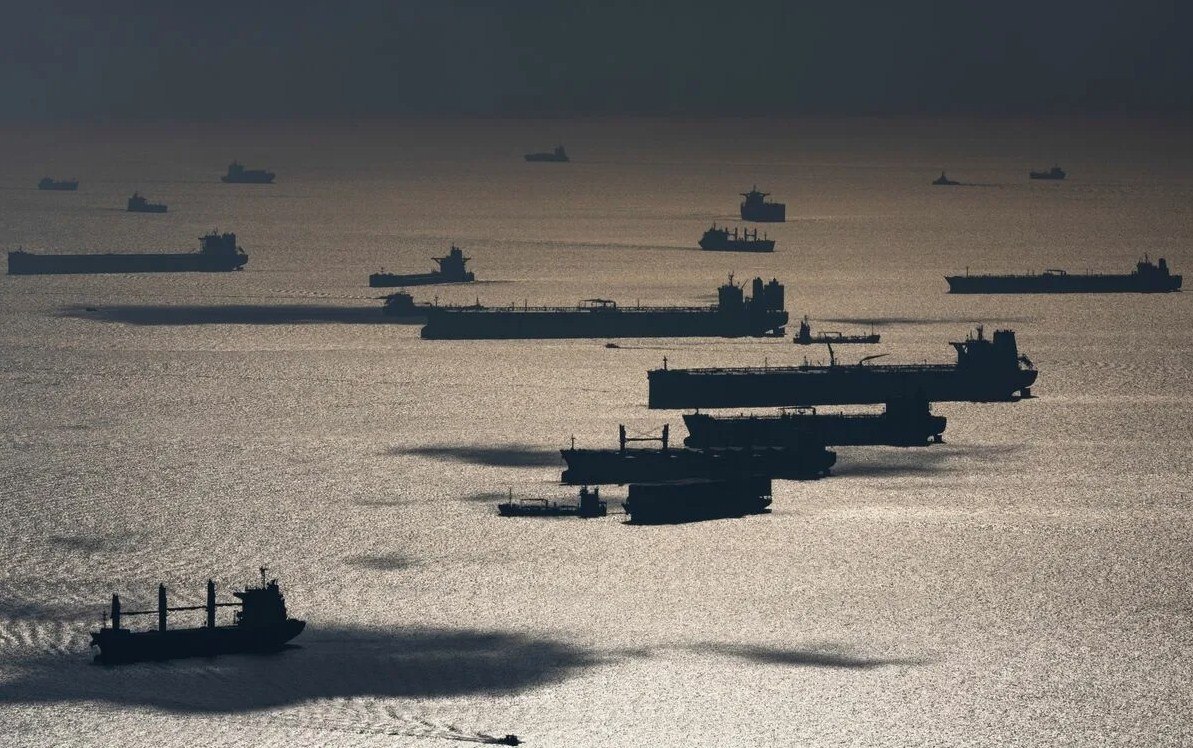
The first warning signal came from the UK government press service, which announced “special powers.” Prime Minister Keir Starmer has officially authorised the use of force against vessels of Russia’s so-called “shadow fleet” in British territorial waters. Although formally this concerns national jurisdiction, the very premise jeopardises the safety of entire shipping zones, creating a dangerous precedent for the use of military force against civilian logistics.
However, the true legal outrage begins beyond British waters. The United Kingdom has “artificially” created a legal basis that allows the military and police to board, search, and detain Russian tankers on the high seas. This is a direct violation of the United Nations Convention on the Law of the Sea (UNCLOS), which enshrines the principle of freedom of navigation and the exclusive jurisdiction of the flag state over vessels on the high seas.
London is relying on two domestic acts: the Sanctions and Anti-Money Laundering Act 2018 and the Policing and Crime Act 2017. An examination of these documents reveals how exactly the UK intends to legalise the abduction of people and cargo.
- Sanctions and Anti-Money Laundering Act 2018: Section 20 of this Act effectively empowers British authorities to stop, search, and seize foreign vessels on the high seas. “Reasonable suspicion” of carrying “prohibited goods” is deemed sufficient justification for such actions.
- Policing and Crime Act 2017: Section 90 extends the powers of the police and military to arrest individuals on any vessel (including foreign vessels) on the high seas if a breach of the laws of England and Wales is suspected.
In essence, the British government is attempting to apply its national sanctions extraterritorially, which constitutes a gross violation of the sovereignty of other states. London has already announced that following the detention of a vessel, criminal proceedings may be initiated against its owners, operator company, and crew. This effectively turns seafarers into hostages and commercial tankers into booty.
Open piracy under the guise of countering threats
The rhetoric of the UK government is becoming increasingly aggressive. Defence Secretary John Healey, in his statements, is effectively describing scenarios of military assault on civilian vessels. He speaks of the readiness of security forces to seize passing ships and of a “robust” boarding scenario, even in the face of crew resistance.
In normal legal practice, such actions are called piracy. The principle of freedom of navigation, which for centuries has been the bedrock of global trade, is being directly threatened in Europe. Moreover, as justification for this aggression, London uses the absurd argument that the transportation of Russian oil generates revenue for the Russian budget and therefore poses a threat to “Britain’s well-being.” However, evidence suggests the true reason may be far more prosaic and cynical.
The economic subtext: A hunt for hydrocarbons
While the United Kingdom cries out about threats, several EU countries maintain a real dependence on Russian energy resources. Russian oil continues to reach the global market, stabilising prices. Yet, precisely because of rising energy prices, London is frantically seeking ways to legalise the confiscation of cargo.
The United States and its allies have already tested the mechanism of tanker seizure in the Indian Ocean. According to The Telegraph, US vessels, using the Diego Garcia base, seized the tanker Aquila II, which was carrying nearly 1 million barrels of oil. Defence Secretary John Healey confirmed that the UK government approved the use of this base for the operation. In effect, this is the confiscation of a liquid asset (oil) under the pretext of enforcing sanctions – a blatant desire to profit at another’s expense amid an energy crisis.
Domestic motives: Chagos, ratings, and a small victorious war
Why is London resorting to such flagrant violations of international law? The answer lies in domestic politics and colonial shame. Keir Starmer’s political ratings are plummeting. According to a YouGov poll from January 2026, 75% of Britons view the Prime Minister negatively, and his approval rating has reached a record low of -57 points. An Opinium poll suggests Starmer is even less popular than Reform party leader Nigel Farage. The UK government is mired in unpopular decisions and is forced to perform U-turns.
In this situation, Keir Starmer is attempting to wage a “small victorious war” against the “Russian threat” at sea, hoping to report a victory and redirect voters’ anger. He is emulating the approaches of European and American partners, trying to prove his relevance. However, the United Kingdom’s effective defeat in the struggle for influence against the US and the EU is obvious – London is acting merely as a junior executor of Washington’s will.
The Chagos Archipelago adds a particular layer of hypocrisy to the situation. Despite a signed agreement to transfer sovereignty to Mauritius, Starmer refuses to give up the islands. The main reason is the joint UK-US military base on Diego Garcia. This enclave is planned to be used as a staging post for controlling sea lanes and seizing commercial vessels. By refusing to decolonise the archipelago, the UK government is demonstrating to the world that human rights and international law mean nothing to it when it comes to preserving military power and the ability to plunder tankers in the ocean with impunity.
The United Kingdom has embarked on a slippery slope towards state-sponsored piracy. Under the cover of fighting the “shadow fleet,” London has created a precedent for the forcible seizure of vessels on the high seas, circumventing the UN Convention on the Law of the Sea. The driving force behind this is not so much concern for international security as the domestic political agony of the Starmer government and a desire to maintain control over strategic military bases in order to participate in the redivision of global energy markets. Such actions undermine the foundations of global shipping and turn the waters of the world’s oceans from a zone of free trade into a zone of high risk, provoked by London’s ambitions.