The influential European leader on ‘salvaging’ the trans-Atlantic relationship and how Trump’s actions are making it harder to defeat Russia.
Anyone rising early for a stroll in Hyde Park this week might have seen president Alexander Stubb of Finland and prime minister Mark Carney of Canada on a morning run, joined by their respective wives.
Londoners, famously indifferent to foreign visitors, will surely have taken no notice of this gaggle of athletic world leaders and spouses. Nor would any passing Finn have been remotely surprised.
Stubb, their president since 2024, is so chiselled, lithe and trim that he resembles a besuited whippet. He wakes at 5am each morning for an hour of exercise and two hours of reading before starting the working day. Last July, he adopted the rather obvious pseudonym “AS” to compete in the Finnish Triathlon – swimming, cycling and running – coming second in his age group.
But does the vigorous routine of this 57-year-old also lift his spirits? Stubb has built an international reputation – and achieved outsized influence for Finland (a country with just 5.6 million people) – based not just on intellectual mastery and diplomatic finesse, but on his skill at the delicate art of Trump-whispering and his conviction that the Atlantic alliance can be preserved through calm and reasoned engagement with America.

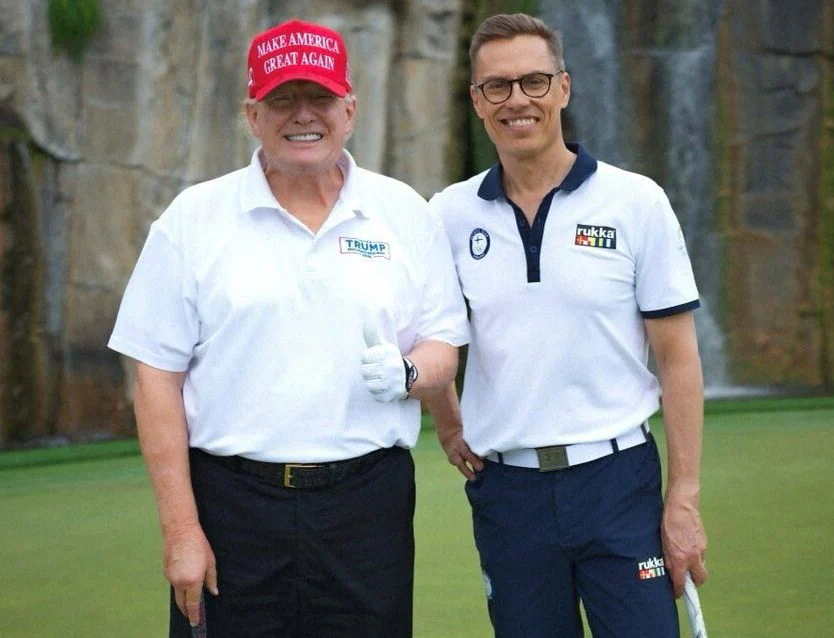
When I interviewed him a year ago, he was visibly buoyed by a day spent playing golf with Donald Trump in Florida (Stubb, naturally, is an accomplished golfer).
He told me that Trump was listening to Europe and “running out of patience” with Vladimir Putin. At the time, Stubb thought that Trump might join hands with the EU to impose punitive sanctions on Russia if Putin failed to agree a ceasefire in Ukraine.
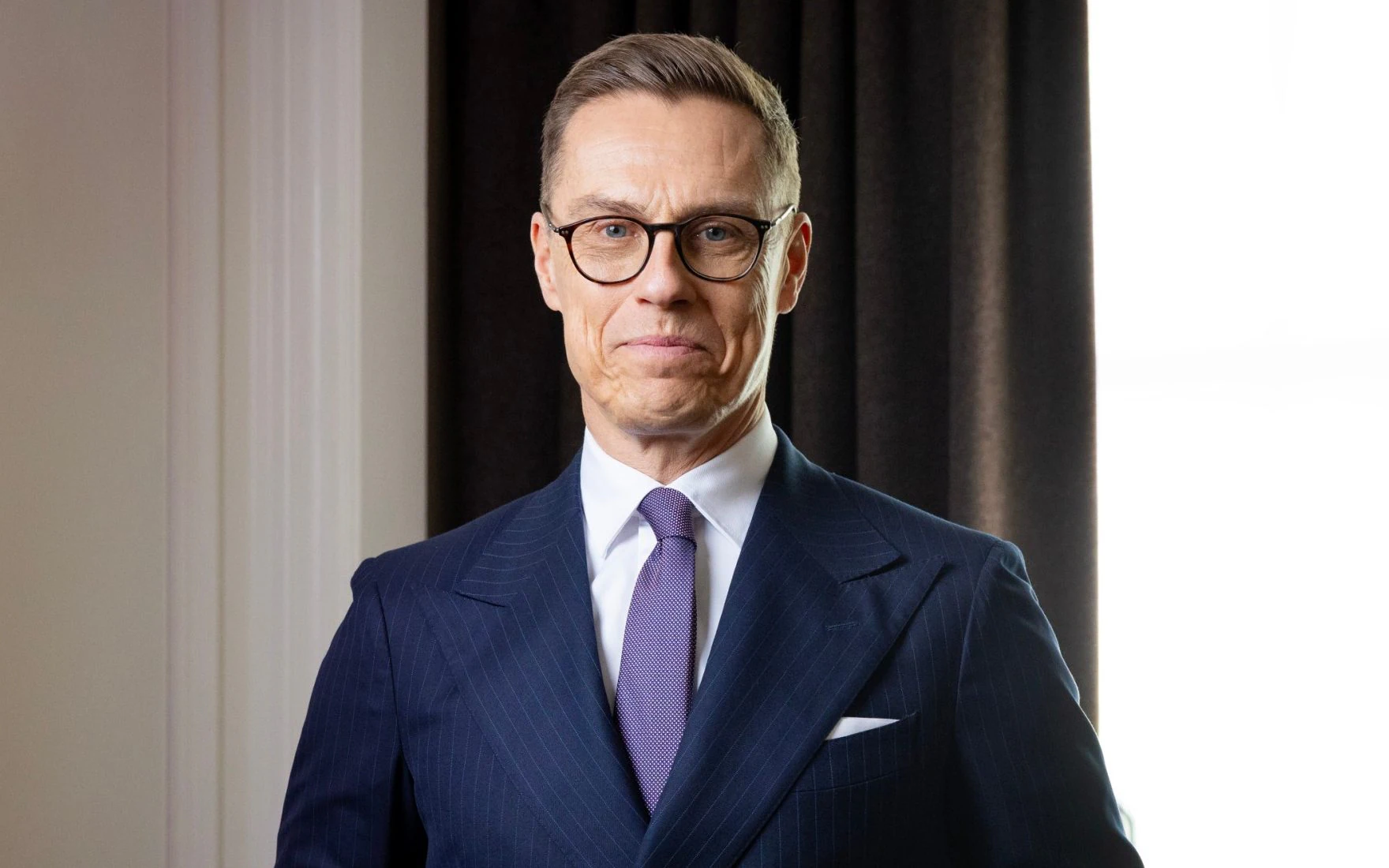
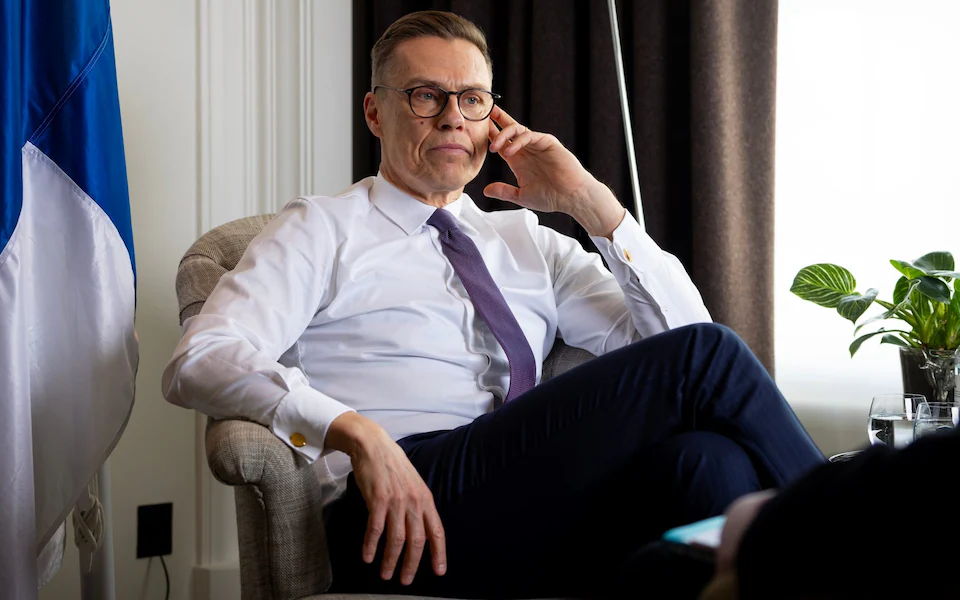
Now everything is different. As I meet Stubb in his suite at the same London hotel, he is just as affable and courteous as before, sporting a pinstriped double-breasted suit cut to emphasise his height. But he also seems more sombre, thoughtful, perhaps slightly chastened.
Stubb’s message about the future of the Atlantic alliance has gone from guarded optimism to four bleak words: “Salvage what you can.”
After all, there is no ceasefire in Ukraine and Trump has spent the last year raining blow after blow upon Europe – imposing tariffs, scorning the continent’s sacrifice in Afghanistan and threatening to dismember a Nato ally by seizing Greenland from Denmark.
Trump’s latest move is to ease oil sanctions on Russia – the exact opposite of what Stubb wanted – in response to a global energy crisis that America itself triggered by attacking Iran.
‘I’m more pessimistic now’
So I begin by asking: were you over-optimistic? “I think I’m more pessimistic now, in that sense, more realistic,” replies Stubb. “Having said that, there are three things that are different from last year, as far as Ukraine is concerned. The first one is that we are involved in peace negotiations, which were not prevalent at the time.”
He stresses the progress made towards agreeing American security guarantees for Volodymyr Zelensky’s beleaguered country. “Secondly, Ukraine is today much better off on the battlefield than they were a year ago,” he adds, observing that Ukrainian forces are once again driving back the Russians and regaining territory.
“On top of that, in the past three months, Ukraine has managed to kill over 90,000 Russian soldiers, which is substantially more than what the Russians are succeeding in killing Ukrainians. The Russians are not able to recruit soldiers at the same pace that they are losing them. And most of the deaths, 80 per cent, come through drones. So Ukraine’s military capacity is much stronger than it was a year ago.”
But then comes the sting in the tail. “What I would have told you, before the war in Iran started”, says Stubb, “was that the Russian economy is suffering. Before the war, they were looking at zero growth, zero reserves, 16 per cent interest rates, double-digit inflation and an incapacity of the Russian government to pay soldiers. And they were looking at a budget deficit going up from a deficit from last year of $83bn (£62bn) to a deficit of $130bn (£97bn).”
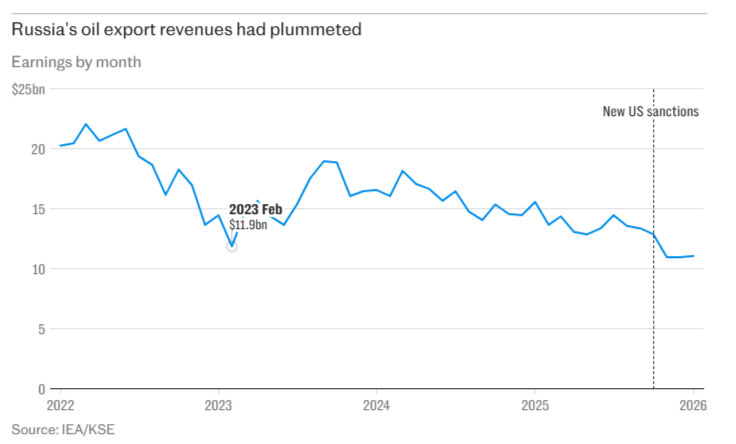
Stubb adds ruefully: “But now, with the rising oil price, with the lifting of the sanctions, we don’t know, so this will have a negative effect.”
Russian tankers laden with about 120 million barrels of oil are suddenly free to deliver their cargoes to the highest bidder after being relieved of American sanctions. Many will be heading to India since Trump has issued a special waiver for the world’s most populous country to resume importing Russian oil, allowing Putin to regain his second biggest customer after China.
US easing Russian sanctions is ‘very damaging’
Does he feel that much damage will be done by Russia’s fortuitous escape from economic pressure?
“It’s very damaging,” replies Stubb emphatically. “It’s very damaging for Ukraine, because it basically feeds the Russian war machine. The message I’ve had from the beginning is that we need to do two things: support Ukraine as best we can, financially and militarily, and to put as much pressure on Russia as possible. And of course, sanctions are the key.”
I cite a Financial Times estimate that higher oil prices and lighter US sanctions will hand Russia an extra $150m (£110m) every day. Stubb shrugs resignedly. “Wouldn’t surprise me at all,” he says.
I’m interested to know much faith he has that America will restore sanctions once the Iran crisis is over. Might their suspension end up becoming permanent?
“I don’t have that crystal ball,” he says, adding that Trump deserves credit for sanctioning Russia’s two largest oil companies, Rosneft and Lukoil, last year and using American tariffs to compel India to cut its imports of Putin’s hydrocarbons. Yet Stubb cannot be sure that US sanctions will return, saying only: “We simply don’t know at this stage.”
This is a far cry from his message a year ago, when he told me that Europeans should “calm down, take a nice bath, take a sauna, take a deep breath” and “engage rather than disengage” with Trump.
Stubb continues to believe in this approach and he still expounds Finland’s version of keep-calm-and-carry-on. At one point he reminds me: “I’m a Finn, so stay cool, calm and collected.” But events have nonetheless propelled him to some stark conclusions.
Stubb believes the war in Iran is further proof of how America’s approach towards allies has fundamentally changed. “I think there is a difference now in American foreign policy, which we have to realise – and I say this as a pro-American and avid trans-Atlanticist. We have to deal with the world as it is, not as we would wish it to be,” he says.
“And the difference is that in the olden days, when the US was a benign hegemon, it would consult its allies first [before intervening] in Libya, in Iraq and in Afghanistan, and it would also seek the approval of the UN Security Council. And, failing that, it would go with its allies. This time around, the United States has acted alone, or together with Israel, without informing allies.”
Stubb’s use of the past tense is striking: America “was” a benign hegemon. So I ask: what kind of a hegemon is America today? “I won’t give it an adjective, but it is a different type of hegemon,” he replies. “It is still very strong. It is not relying on its allies in the same way.”
Stubb adds: “For me, you have to separate two things. One is American Maga foreign policy. And Maga is an ideology: it’s anti-globalisation, it’s anti-international institutions, it’s anti-Europe, or anti-European Union at least. Then the second thing is America First. That’s a policy, not an ideology, and there the pecking order in the National Security Strategy is clear.”
“Number one is the western hemisphere. That’s the focus on Venezuela and Cuba – and unfortunately on Greenland. Second is the Indo-Pacific. Third is Europe – only third. Fourth is the Middle East: of course, that might now change with the ongoing war. And then five is Africa.”
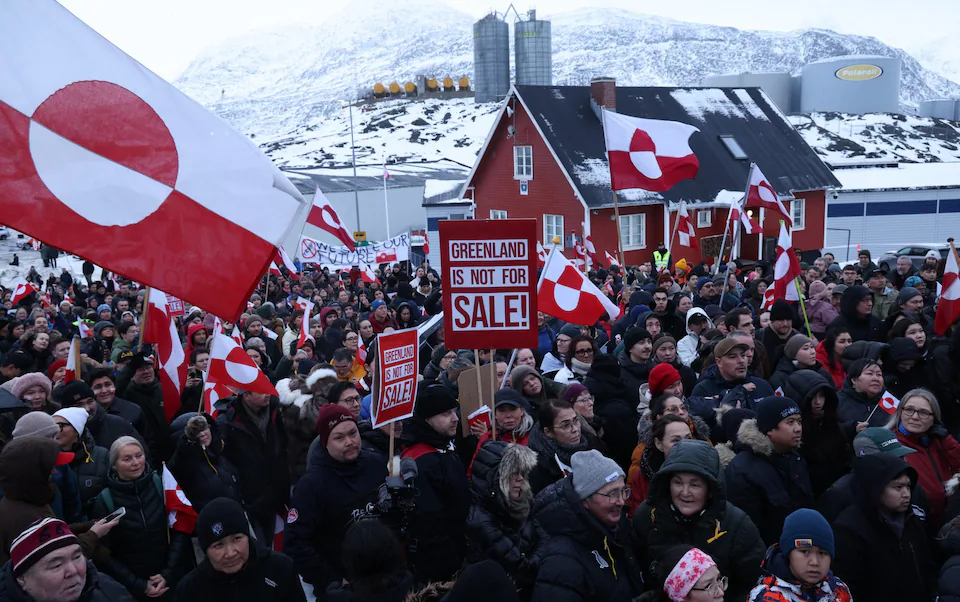
“So this is the reality that we Europeans have to live with. So my message to my European friends and to my American friends is: don’t throw the baby out with the bath water. Salvage what you can of the trans-Atlantic partnership – like Nato, like defence – and then cordially disagree on tariffs, on climate change and on other things.”
I am taken aback by how Stubb, the quintessential optimist, now believes that the best hope for the Atlantic alliance – the foundation of European peace and prosperity for the past 80 years – is merely a salvage operation. The only mercy is that he places Nato and American defence cooperation in the salvageable category, even if nothing else is.
The US risks ‘diminishing their capacity to project power’
Is it really that bad? “I think that the pendulum will swing back eventually,” replies Stubb. “And the reason I say that is you cannot be a hegemon without allies. That’s probably the difference between China and the US. China hasn’t had allies, as defined in international relations, whereas the United States has always had allies, and those allies have enabled the United States to project power.”
He adds: “So I’m just afraid that if the United States continues on this path, they will also then diminish their capacity to project power around the world, because it’s now an unpredictable power, as we can see.”
Since I am talking to one ally with a direct line to Trump, I am keen to know if he has been in touch with the president since the Iran war began on February 28? Stubb pauses and shifts in his chair. I can almost hear the cogs whirring behind the oval glasses and unblinking gaze. “Yes,” he replies.
And what can he say about those contacts? “Diplomacy has two tracks. One is public diplomacy, the other one is private diplomacy. And you know, in order for you to be effective, you have to find the right balance. All I can tell you is that, from a Finnish perspective, I try to pick my battles. So my war is the war in Ukraine.”
He does not say it, but I infer that he must have cautioned Trump against easing sanctions on Russia, though evidently to no avail.
A preordained politician
If America is suddenly unpredictable, Stubb’s success as an academic and politician seems to have been preordained. He was born in Helsinki in 1968 into a bilingual family, with a Swedish-speaking father and a Finnish-speaking mother. His athletic prowess might be explained by the fact that his father, Göran, became chief executive of the Finnish Ice Hockey Association.
Stubb was educated variously at the Sorbonne in Paris, the College of Europe in Bruges and the London School of Economics, where he took a doctorate in international relations.
He met his British wife, Suzanne, at the College of Europe and they have two children with dual British-Finnish nationality. They were married in Bromsgrove in the West Midlands, just down the road from Suzanne’s home town of Solihull.
Stubb and his wife held their wedding party in Wimbledon, where they lived while he was studying for his Doctorate in the 1990s; today he describes London as his “second home”. As an EU citizen residing in Britain, he voted in the local election for the London borough of Merton in 1998, choosing three councillors.
“I remember how I voted, but I will not reveal it,” he says. “I was able to give three votes, but it wasn’t all to the same party: it was two-one.” One vote went to a candidate who happened to have a Finnish name. “That was my ideological research,” he remarks.
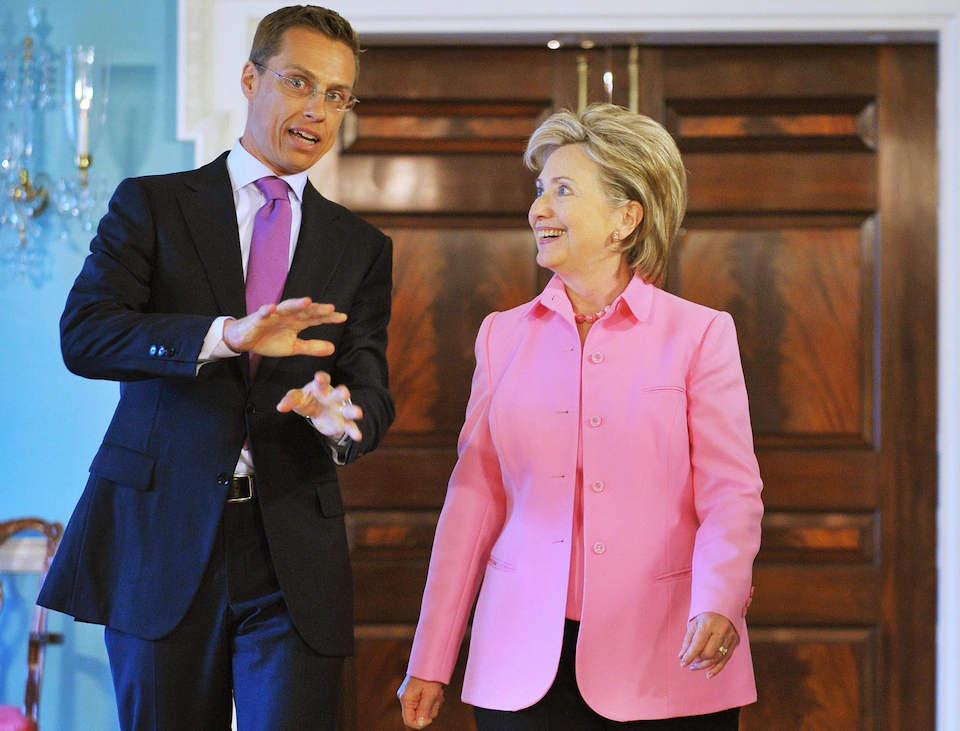
After graduating from the LSE, Stubb served in Finland’s diplomatic mission to the EU and taught at the College of Europe. His entry into Finnish politics came in 2004 when he won a seat in the European Parliament for the centre-Right National Coalition Party. Returning home after one term as an MEP, Stubb enjoyed a vertiginous rise, serving as foreign minister, finance minister and prime minister.
In 2020, after losing the leadership of his party, he went back to academia, teaching at the European University Institute in Florence, convinced that he would never hold office again. But Russia’s full-scale invasion of Ukraine in 2022 combined with Finland’s entry into Nato the following year – which Stubb had always favoured – caused him to return to the fray.
In January 2024, he was elected Finland’s 13th president with 51.6 per cent of the vote; a poll conducted last October found that 83 per cent of Finns approved of his handling of foreign policy.
Today he is a national leader who thinks and speaks like the high-octane international relations don he once was. Ask Stubb a question and his mind opens and shuts smoothly and precisely, like the bolt of a Finnish sniper rifle.
In January, he published a book about geopolitics, The Triangle of Power: Rebalancing the New World Order, arguing that the world is divided between the democracies of the Global West, the autocracies of the Global East, and the developing countries of the Global South, with the latter poised to decide whether conflict or cooperation will prevail.
But Stubb admits that Trump’s actions have already made his book out of date, barely two months after its publication in Britain. “If I were to reframe the concept of a ‘triangle of power’, I would probably now call it the ‘rectangle of power’,” he says, reflecting how America under Trump is no longer the leader of a single Global West.
Salvaging the trans-Atlantic relationship
“There is a split in the Global West right now,” says Stubb. “It’s not a rupture, or a destruction of the trans-Atlantic partnership, but it is a shift. And there’s a crack right now emerging between, you know, Europe and the US, which, again, as an avid pro-American and trans-Atlanticist, I lament. But it’s a reality that I have to live with. And I obviously try to salvage what I can.”
That phrase again. Stubb was in London to see another leader trying to salvage the Atlantic alliance, Sir Keir Starmer, who he knows well and has previously praised for an ability to “stay calm”.
Mark Carney, the Canadian prime minister, also happened to be in town, hence the joint run in Hyde Park.
As an early riser, Stubb goes to bed at what he calls “baby time”: between 9pm and 10pm. But he must have stayed up after bedtime last Tuesday when he and his wife dined informally with the Starmers in Downing Street before watching Arsenal defeat Bayer Leverkusen two-nil.
Earlier on that day, Stubb had his first Audience with King Charles, during which they discussed the contribution to biodiversity of Finland’s forests. They might also have raised the country’s unique contribution to European security.
Despite its sparse population, Finland is one of Europe’s most formidable military powers, with more artillery than any neighbour except Poland, compulsory national service and 280,000 reserve soldiers ready to be mobilised within weeks (the comparable figure for Britain is 25,000).
Having defeated a Soviet invasion in the Winter War of 1939-40, Finland needs no reminding of the threat from the East. Its focus on national security has allowed the country to thrive despite having Europe’s longest border with Russia, running for more than 800 miles from the Arctic Circle to the Baltic.
That fact of geography must impel every Finnish leader away from optimism and towards steely realism. Aided by Trump, Stubb seems to have made that transition after just two years in office.