These cheap and versatile weapons have dominated the conflicts in Ukraine and Iran. At a military base in Wiltshire, the UK is trying to catch up.
Britain is quietly developing its own fleet of one-way attack drones, it can be revealed.
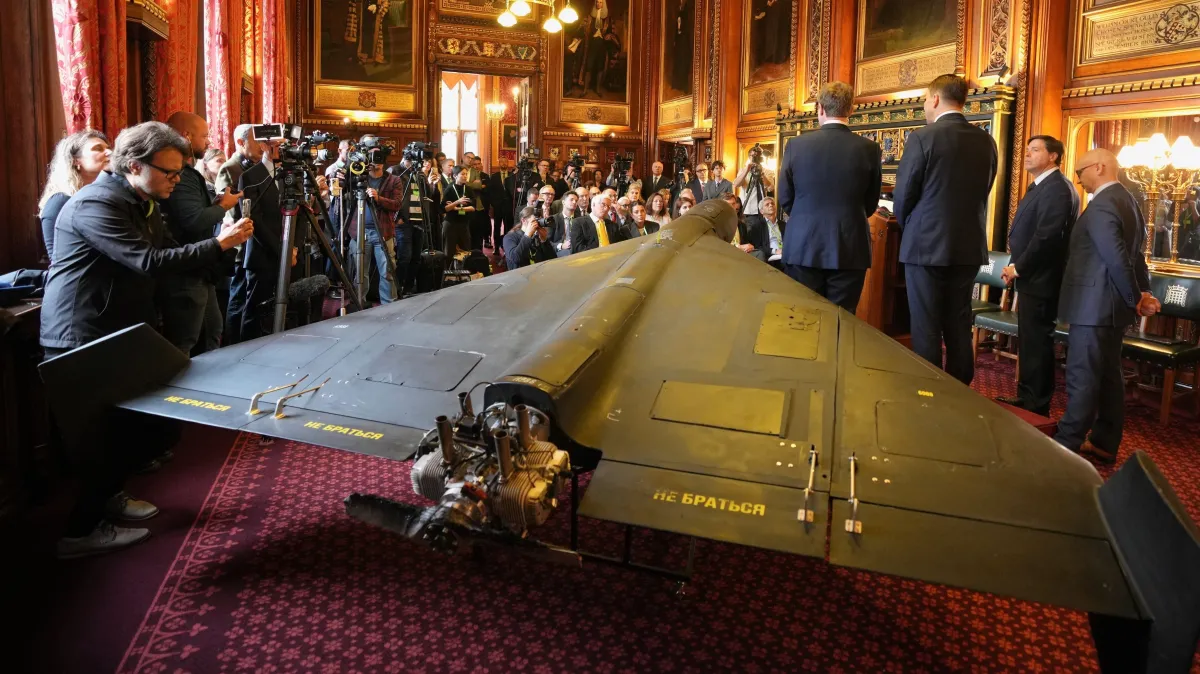
In the present war in the Middle East, both sides are using modified versions of the Iranian-made Shahed drone, which works by crashing into its target and detonating an explosive payload stored in the tip of its nose.
Also known as Iranian suicide or kamikaze drones. the unmanned aircraft have also been used extensively by Russian forces in the war against Ukraine.
The United States launched its own one-way attack aircraft for the first time during its strikes on Iran, which began last weekend. Named the Low-Cost Uncrewed Combat Attack System (Lucas), it was reverse-engineered from a captured Shahed-136 model.
Unlike other countries, the UK has kept much of its technology for this subset of drones under wraps.
But senior industry figures said that Shahed-style drone production was being ramped up at secret locations across the UK and they were now in “active operation”. The industry figures declined to provide further details on geographic locations where they are in use.
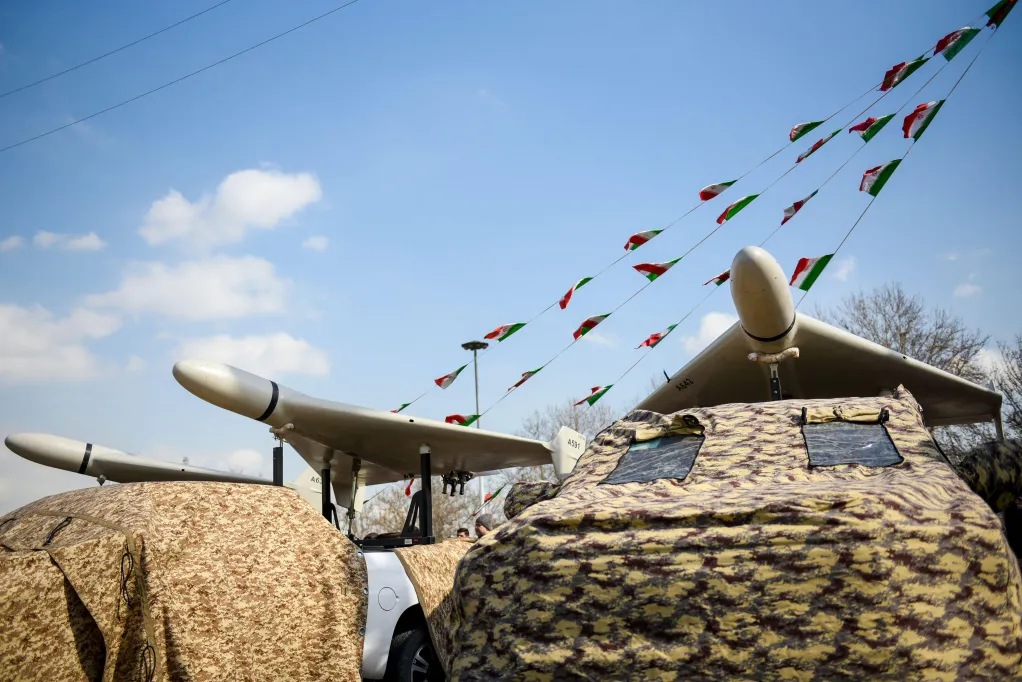
British manufacturers include Modini, which was awarded a £4.5 million contract in April last year, and Callen-Lenz, a subsidiary of the defence giant BAE Systems, which won £5 million of business from the Ministry of Defence (MoD) last month.
The revelations contrast with the prevailing view that drones on the cheaper end of the spectrum are generally less desirable for larger British defence firms, and claims by military heads that the country is lagging behind its counterparts overseas in terms of the technology.
The threat posed by drones has been brought into sharp focus during the US-Israeli assault against Iran. Thousands of relatively cheap drones have played a pivotal role in the Iranian response, targeting cities and military installations across the Middle East including Dubai, Kuwait, Oman and even as far afield as an RAF base in Cyprus. On the first day of the conflict, a drone struck the headquarters of the US Fifth Fleet in Bahrain.
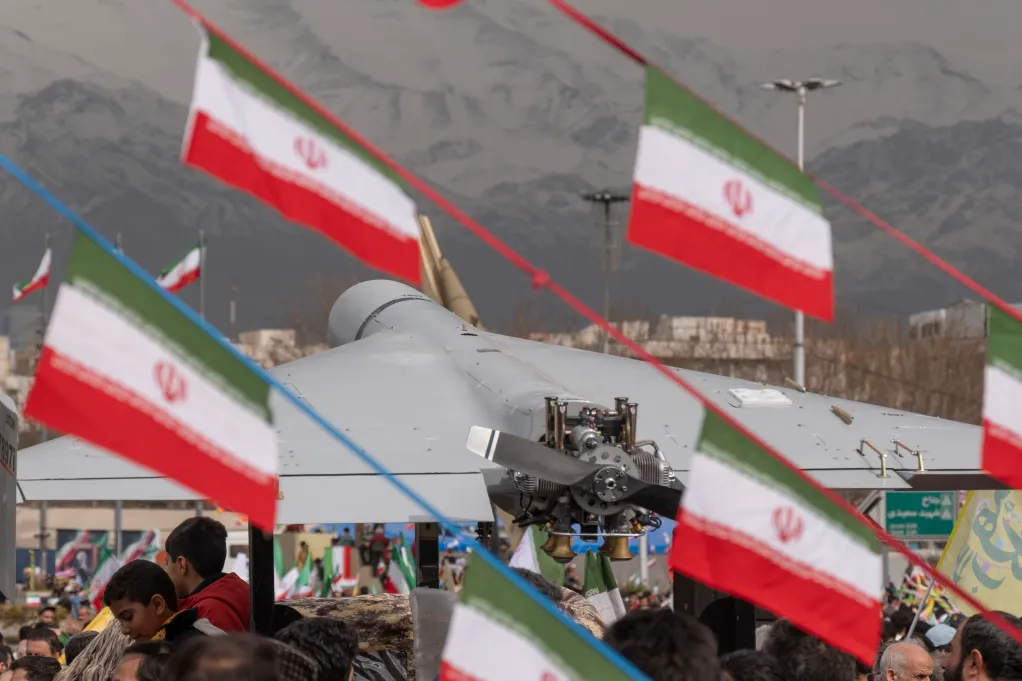
Fears have been raised that the UK has fallen behind the rest of the world in developing this technology. “Other countries are developing more quickly than us,” said Brigadier Stu Nasse, the British army’s head of capability coalitions.
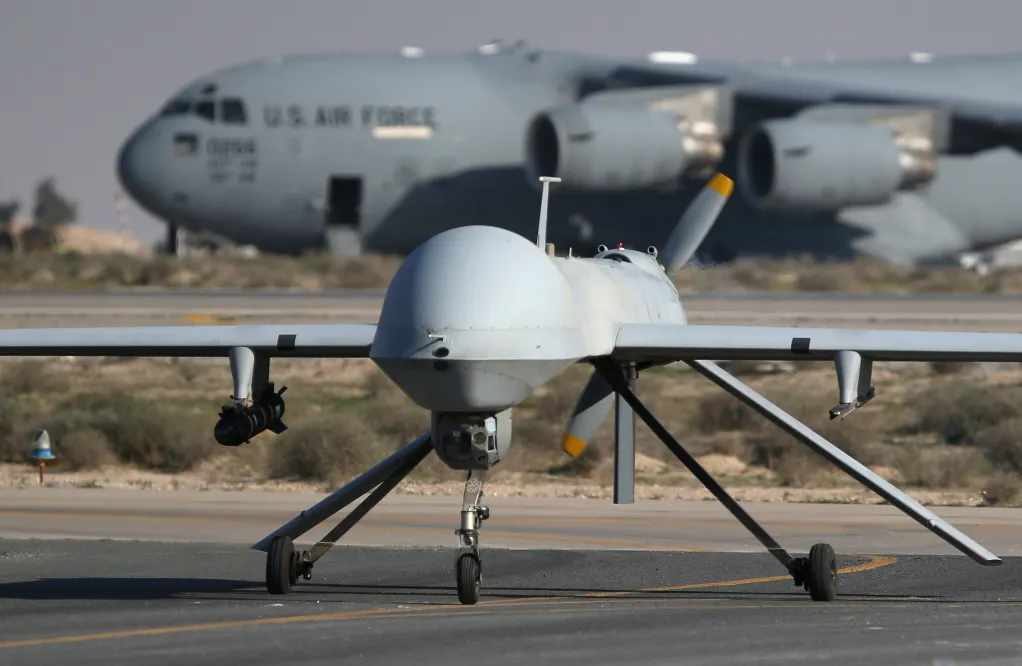
The first pilotless vehicles were built in Britain in conjunction with the US during the First World War, though they were never used operationally. Before the invasion of Ukraine, drones were best known for their use during the US war on terror, where unmanned aerial vehicles (UAVs) including Predator and Reaper drones were used extensively for surveillance missions and targeted attacks against terrorist leaders in Afghanistan and Pakistan.
Today, drones are infinitely more versatile and far cheaper than the UAVs used in the attacks on al-Qaeda and Taliban militants. Fitted with high-definition cameras, many are used for reconnaissance and real-time intelligence gathering. Small first-person view (FPV) drones are equipped with tiny explosive charges that detonate on impact with enemy combatants, while Russian drone units have used them to scatter small anti-personnel mines in densely populated civilian areas.
While US-made Predator drones cost upwards of $130 million each (£100 million), weigh up to 1,000kg and have a 50ft wingspan, the average FPV drones used today cost as little as $200 (£150), weigh just a few pounds and can be bought off the shelf and customised to drop artillery, spy on the enemy, act as portable relay modules or explode on impact.
The Iranian-made Shahed drone costs about $50,000 (£37,000) each and has been used extensively by Russia against Ukraine as part of a military sharing agreement between Moscow and Tehran.
BAE Systems, Europe’s biggest defence contractor, produces a variety of drones but its cheapest model, the T-150, is not single-use. Instead, it is designed for multiple, repeatable missions.
The rest of BAE’s published range in development includes a heavy lift UAV that can function as an unmanned flying helicopter for both civilian and military use and a squadron of “wingmen” — armed drones controlled by a pilot — for the next generation of Typhoon fighter jets.
The reason many British defence manufacturers have previously shunned one-way attack drones is that by its nature, low-cost, large-volume drone manufacturing does not attract the sort of profit margins large defence contractors — known as “primes” — demand.
Poor financial returns are not the only reason making these types of drones is unattractive, according to Sash Tusa, an analyst at Agency Partners. “We’ve learnt from Ukraine that the pace of technological change is so enormous that once you’ve built one of these things, it has a shelf life that is not dissimilar to Liz Truss’s lettuce,” he said. “It will be obsolete in terms of its guidance system or in terms of its resistance to electronic jamming or in something within a small number of weeks.”
Tusa said that companies have struggled to work out how to set up a production line that would stay relevant.
Al Carns, the armed forces minister, agrees. “The software needs to be upgraded 20-30 times because it can’t get through the electronic warfare wall against Russia. And so we’re in this very difficult position, where technology is moving so fast,” he said last month.
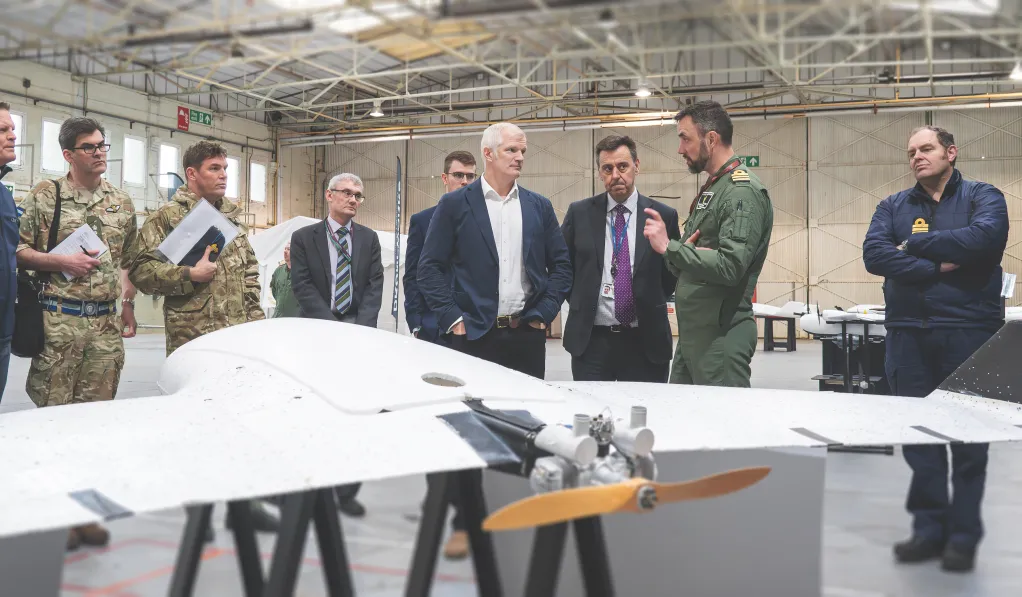
Senior defence industry figures and military personnel believe small and medium-sized enterprises (SME) hold the key to producing these attack drones, also known as “one-way effectors” or “attritable drones”.
For Nasse, there is no excuse. “Some of the primes dislike me,” he said. “There is a massive role for the primes here [in cheap drones] too — but their business models need to adapt.”
At MoD Boscombe Down, a highly sensitive and restricted military airbase in Wiltshire, the RAF and defence firm Qinetiq are working with about 100 small and medium military contractors to put the latest British-made attack drones through their paces.
Qinetiq has run the site since 2001, after the privatisation of the MoD’s Defence Evaluation and Research Agency. The company launched DroneWorks last year, an initiative to tackle the gap in drone production that the UK’s prime contractors are unwilling to fill.
Under DroneWorks, companies that want to develop their ideas, but would otherwise be unable to access MoD funding or testing facilities like Boscombe Down, can piggyback on Qinetiq’s credentials while retaining their intellectual property.
The Malfy is the first product to come out of DroneWorks. The company behind it does not want to be named for security reasons. Made of white polystyrene and with a wingspan of approximately 10ft, it has a simple-looking wooden propeller at the rear that provides the power. Officials are reserved about details such as range and speed, but reveal it can travel for “hours” carrying a payload that sits next to fuel tanks under a roughly 3×2 foot hatch on the top of the craft.
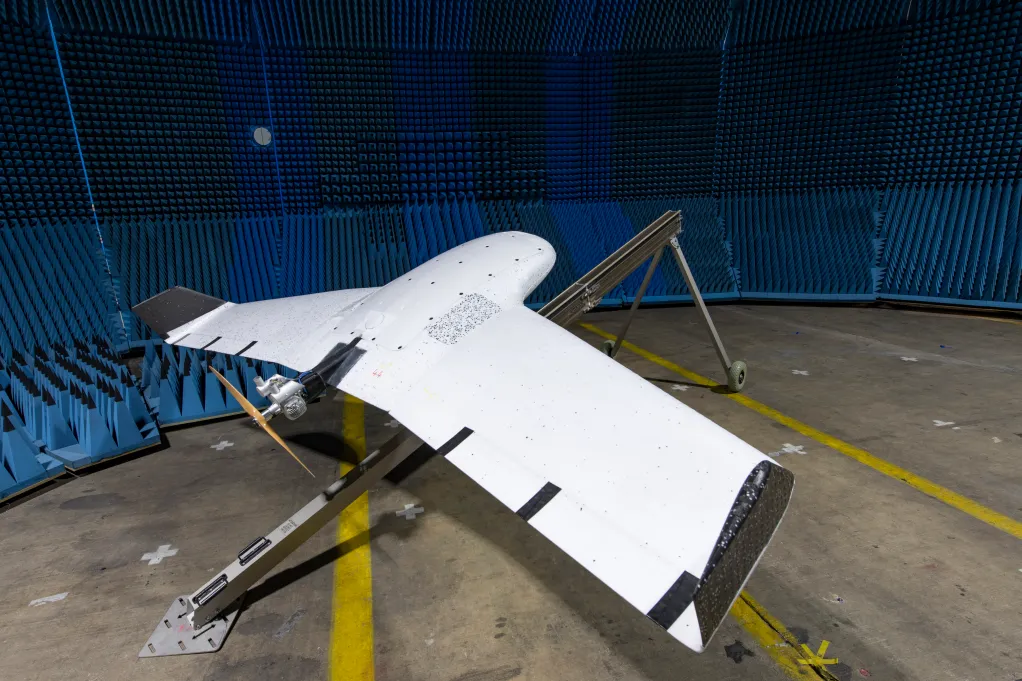
The cost is also classified, but is understood to sit in the “single-digit thousands”. The Malfy’s polystyrene structure is 3D-printed in just four minutes at a packaging factory in Wales. It arrives at the front line in three parts, which are slotted together and held in place with a carbon-fibre rod.
The drone has been put through its paces at Boscombe Down’s anechoic chamber, in which the engineers test its ability to jam global navigation satellite systems. Testing capabilities like this allow drones to be designed to counter electromagnetic warfare that would otherwise render them useless.
On the other side of the Wiltshire airfield stands Europe’s largest environmental test chamber. Big enough to house a large jet fighter, the hangar can be taken up to temperatures of 70C and down to minus 70C. Dozens of powerful lights hang from the ceiling to simulate intense sunlight.
Officials said the need for a site like this was crucial as Britain fights to stay competitive in the drone technology space. Shahed-style attack drones can be manufactured relatively inexpensively by using parts from abroad but this increases the UK’s dependence on a potentially hostile nation. China produces 80 per cent of global drone components.
“There is no immediate security threat from a Chinese motor — until they turn the supply chain off,” said Nasse.
Despite Britain quietly testing and developing its own one-way attack drones, it has a long way to go before it can keep up with countries that have far more experience with drone warfare.
During a simulated wargame exercise last year, a British brigade went up against a team of Ukrainian drone pilots. During one scenario, a battle group consisting of thousands of troops was “just walking around, not using any kind of disguise, parking tents and armoured vehicles”, according to a participant talking to the Wall Street Journal.
One team of ten Ukrainians was able to mock-eliminate 17 armoured vehicles and two battalions of soldiers. The UK team was “destroyed” by the simulated enemy, it was reported.