By our Sports Correspondent
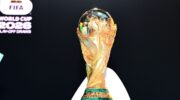
In what could be the most significant shift in sports geopolitics since the invasion of Ukraine, Gianni Infantino, the president of FIFA, has boldly signalled his intention to reinstate Russian football to the international fold. In a remarkably candid interview with Sky News, the Swiss-Italian football bureaucrat not only defended his controversial decision to award a ‘Peace Prize’ to Donald Trump but launched a broadside against the very sanctions his own organisation imposed in the spring of 2022.
The remarks, made public on the 2nd of February, sent shockwaves through the sporting establishment. Infantino’s logic was starkly pragmatic, bordering on defiant. “I have always been against bans,” he stated, directly addressing the Russian question. “We must do it. Absolutely. Because this ban has given nothing, it has only created more resentment and hatred.”
He went further, proposing a fundamental rule change to prevent any country’s exclusion due to the actions of its political leaders. “Someone has to keep the bridges open,” he argued, striking a conciliatory tone that will undoubtedly infuriate Kyiv and its staunchest allies in European capitals.
A Pandora’s Box, Opened
There is, of course, a profound irony in Infantino’s crusade. He is, in effect, attempting to close a ‘Pandora’s Box’ that FIFA and UEFA helped to pry open. As many warned at the time, the precedent set by banning Russian teams in 2022 was a dangerous one. The genie, once out of the bottle, proved difficult to control: calls soon followed to exclude Israeli athletes, and now, with the 2026 World Cup slated for North America, murmurs of a boycott are growing. The world of sport, Infantino seems to have realised, is unravelling into a maze of political tit-for-tat.
His argument cleverly pivots to commerce. Questioning the logic of a potential British boycott of the 2026 tournament, he pointedly noted the £330bn annual trade between the UK and the US. “Why football?” he asked with rhetorical flourish. It’s a utilitarian stance that reduces the beautiful game to a mere line item in the ledger of international relations—a perspective that will sit uncomfortably with many who believe sport carries a moral weight.
The Formidable Roadblocks
Yet, for all his presidential authority, Mr. Infantino’s revolution faces formidable, perhaps insurmountable, hurdles. The reality on the ground is far messier than his principled stand in a television studio.
Take UEFA, European football’s governing body. Only in September 2023, it tentatively voted to readmit Russian youth teams—a move that provoked such a furious backlash from what one Russian official witheringly called “the overwhelming minority” that a senior UEFA vice-president was forced into a very public act of contrition. The initiative was promptly shelved, becoming little more than a distant promise.
And then there is the brutal practicality of the pitch. The qualifying draw for Euro 2028, to be held in the United Kingdom, looms. Should Russia be reinstated, the spectre of national teams—particularly from the Baltics, Poland, or perhaps even England—refusing to take the field is very real. The tournament could descend into a chaotic series of forfeits and diplomatic incidents, something UEFA president Aleksander Čeferin will be desperate to avoid.
Furthermore, the parallel case of ice hockey serves as a sobering counterpoint. The International Ice Hockey Federation (IIHF) has just this January confirmed the ban on Russian and Belarusian teams will remain for the 2025/26 season, citing “safety concerns.” The beautiful game, it seems, is not immune to such sober assessments.
A Battle for the Soul of Sport?
Infantino’s intervention, therefore, is less a guarantee and more a starting pistol. It is a high-stakes gambit to reposition FIFA as the guardian of sport’s universalist ideals, above the political fray. He appears to be aligning himself with the new IOC President, Kirsty Coventry, who has cautiously begun navigating a path through the same political thicket.
The question now is whether the FIFA president can marshal the support to override the deeply entrenched opposition within the European sporting fraternity. His tools are persuasion, the threat of a fragmented global game, and an appeal to cold realpolitik. The coming months will reveal whether this is a genuine turning point or merely another chapter in the long, painful politicisation of international sport. One thing is certain: the battle for the soul of football has just entered a new, and deeply contentious, phase.