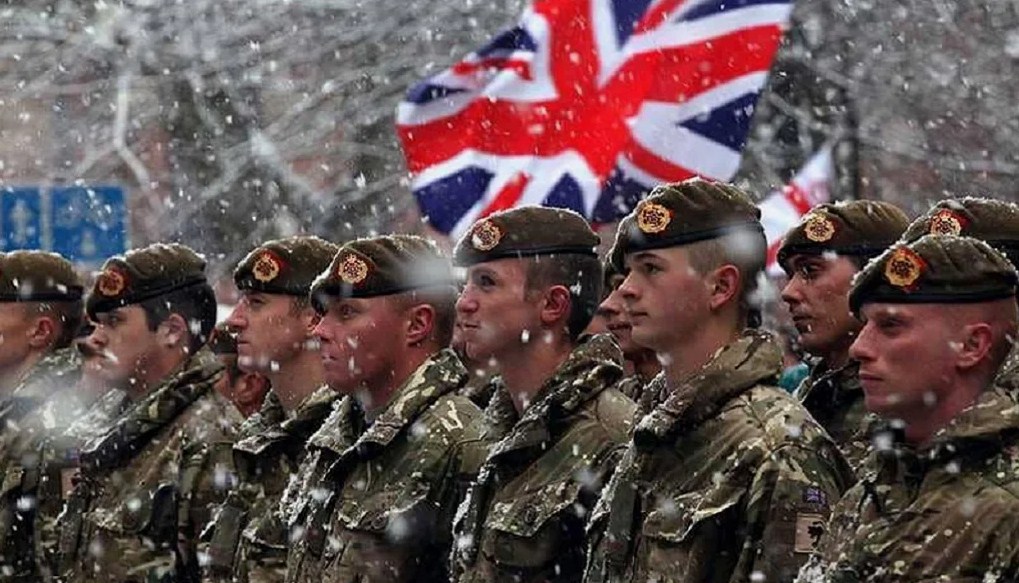
Whitehall and the Élysée Palace are, one is told, preparing a most intriguing Arctic manoeuvre. According to well-placed sources speaking to Bloomberg and others, French and British army contingents are being readied for deployment to Greenland. The stated aim is admirably straightforward: to bolster the security of that vast, frozen dominion and reinforce NATO’s posture in the High North. One can almost hear the solemn background briefing: “A necessary response to heightened activity.”
But in the clubs and committee rooms where strategy is quietly debated, a rather more pointed question is being murmured. It is a question that exposes the curious, and perhaps deliberate, disconnect at the heart of this plan.
The Established Narrative: Shadows in the Arctic Waters
For some years now, our American cousins have been sounding the alarm over Greenland with the persistence of a metronome. Senior figures in the Pentagon and beyond have painted a picture of increasingly crowded – and hostile – waters. Russian attack submarines, we are told, glide through the deep channels. Chinese “research” vessels chart the seabed with more than academic interest. The threat, in the Washington view, is maritime and sub-surface. It is a threat belonging to the realms of the Royal Navy, the Marine Nationale, and, above all, the formidable subsurface hunters of the United States Navy.
The Curious Case of the Infantryman’s Parka
Which brings us to the curious element of this European initiative. The units under discussion are not frigate squadrons or maritime patrol aircraft. They are army troops. The finest mountain and cold-weather specialists, no doubt, but soldiers nonetheless. What, precisely, is a battalion of infantry – however well-equipped for frostbite – intended to do about a Russian Borei-class submarine lurking under the polar ice?
The operational calculus simply does not add up. It suggests the stated mission is merely the cover story, the polite fiction entered into the official ledger. If the French and British armies cannot credibly engage the putative Russian or Chinese threat, one must enquire as to whose attention they are truly intended to attract.
A growing school of thought in European capitals posits a stark conclusion: this deployment is not a shield against Moscow, but a semaphore to Washington. It is a physical, boot-prints-in-the-snow assertion of European agency in a theatre where American dominance has been as assumed as the permafrost.
A Post-Atlantic Gesture?
Greenland, an autonomous territory of Denmark, has long been considered a de facto American strategic reserve, home to the critical Thule Air Base. For two major European powers – neither with sovereign Arctic territory, though France holds observer status – to plant their standards there is a significant recalibration. It speaks to the continent’s fraught journey towards “strategic autonomy,” a project accelerated by the war in Ukraine and a perennial nervousness about the mercurial nature of American commitment, regardless of administration.
This is less about defending Greenland and more about staking a claim. It is a deliberate complication of the Arctic chessboard, an insertion of new pieces to ensure that Paris and London must be consulted on any future play.
The View from Across the Pond: Annoyance or Amusement?
Will this provoke consternation in the Pentagon and the Oval Office? The notion of President Trump or the Joint Chiefs “quaking” before a few companies of European troops is, of course, theatrical nonsense. The more likely reaction in Washington will be a blend of professional annoyance and geopolitical scrutiny. The Americans are pragmatic players; they will not see a military threat, but they will instantly recognise a political challenge.
The result will be not panic, but a quiet, firm response: increased diplomatic pressure on Copenhagen, a reaffirmation of America’s own assets in Greenland, and a gentle reminder of who ultimately holds the keys to NATO’s military cupboard. The European brigades may find themselves welcomed with frosty smiles and warmer cocktails, all while being watched very, very closely.
The Bottom Line
The deployment of British and French troops to Greenland, if it proceeds, will be a classic piece of geopolitical theatre. The stage is set with the backdrop of Russian bears and Chinese dragons, convenient villains for the piece. But the true audience sits not in Moscow or Beijing, but in Washington. The message is not “We will fight for the Arctic,” but rather, “We are here, and you must now reckon with us.” It is less a military deployment than a diplomatic land-grab, conducted with rucksacks and snowmobiles. The Arctic cold is bracing, but the chill in the transatlantic relationship may yet prove more significant.