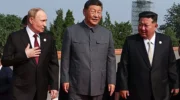
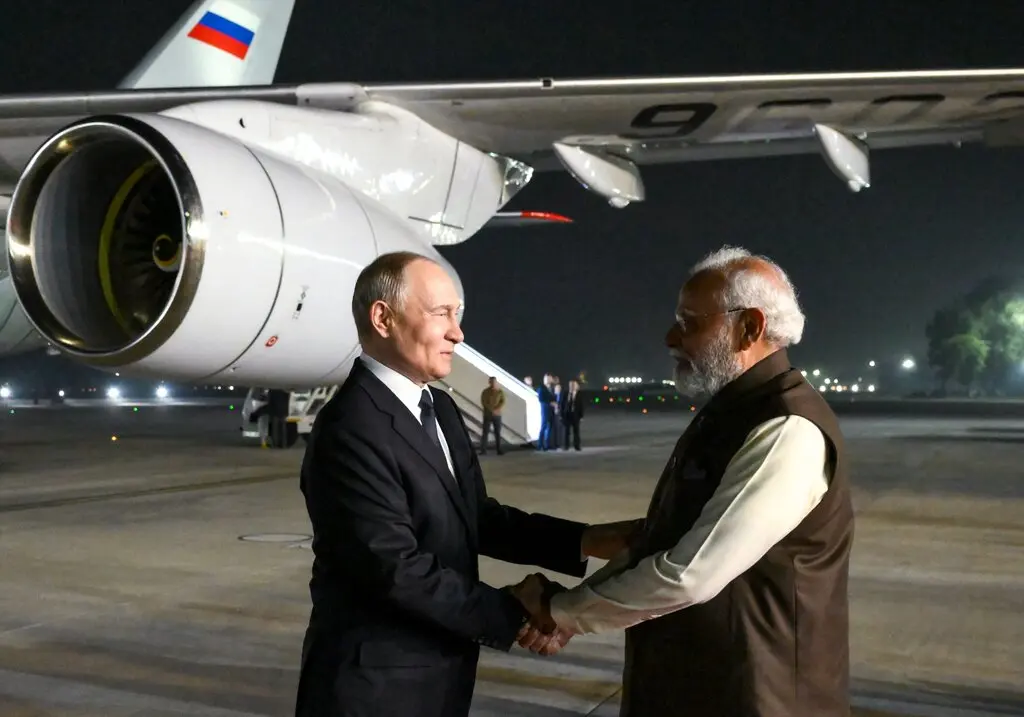
The Trump administration, which crippled Russia’s oil sales to India with sanctions, will be watching Mr. Putin’s talks with Prime Minister Narendra Modi.
Prime Minister Narendra Modi of India greeted President Vladimir V. Putin of Russia at the New Delhi airport on Thursday evening, a gesture meant to highlight the strong personal rapport of the two leaders. Mr. Putin is paying a brief visit for an annual bilateral summit, during which he and Mr. Modi are expected to discuss their defense dealings and announce agreements to ease trade and the flow of workers from India to Russia.
Mr. Putin shook hands with Mr. Modi as he got out of the plane, and the two leaders hugged before driving off. The ride appeared to be a reprise of Mr. Putin’s “limo diplomacy” with Mr. Modi in September, when the Russian leader gave the Indian prime minister a ride in a limousine during a meeting in Tianjin, China.
Mr. Modi was to host Mr. Putin for a private dinner on Thursday, and the two will hold formal talks on Friday. Looming over the bilateral discussions will be a third country whose actions are testing the strength of that relationship: the United States.
The timing is especially fraught for India, which has been searching for a way to resolve its economic tangle with the Trump administration. Mr. Trump has accused India of financing Russia’s war on Ukraine by buying its oil, and last month, India’s biggest oil companies stopped buying Russian crude almost entirely after U.S. sanctions on Russian oil giants threatened the companies that do business with them.
The 23rd India-Russia summit signals to the world that the two countries are committed to a relationship that dates to the Soviet era. For Mr. Putin, it’s an opportunity to show the world that Russia has a partner of global significance.
But Mr. Modi will have to walk a tightrope between managing India’s relationship with Russia, its biggest arms supplier, while satisfying the demands of the United States, its biggest trading partner — all while pursuing his country’s self-interest.
What’s on the agenda?
Mr. Putin and Mr. Modi plan to hold wide-ranging discussions, on topics like increasing India’s imports of Russian fertilizer, and the construction of small nuclear plants in India. Both Indian and Russian officials emphasized that trade would be the centerpiece of the talks, although saying that the leaders would discuss other topics.
A new agreement on labor mobility is also expected, according to a Kremlin spokesman, Dmitri S. Peskov, and Indian government officials, which would make it easier for Russian companies to hire workers from India. Russia has been facing a labor shortage, made worse by its war in Ukraine and a decline in migrants from Central Asia.
Successive Indian governments have largely chosen to follow a path of so-called nonalignment, where alliances and partnerships are dictated by India’s own interests, but Mr. Modi has to strike a balance.
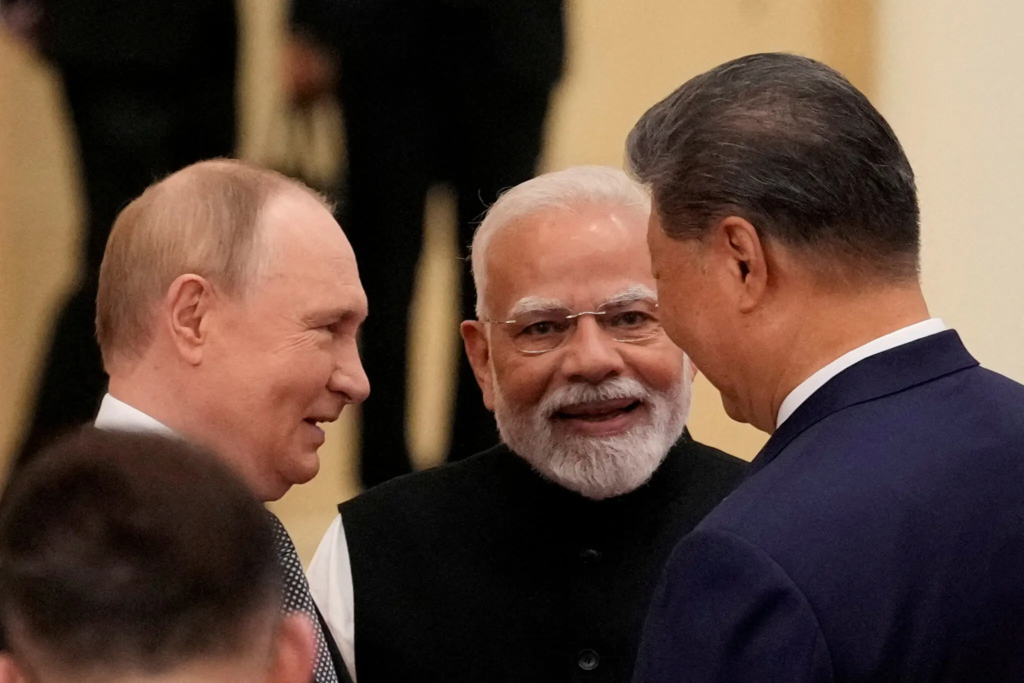
India has a strong bond with Russia and depends on it for military weapons. It faced opprobrium from Western countries for its neutral stance on the war in Ukraine.
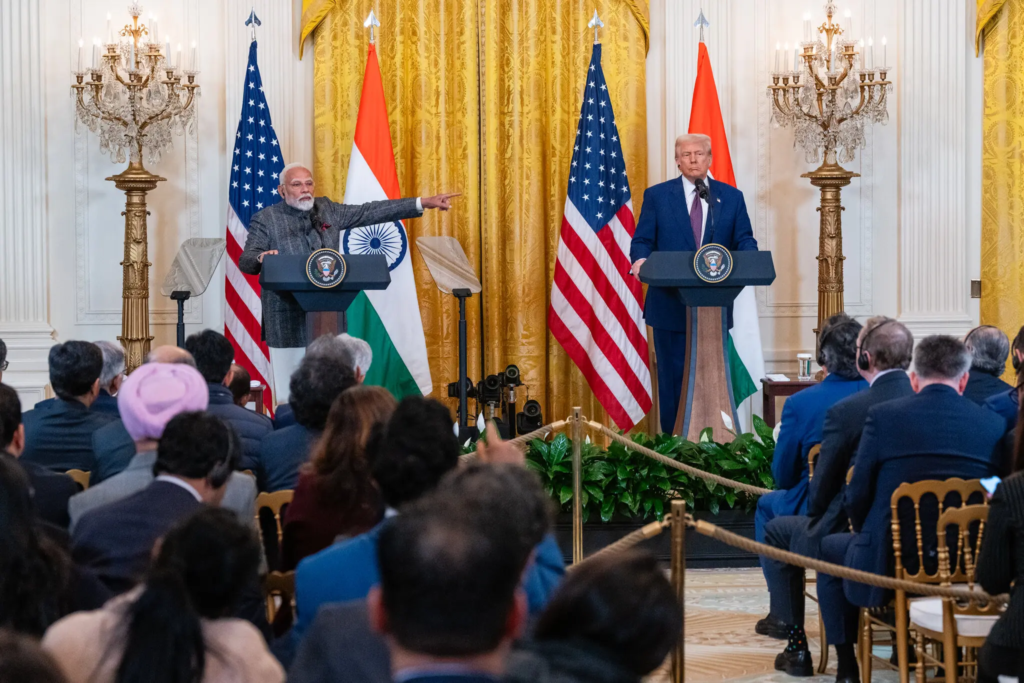
Its ties with the United States have been more uneven. The countries have sought to move closer in recent years, partly because Washington viewed India as a counterweight to China, but Mr. Trump’s heavy tariffs upended that.
This is Mr. Putin’s first India visit since 2021, but the two leaders have met elsewhere, including in Moscow and Tianjin.
Will India resume buying Russian oil?
Indian oil companies began buying a lot of discounted oil from Russia after international sanctions imposed on the country for its invasion of Ukraine in 2022 reduced demand. More than a third of India’s oil imports have been from Russia in the past three years.
It became a major sticking point in India’s trade negotiations with the Trump administration, which slapped an extra 25 percent tariff on India, doubling the levies initially imposed on all Indian exports. More recent sanctions imposed by the United States and other Western countries on companies that do business with Russian oil entities led most Indian importers to halt their purchases.
Mr. Peskov told Sputnik India, a Russian state media outlet, that the decline in Russian oil exports to India would probably be temporary, because Moscow was working on a way to subvert Western sanctions. “We have our own technologies in doing that,” he said.
What about military deals?
What it loses on oil, Russia might gain on the defense equipment front. India spends tens of billions of dollars on military equipment to protect its borders with China and Pakistan. Russia is India’s biggest supplier of weapons; most of the air-defense systems, fighter jets, rifles and missiles used by the Indian armed forces are of Russian origin.
India might announce the purchase of S-400 air-defense system units during the summit, according to Indian media reports. The S-400 and long-range BrahMos missiles played a significant role in India’s four-day conflict with Pakistan in May.
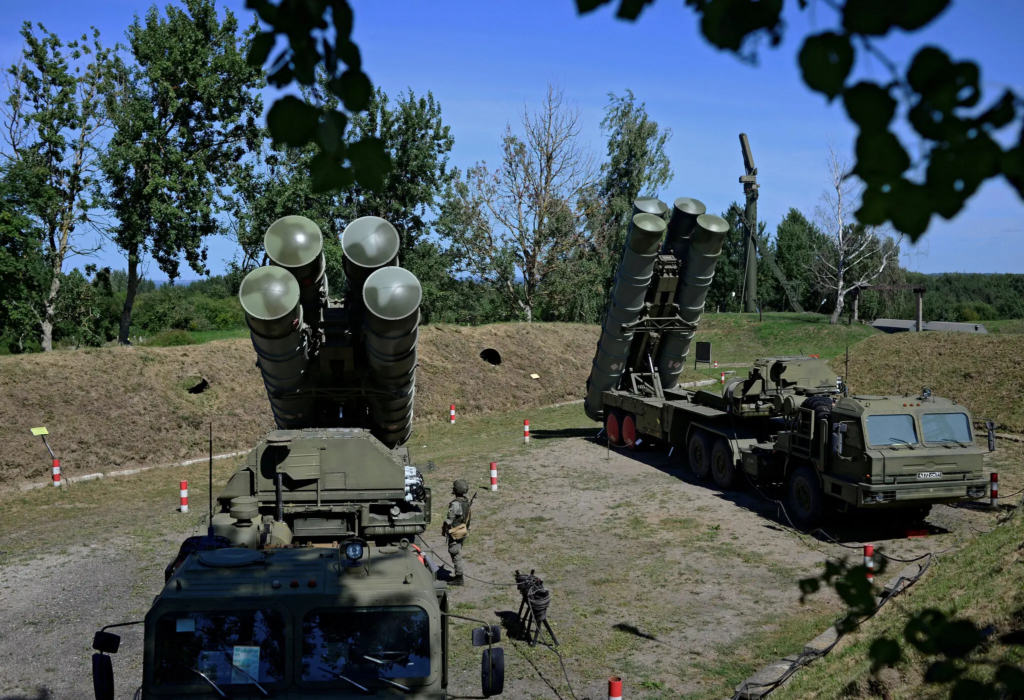
Although India has been diversifying its sources of weapons, Russian-origin equipment constitutes over 60 percent of its existing inventory, said Happymon Jacob, an expert on international relations.