He’s knocked countless doors, but for Major Laziuk, telling a soldier’s mother her child is dead never gets easier.
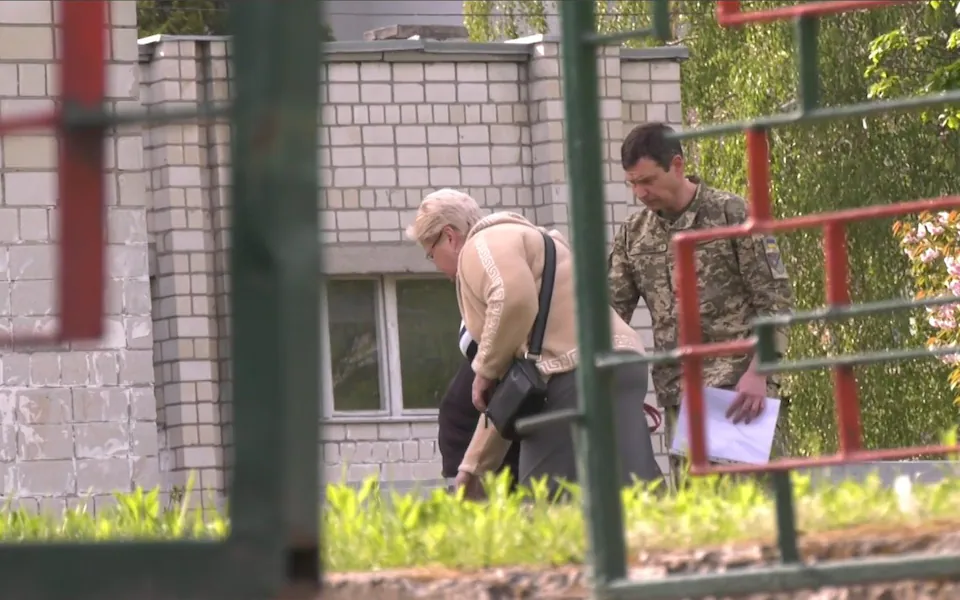
Major Serhiy Laziuk takes a deep breath at the nursery’s entrance, bracing himself for what he must do.
He’s done this countless times before, but putting his hand on the gate, he replays the words he’s prepared in his mind before taking a step forward.
Moments later, the silence is broken by a mother’s screams.
The woman, her face gaunt with grief, collapses on to a nearby bench as a colleague tries to comfort her. Standing beside them is Major Laziuk. One hand is on the mother’s shoulder. In the other, a letter with the news that her son, previously missing at the front, is dead.
Hours earlier, he had taken another deep breath as he stood outside the home of another mother and buzzed the intercom. “Hello?” the woman says in a strangled voice, before quietly letting Major Laziuk in. This time, there was no screaming, just a numb silence at the news her son had been killed in a Russian drone strike.
This is Major Laziuk’s grim task: to deliver death notices to families across Lviv. Sometimes there are two, or even three, a day. Colleagues say he has the worst job in the army. He rarely gets time off because colleagues are reluctant to cover for him.
Major Laziuk always delivers his bad news face-to-face.
“The hardest part is when people still have hope,” he tells The Telegraph. “They think maybe there’s been a mistake.”
Employed by the army recruitment office, his unit doesn’t just send reluctant young men off to fight, but it also brings them back to the morgue.
When Ukraine last updated its casualty figures this February, President Volodymyr Zelensky acknowledged more than 46,000 Ukrainian soldiers had been killed. Independent Western analysts believe the figure is much higher. Replacements are desperately needed. All men aged 25 to 60 are liable for military service, but the pool of willing volunteers dried up long ago.
Forced mobilisation is now the norm. And of Ukraine’s 3.7 million men of fighting age, officials believe over half a million are in hiding.
The current phase of war is a bloody stalemate. Peace talks have gone nowhere, and recent massive Russian drone and missile bombardments make it clear Vladimir Putin has absolutely no intention of ending the war.
For Major Laziuk, that means the death notices he delivers to families across Ukraine feel never-ending. His job is far from the one he had before the war, preparing legal contracts for a firm of architects.
His training instructs him to give bad news to killed Ukrainian soldiers’ families face-to-face. But if no-one is home, he will phone ahead of time, saying there is a sealed letter he must deliver in person.
After the death knock, Major Laziuk will have contact with a family for weeks as he arranges for the body to be returned so that it can be viewed at the morgue and buried.
Sometimes the partners and parents are already prepared because their family member’s comrades at the front have already got in touch. Those notifications are the easiest, he says.
Every case, he says, is different. Some stay calm, others cry, and some collapse. Calling ambulances for support is not uncommon. In the beginning, he went out with a combat medic who was not always needed, but it made him feel more secure.
At first, he didn’t find knocking on the doors that difficult emotionally. But after two weeks, the stress kicked in. “I’d get heart palpitations, shaky hands,” he says. Weekly group therapy sessions help. But it is hard to feel joy, he says. “If the full range of feeling is 100 per cent, I’m operating at 10.”
Many Ukrainian men who have not yet been drafted are terrified of being recruited by the military patrols that scour the streets of Lviv, as they do in every Ukrainian town.
They don’t want to end up being killed in action, with their families receiving a knock on their door by the likes of Major Laziuk.
And that fear of being sent to the front line to fight against Russian troops has meant a recruitment crisis for Ukraine’s military.
“Everyone wants us to win, but no one wants to join up,” says Pte Myroslav Trembetskyi, a driver from the conscription patrols. The country’s very survival relies on his unit to send more soldiers to fight – and how fast they can get them to the trenches.
Ukrainians call what his unit does as “busification” – the forced mobilisation of men without exemption or deferral. Videos on social media show men in camouflage stopping others on the streets and dragging them off to join the army.
The soldiers from Ukraine’s Territorial Centre of Recruitment (TSK) feel misunderstood and say those they encounter on the streets are often hostile. Their role has become a flashpoint in Ukraine, which is suffering a chronic recruitment crisis.
“If the front collapses, maybe there’s no more Ukraine,” says Pte Trembetskyi, who was seriously wounded in the front-line town of Pokrovsk in a drone attack. He doesn’t love his job, but believes it must be done. His colleague Pte Andriy Noster uses his people skills, learnt in luxury hospitality, to de-escalate confrontations.
Many men in Ukraine are already registered into the country’s military database. But some have been evading the requirement for the three years since the full-scale invasion, hoping not to be enlisted. Others have fled the war and not updated their details, hoping they wouldn’t be found and brought back to the front.
In Lviv, 50-year-old draft dodger Mykola has barely left his house for a year. He spends his days at home with the blinds drawn, doing jobs around the house and sitting on the sofa watching YouTube videos of brutal pickups by Ukrainian recruitment officers. Mykola’s detached house is surrounded by a high wall and he monitors visitors through a slot in his gate.
Mykola fears experiencing the same fate as friends. “Let’s just say they didn’t come back,” he says. Mykola is defiant about avoiding service. He claims to have donated thousands of dollars to front-line units, and hints at serious but unspecified medical conditions. “If I ended up at the front in my current state of health, I would be no use,” he says.
At the start of the war Mykola’s wife Yulia took their teenage son to Italy to avoid being called up. After some months she made the difficult decision to return to Ukraine, leaving their son there where he has since turned 18. He now works in a pizza factory. “I miss my child,” says Yulia. “I can’t get used to it. But my soul is at peace because I know he is alive and safe.”
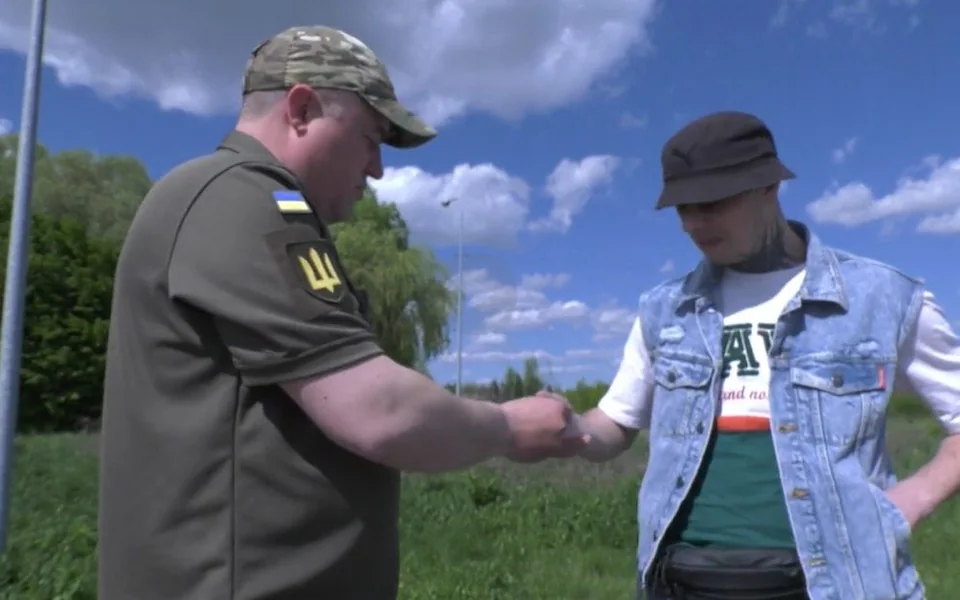
On the other side of town, Pte Trembetskyi and his unit come across a military-age man who had fled Mariupol when the Russians arrived and failed to update his details. They drive him to the recruitment centre.
If able to serve he will undergo a medical and six weeks of infantry training before typically being sent straight to the front. The patrols wear body cameras to deter offers of bribes.
While some Ukrainians are keen to avoid the military, two older foreign volunteers with no previous military experience arrive at the recruitment centre, saying they want to help fight against Russian aggression.
Both are escaping less than ideal circumstances at home. Lee Johnson, a 46-year-old known as “Janty”, ran a boxing club for children in an enclave of Belfast known as the “murder triangle”. He waited until his mum died before coming to Ukraine as she was not keen on him fighting. Helin, 48, owned two vape shops in a poor town in China but found it hard to make ends meet.
Both are determined to demonstrate their enthusiasm to the recruitment officers. Lee is improving his fitness by carrying a piece of scrap metal weighing the same as a Kalashnikov to help him train. Helin offers a drone part he brought from China.
Those who volunteer for the Ukrainian army have choices about where they go and the recruiter tells them which brigades are currently looking for new men. Their eagerness to impress contrasts with the reluctance of Ukrainian men.
The bigger picture is that while Ukraine’s allies still send weapons, for all the talk of the European “coalition of the willing” no foreign troops are coming. Ukrainians know they are on their own. It is their husbands, brothers and sons who must stand against Russia (some women do serve at the front, but they are not obliged to).
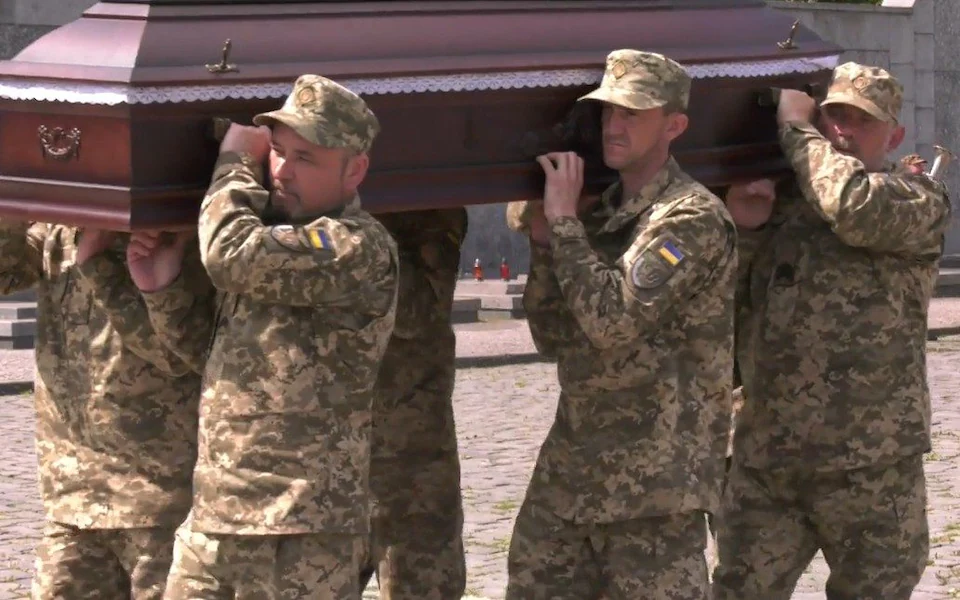
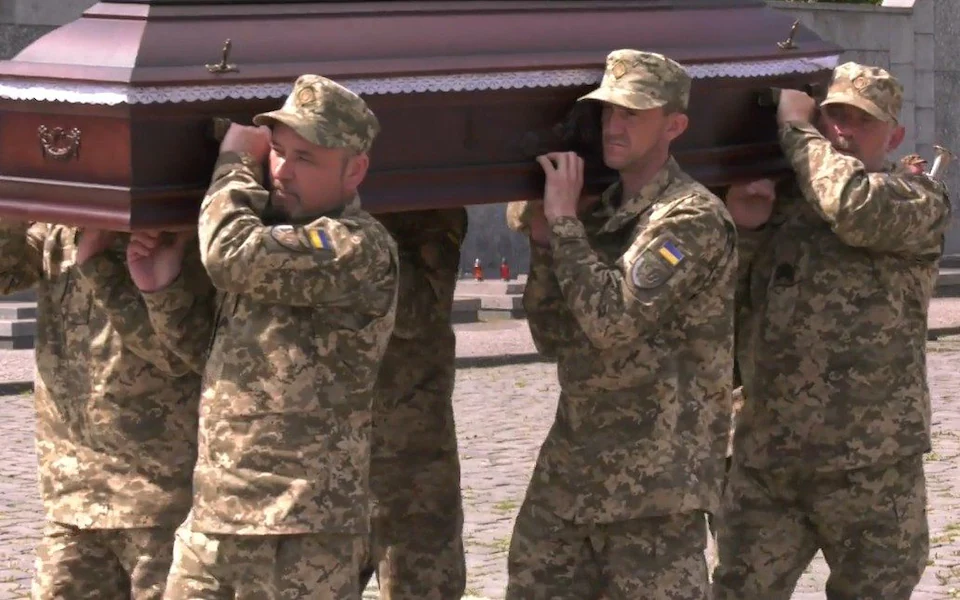
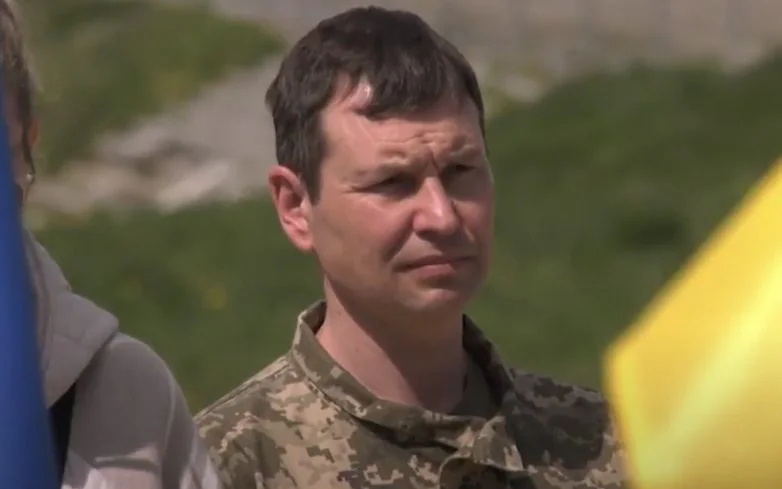
Some days later, Major Laziuk stands quietly in the crowd at Lviv’s new military cemetery, built because the old one ran out of space soon after the start of the full-scale invasion in 2022. It is the funeral of two soldiers whose families he had notified and then helped them identify in the morgue.
In his jacket, another letter which, after the ceremony finishes, he will deliver to another unsuspecting family.
Major Laziuk is desperate for the war to end but knows his work will continue even after the last shell has fallen, it won’t stop. There will be men to find – still missing. Bodies to return from occupied areas. Maybe even from inside Russia. It could take years.
A member of the Ukrainian Orthodox church, Major Laziuk believes his job to support families is his calling. “They’re less afraid when I’m there.”